



How to Handle Criticism – Social Story for Kids
₹80
₹160
50% off
0 (0 ratings)
Grade Levels
Grade 1 - Grade 3 (Ages 6-9)
Content Overview
Format: Printable PDF, Total Pages: 11, Features: 16 segments with real images, vocabulary, spelling, comprehension, role-play activities
Categories
Share


About the Product
Introduction
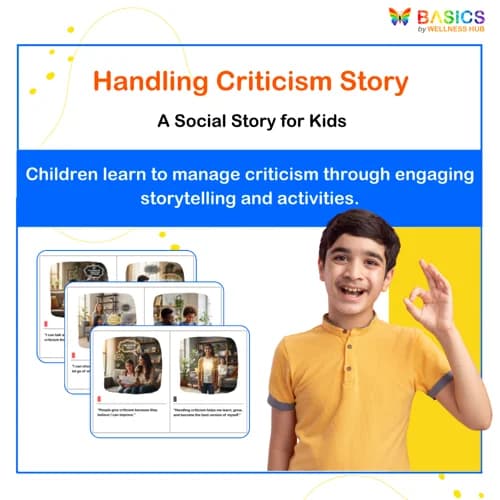
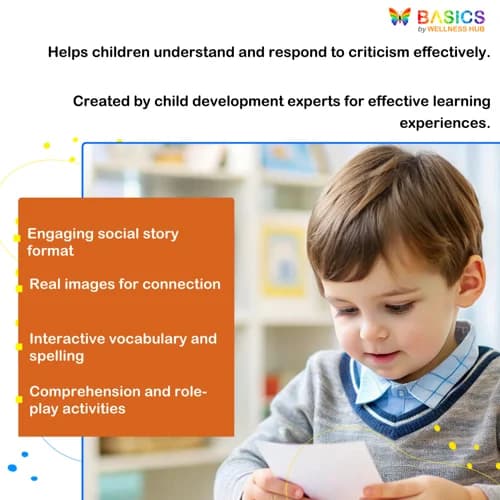
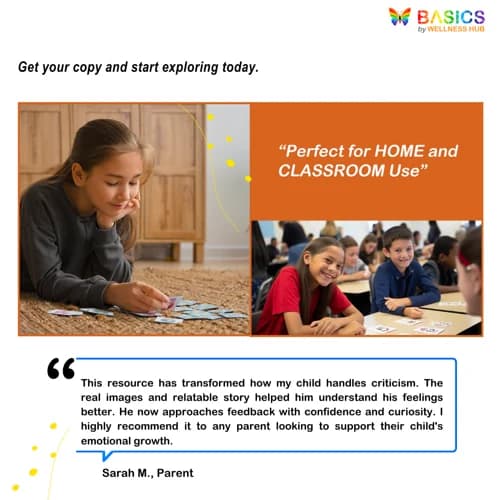
Learning how to handle criticism is a crucial social skill that helps children build resilience, self-awareness, and emotional intelligence. This social story PDF, "How to Handle Criticism," is designed to guide children through understanding and managing feedback in a positive and constructive way. With real-life images and relatable scenarios, this resource helps children connect with the content and apply it to their own experiences. Perfect for use in speech therapy, special education, and at home, this tool supports children in developing healthy communication and coping strategies.
Product Details
- Format: Printable PDF
- Total Pages: 11
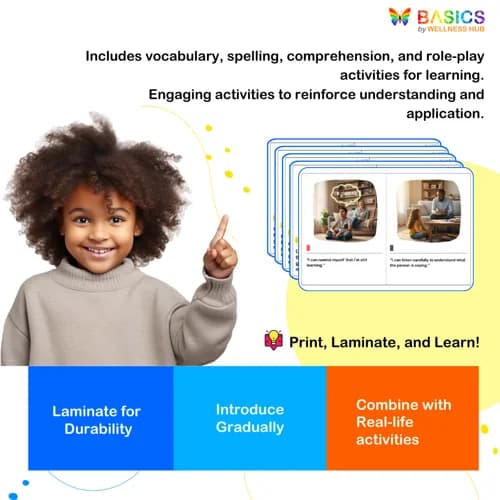
- Social Story: 8 pages, divided into 16 segments, each featuring a real picture and a sentence in the first person to enhance relatability.
- Vocabulary and Spelling (Page 9): Includes 5 vocabulary words with two meaning options and 5 spelling words with two spelling options, encouraging word comprehension and correct spelling.
- Comprehension and Open-Ended Questions (Page 10): Designed to reinforce understanding and encourage critical thinking about the story.
- Role-Play Activities (Page 11): Provides scenarios for children to practice handling criticism in a safe and supportive environment.
- Ideal For: Children in early education, special education, and those receiving speech therapy.
Additional Learning Activities:
Educational Benefits
1. Enhances Emotional Intelligence
- Helps children recognize and manage their emotions when receiving criticism.
- Encourages self-reflection and understanding of personal strengths and areas for improvement.
2. Builds Resilience and Coping Skills
- Teaches children how to respond to feedback constructively rather than defensively.
- Promotes a growth mindset by emphasizing learning from mistakes.
3. Develops Communication Skills
- Encourages children to express their feelings and thoughts clearly when discussing criticism.
- Improves listening skills by teaching them to understand and process feedback.
4. Supports Vocabulary and Spelling Development
- Enhances language skills through vocabulary exercises that reinforce word meanings and correct spelling.
5. Fosters Critical Thinking and Comprehension
- Encourages children to think critically about the scenarios presented in the social story.
- Develops comprehension skills through open-ended questions that require thoughtful responses.
6. Provides Practical Application through Role-Play
- Offers a safe environment for children to practice handling criticism in real-life situations.
- Helps children apply learned skills in everyday interactions with peers, teachers, and family members.
Instructions for Use
Step 1: Read the Social Story Together
- Sit with the child and go through each page of the social story.
- Discuss the images and sentences, ensuring the child understands the scenarios and emotions involved.
- Ask questions like:
- "How would you feel in this situation?"
- "What could you say or do differently?"
Step 2: Vocabulary and Spelling Activities (Page 9)
- Review the vocabulary words and their meanings with the child.
- Encourage the child to pick the correct meaning for each word.
- Practice spelling by selecting the correct spelling from the options provided.
Step 3: Comprehension and Open-Ended Questions (Page 10)
- Discuss the comprehension questions with the child to reinforce understanding.
- Encourage the child to think deeply and express their thoughts on handling criticism.
- Use open-ended questions to promote discussion and critical thinking.
Step 4: Role-Play Activities (Page 11)
- Set up role-play scenarios based on the social story.
- Encourage the child to practice receiving and responding to criticism in a positive way.
- Provide feedback and support to help them improve their responses.
Step 5: Reinforce Learning in Real-Life Situations
- Encourage the child to apply what they've learned when they encounter criticism in daily life.
- Provide positive reinforcement and guidance to help them handle feedback constructively.
- Regularly revisit the social story and activities to reinforce skills and build confidence.
Activities Using the Resource
1. Picture and Sentence Matching
Objective: Enhance understanding of scenarios and emotions in the social story.
How to Play:
- Print and cut out each segment's picture and sentence separately.
- Mix them up and ask the child to match the correct picture with its corresponding sentence.
- Discuss each match, asking the child to describe the emotion shown and the situation.
Skill Development:
- Visual comprehension
- Emotional recognition
- Sentence association
2. Vocabulary and Spelling Game
Objective: Strengthen language skills through interactive learning.
How to Play:
- Use the vocabulary and spelling words from page 9.
- Create flashcards with words on one side and meanings/spellings on the other.
- Play a memory game where the child matches words to meanings or correct spellings.
Skill Development:
- Vocabulary retention
- Spelling accuracy
- Memory enhancement
3. Comprehension Discussion Circle
Objective: Foster critical thinking and comprehension through group discussion.
How to Play:
- Gather a small group of children and read the social story aloud.
- Pose the comprehension and open-ended questions from page 10.
- Encourage each child to share their thoughts and listen to others' perspectives.
Skill Development:
- Critical thinking
- Listening and speaking
- Group interaction
4. Role-Play Scenarios
Objective: Practice handling criticism in a supportive setting.
How to Play:
- Choose scenarios from page 11 for role-play.
- Assign roles (e.g., one child gives feedback, the other responds).
- Guide the children in using positive language and constructive responses.
Skill Development:
- Social interaction
- Empathy and understanding
- Conflict resolution
5. Criticism Journal
Objective: Encourage self-reflection and application of learned skills.
How to Play:
- Provide a journal for the child to record instances when they received criticism.
- Ask them to write about how they felt, what they learned, and how they responded.
- Review entries together, discussing improvements and celebrating progress.
Skill Development:
- Self-reflection
- Emotional processing
- Writing and expression
6. Real-Life Application Challenge
Objective: Reinforce skills through real-world practice.
How to Play:
- Set daily or weekly challenges for the child to apply handling criticism in real situations.
- Provide scenarios (e.g., receiving feedback from a teacher or peer).
- Offer support and positive reinforcement as they navigate these experiences.
Skill Development:
- Real-world application
- Confidence building
- Resilience development
Frequently Asked Questions
Q1: How can I access the "How to Handle Criticism" social story PDF?
A1: The PDF is available for download from the Wellness Hub's online platform. Once purchased, you can print it for personal use, ensuring you have a physical copy for activities and discussions with your child.
Q2: Can the social story be used for group therapy sessions?
A2: Yes, the social story is designed to be flexible and can be used in both individual and group settings. Group activities like role-play and discussion circles enhance peer interaction and shared learning experiences.
Q3: Is there customer support available if I have questions about the resource?
A3: Absolutely. Wellness Hub offers customer support to assist with any inquiries. You can contact them through their website or via email for guidance on using the resource effectively.
Q4: What is Wellness Hub's policy on refunds for digital resources?
A4: Wellness Hub typically does not offer refunds for digital downloads due to their nature. However, if you encounter any issues with the file or content, their support team is available to help resolve the problem.
Q5: How does the social story support language development?
A5: The story includes vocabulary and spelling activities that reinforce word meanings and correct spelling. These exercises, along with comprehension questions, help enhance language skills in a structured way.
Q6: Can this resource be integrated with other therapy tools?
A6: Yes, it complements other therapy tools like flashcards and visual schedules. It can be part of a broader therapy plan, especially in speech and language therapy, to reinforce communication skills and emotional understanding.
Q7: What makes Wellness Hub's resources unique?
A7: Wellness Hub combines professional expertise with innovative digital tools, making therapy interactive and engaging. Their resources are designed by experts to be practical and effective, supporting both therapists and families in achieving developmental goals.
Q8: Are there any licensing restrictions for using the PDF?
A8: The PDF is licensed for personal use only. Sharing or distributing the content for commercial purposes is not permitted. This ensures that the quality and integrity of the resource are maintained.
Q9: How does the role-play activity benefit children?
A9: Role-play provides a safe environment for children to practice handling criticism. It helps them apply learned skills in real-life situations, enhancing their social interaction, empathy, and conflict resolution abilities.
Q10: What is included in the free consultation offered by Wellness Hub?
A10: The free consultation includes an initial assessment to understand the child's needs and discuss therapy goals. It helps tailor a personalized therapy plan, ensuring that the services provided align with the child's developmental requirements.
Usage Rights and Restrictions
Allowed Usage:
- Personal use by parents, teachers, and therapists.
- Printable for classroom, home, or therapy settings.
- Can be used in group or one-on-one learning sessions.
Not Allowed:
- Reselling, redistributing, or modifying the resource for commercial use.
- Sharing publicly (e.g., on blogs, social media, or websites) without permission.
- Uploading the file to public sharing platforms.
If you need a bulk license for schools or therapy centers, please contact us.
Conclusion
The "How to Handle Criticism" social story PDF is a comprehensive resource designed to equip children with the skills needed to navigate feedback constructively. Through its engaging format, real-life images, and interactive activities, this tool fosters emotional intelligence, resilience, and effective communication. Ideal for children in early education, special education, and speech therapy, it offers a supportive framework for learning and practicing essential life skills. By integrating vocabulary, spelling, comprehension, and role-play exercises, this resource not only enhances language development but also encourages critical thinking and real-world application. Embrace this opportunity to empower your child with the confidence to handle criticism positively and grow from every experience.