

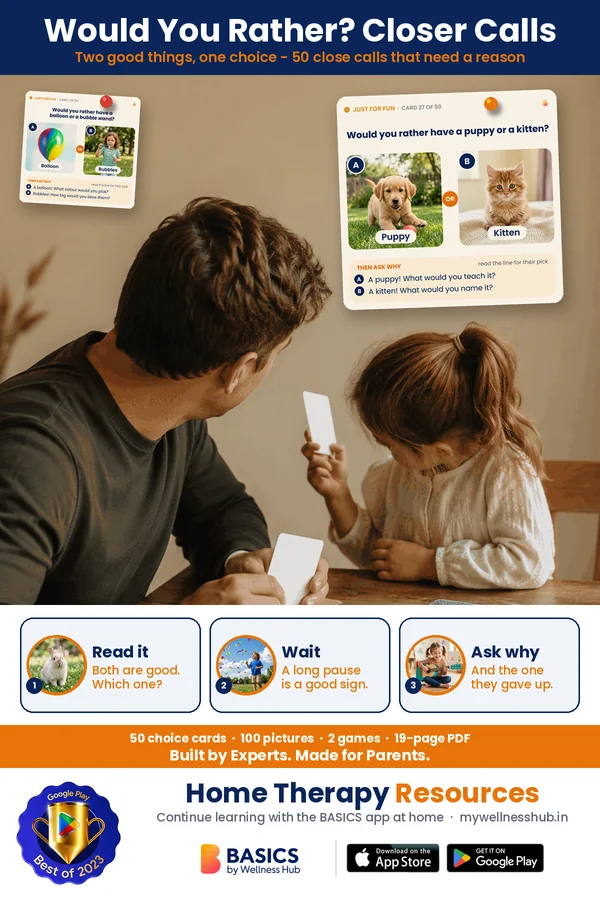
Would You Rather? Closer Calls — 50 Printable Close-Call Choice Cards for Kids to Explain Decisions
₹80
₹160
You save ₹80
4.9 (33 ratings)
Grade Levels
Grade 1 – Grade 4 (Ages 6–10)
Content Overview
Format: PDF | Pages: 19 | Features: 50 picture cards to build decision-making and communication skills
Categories
Share


About the Product
Introduction
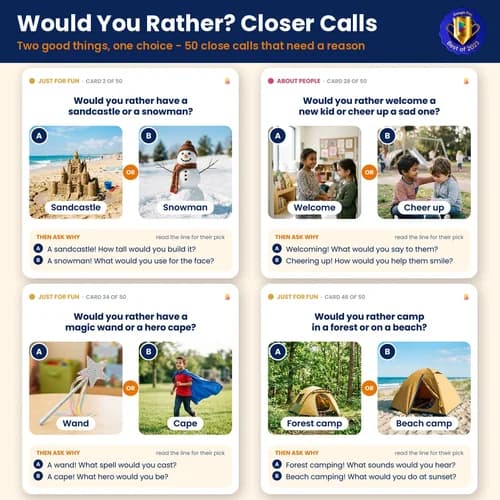
Would You Rather? Closer Calls Picture Choice Cards is a unique 19-page PDF designed for children ready to think deeper about their choices. This resource features 50 engaging cards, each with two genuinely good options shown in clear, inviting photos. Perfect for children who already enjoy making simple choices, it encourages thoughtful discussion and supports those using speech, signs, or AAC.
Kids practice weighing two options, explaining a decision that could have gone either way, and naming what was given up. They also learn to change their mind with a reason and disagree without anyone being wrong. These skills help children build flexible thinking and social understanding as they explore fun and people-centered scenarios.
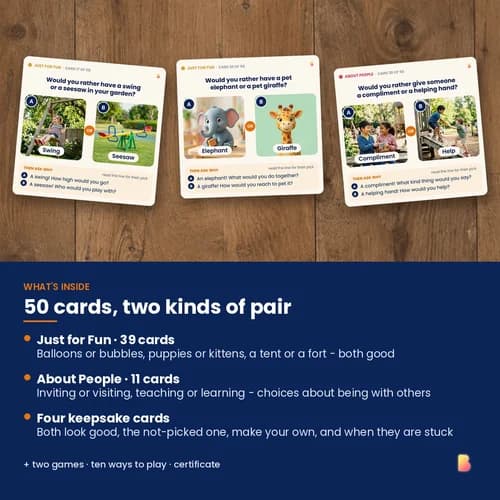
Families, teachers, and therapists can use these cards at home, in classrooms, or during speech sessions to spark conversation and reflection. The "about people" pairs make it easy to discuss friendship and empathy, while the "just for fun" pairs keep sessions light and engaging.
Product Details
- Resource Name: Would You Rather? Closer Calls Picture Choice Cards
- Format: Printable and screen-ready PDF
- Total Pages: 19
- Grade Level: Elementary (ages 6+)
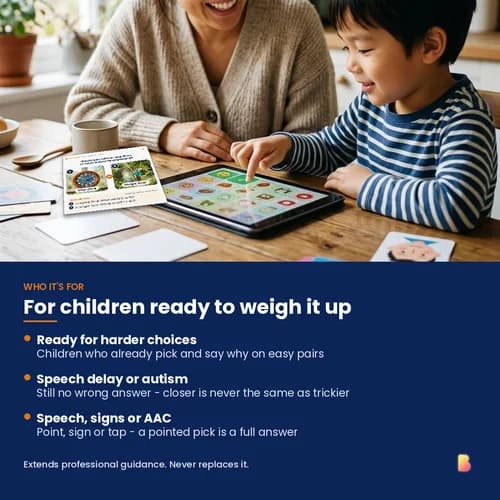
- Designed For: Children ready for advanced choice-making, including those with speech delay, autism, or AAC users
- Printing Notes: Print single-sided for best results; cards can be laminated for durability
- Best Used In: Home, classroom, speech therapy, social skills groups
- Sets / Flashcards / Activities: 50 picture choice cards, 4 keepsake cards, 2 games, practice log, certificate
- Visuals / Illustrations: 100 high-quality photos, clear A/B labeling on each card
Educational Benefits
1. Flexible Thinking and Decision-Making Practice
- Children learn to weigh two appealing options and make thoughtful choices.
- They practice changing their mind with a reason, building cognitive flexibility.
- primary_keyword supports growth in open-minded, adaptable thinking.
2. Expressive Communication and Explanation Skills
- Kids explain their picks and describe what made each option appealing.
- They use clear language or AAC to share their reasoning.
- This builds confidence in expressing opinions and making themselves understood.
3. Social Perspective-Taking and Empathy
- Children consider what others might choose and why.
- They practice disagreeing kindly, learning that no answer is wrong.
- This fosters empathy and respect for different viewpoints.
4. Self-Advocacy and Confidence Building
- Learners choose, justify, and even switch their answers without pressure.
- They practice standing by their choices or changing them thoughtfully.
- Would You Rather? Closer Calls Picture Choice Cards encourages self-advocacy in group or solo play.
5. Visual Processing and AAC Parity
- High-quality photos support visual learners and non-readers.
- Full AAC parity ensures every child can participate by pointing, signing, or tapping.
- This makes the activity accessible for children with diverse communication needs.
Instructions for Use
Step 1: Prepare and Organize the Cards
- Print the PDF single-sided for best card quality.
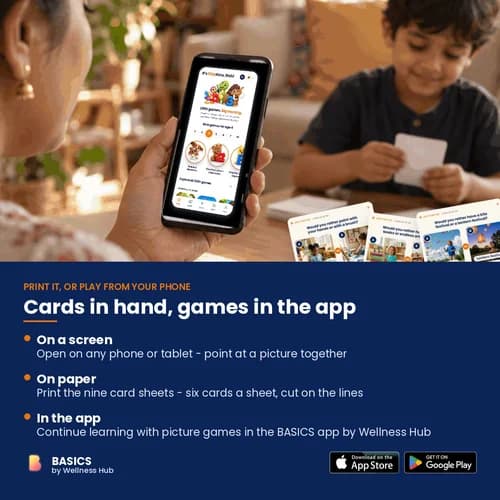
- Cut out the cards or use them on a screen for digital play.
- Laminating cards increases durability for repeated use.
Step 2: Introduce the Choice-Making Activity
- Show a sample card and explain the two options.
- Model how to pick by pointing, saying, or signing your choice.
- Weighing two options is the focus for this step.
Step 3: Encourage Verbal or AAC Responses
- Invite the child to make a choice using speech, signs, or AAC.
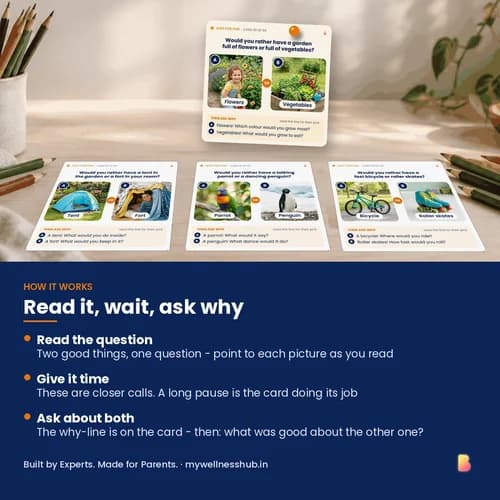
- Prompt them to explain why they picked that option.
- Explaining a decision that could have gone either way is key here.
Step 4: Explore the Not-Picked Option
- Ask what was good about the option not chosen.
- Discuss what the child gave up or might miss.
- A long pause is a good sign—give time for thinking.
Step 5: Support Switching and Changing Minds
- Let children change their answer if they wish, with a reason.
- Reassure them that switching shows flexible thinking.
- Celebrate honest answers, including "I cannot decide."
Step 6: Extend with Games and Real-Life Carryover
- Play included games like The Split House for group fun.
- Use keepsake cards and practice log for ongoing reflection.
- Encourage use of these skills in daily choices and conversations.
Activities Using the Resource
1. Weighing Two Good Options Game
Objective: To build flexible thinking by using Would You Rather? Closer Calls Picture Choice Cards to compare two appealing choices.
How to Play:
- Present a card with two photos, such as a puppy or a kitten.
- Ask the child to pick one and explain why using words, signs, or AAC.
- Discuss what makes the not-picked option good, too.
Skill Development:
- Compares and contrasts two positive options.
- Practices giving reasons for choices.
- Strengthens open-minded decision-making.
2. Explaining a Decision That Could Have Gone Either Way
Objective: To encourage children to explain their reasoning for a close call using expressive language or AAC.
How to Play:
- Show a card (e.g., balloon or bubble wand) and let the child choose.
- Prompt them to describe why it was hard to decide.
- Invite them to share what they like about both options.
Skill Development:
- Builds expressive communication.
- Develops perspective-taking about choices.
- Increases comfort with ambiguity.
3. Naming What Was Given Up Activity
Objective: To help children identify and express what they gave up when making a choice.
How to Play:
- After a choice, ask, "What did you give up by not picking the other?"
- Use cards like sandcastle or snowman for practice.
- Encourage sharing feelings about missing out.
Skill Development:
- Enhances self-awareness of preferences.
- Teaches emotional vocabulary.
- Supports coping with small disappointments.
4. Changing Your Mind with a Reason
Objective: To practice flexible thinking by allowing children to switch their answer and explain why.
How to Play:
- Present a card and let the child pick, then ask, "Would you like to switch?"
- If they switch, prompt for a new reason using the Would You Rather? Closer Calls Picture Choice Cards.
- Celebrate thoughtful changes of mind.
Skill Development:
- Encourages cognitive flexibility.
- Reinforces justification for decisions.
- Normalizes changing opinions.
5. Disagreeing Without Anybody Being Wrong
Objective: To foster respectful disagreement and empathy during group play.
How to Play:
- Each child picks from a card (e.g., tent in the garden or fort in your room).
- Children take turns sharing their reasons.
- Emphasize that all answers are valid and discuss different viewpoints.
Skill Development:
- Builds empathy for others' choices.
- Teaches respectful communication.
- Promotes social perspective-taking.
6. Everyday Carryover: Practicing Choices in Real Life
Objective: To generalize skills from the cards to daily decision-making moments.
How to Play:
- Use real-life scenarios (e.g., snack choices) and follow the card process.
- Ask for a pick, a reason, and what was good about the other choice.
- Encourage use of pointing, signing, or AAC as needed.
Skill Development:
- Applies decision-making to daily routines.
- Strengthens communication in real contexts.
- Increases independence in making and explaining choices.
Frequently Asked Questions
Q1: What ages and skill levels are best for Would You Rather? Closer Calls Picture Choice Cards?
A1: This resource is designed for children ages 6 and up who can already make simple choices and explain their picks. It is ideal for elementary students ready to weigh two good options and discuss their thinking. Children using speech, signs, or AAC will all benefit from the flexible format.
Q2: Can these cards be used in a classroom group activity?
A2: Yes, these cards work well for small groups or whole-class discussions. Each child can pick an option, explain their choice, and listen to others' reasons, promoting respectful disagreement and social perspective-taking. Try circle time, partner sharing, or group games like The Split House for interactive use.
Q3: Are these picture choice cards suitable for speech therapy sessions?
A3: Absolutely. The cards target expressive communication, flexible thinking, and explaining decisions, which are key goals in speech therapy. They are especially helpful for children with speech delay or those using AAC, as every response method is valued equally.
Q4: How should I print and prepare the cards for repeated use?
A4: Print single-sided on thick paper or cardstock for best results, then cut out the cards. Laminating makes them more durable for frequent handling in classrooms or therapy. Store cards in a labeled envelope or box for easy access.
Q5: Are these cards accessible for children with autism or who use AAC?
A5: Yes, the resource is fully accessible for children with autism and AAC users. Each card features clear photos, simple A/B labeling, and allows for pointing, signing, or tapping as valid responses. The format encourages participation without pressure or time limits.
Q6: Can I use these cards on a tablet or computer without printing?
A6: Yes, the PDF is screen-ready and can be displayed on tablets, computers, or interactive whiteboards. Children can point, tap, or use digital annotation tools to make their choices. This flexibility supports both in-person and teletherapy sessions.
Q7: What specific skills will children develop with this resource?
A7: Children will practice weighing two options, explaining their decisions, and naming what was given up. They also learn to change their mind with a reason and disagree kindly, building social perspective-taking and flexible thinking. These skills are essential for confident, empathetic communication.
Q8: What are the usage rights for Would You Rather? Closer Calls Picture Choice Cards?
A8: Purchase grants a single-user license for personal, classroom, or therapy use. Sharing, posting, or distributing the PDF to others is not permitted. Please contact Wellness Hub for group or organizational licensing.
Q9: How do I receive and download my PDF after purchase?
A9: After purchase, you will receive an email with a secure download link to the PDF. The file is ready for immediate use on any device or for printing. If you have trouble accessing your resource, Wellness Hub's support team is available to help.
Q10: What is Wellness Hub's refund or exchange policy for digital resources?
A10: Due to the nature of digital downloads, refunds and exchanges are generally not offered once the PDF is accessed. If you experience technical issues or believe you received the wrong resource, contact Wellness Hub for prompt assistance. Their team is committed to ensuring customer satisfaction and resolving any concerns.
Usage Rights and Restrictions
Allowed Usage:
- Personal use by parents, teachers, and therapists.
- Printable for classroom, home, or therapy settings.
- Can be used in group or one-on-one learning sessions.
Not Allowed:
- Reselling, redistributing, or modifying the resource for commercial use.
- Sharing publicly (e.g., on blogs, social media, or websites) without permission.
- Uploading the file to public sharing platforms.
If you need a bulk license for schools or therapy centers, please contact us.
Conclusion
Would You Rather? Closer Calls Picture Choice Cards offers a creative way for children to build advanced decision-making skills while having fun. Designed for learners who are ready to weigh two good options, this resource supports kids who communicate by speech, sign, or AAC, and helps them grow in confidence and self-expression.
By practicing social perspective-taking and learning to disagree kindly, children develop empathy and flexible thinking. The cards fit easily into home routines, classroom activities, or therapy sessions, making them a versatile tool for building meaningful conversation and understanding.
Bring Would You Rather? Closer Calls Picture Choice Cards into your learning space today and help every child strengthen their ability to make thoughtful choices and explain their thinking with pride.