
Whose Turn? Trickier Moments — 50 Printable Turn-Taking Cards for Handovers and Interruptions
₹80
₹160
You save ₹80
4.8 (34 ratings)
Grade Levels
Grade 1 – Grade 4 (Ages 6–11)
Content Overview
Format: PDF | Pages: 22 | Features: 50 photo cards, turn-taking skills, real-life scenarios, answer key included
Categories
Share


About the Product
Introduction
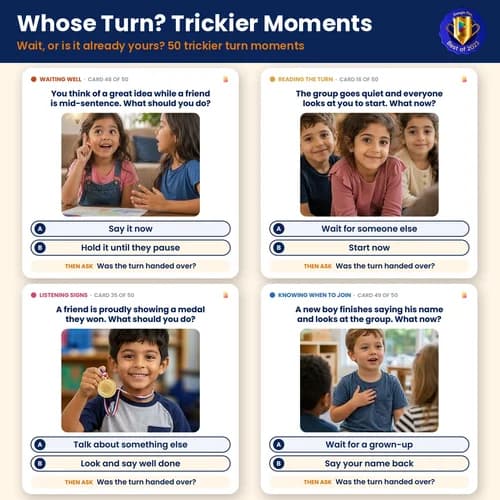
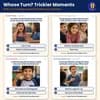
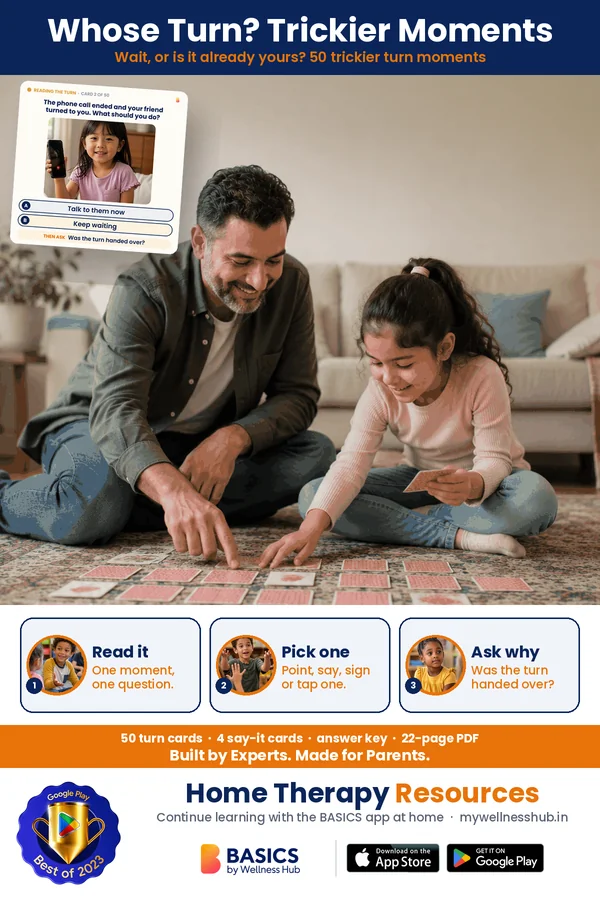
Whose Turn? Trickier Moments: Turn-Taking Photo Cards PDF is a 22-page digital resource designed for children who are ready to master the subtler side of conversation. This set features 50 real-life photo cards that capture those tricky moments after a turn is handed over—when waiting or jumping in can make all the difference. Each card presents a scenario, a guiding question, and two paddle choices, making it perfect for children developing advanced social communication skills.
Children will practice reading the turn, choosing between waiting well or responding, and learning to spot when a turn is truly theirs. The cards help build skills like giving a turn back, answering questions asked of a group, and knowing when to join in. Clear, visual choices make it easy for children to understand the consequences of each move, supporting measurable progress in conversation timing and social awareness.
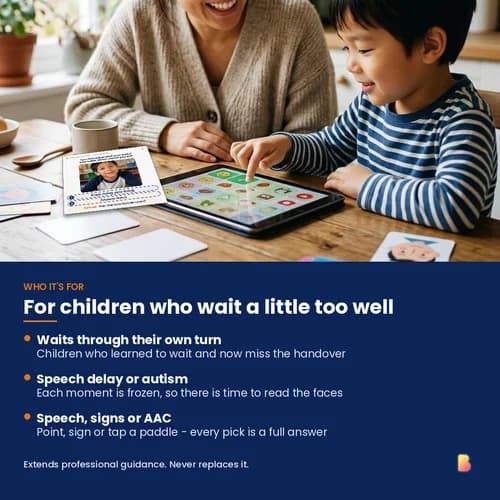
Ideal for home, classroom, and therapy settings, these cards support children with speech delay, autism, or those using AAC. Listening signs are woven throughout, encouraging children to show they are engaged in a way that works for them. The flexible format and visual supports make this resource valuable for group activities, one-on-one practice, or as part of a communication curriculum.
Product Details
- Resource Name: Whose Turn? Trickier Moments: Turn-Taking Photo Cards PDF
- Format: Printable and screen-ready PDF
- Total Pages: 22
- Grade Level: Elementary and up
- Designed For: Children practicing advanced turn-taking, including those with speech delay, autism, or AAC users
- Printing Notes: Print single- or double-sided; laminate for durability if desired
- Best Used In: Home, classroom, speech therapy, social skills groups
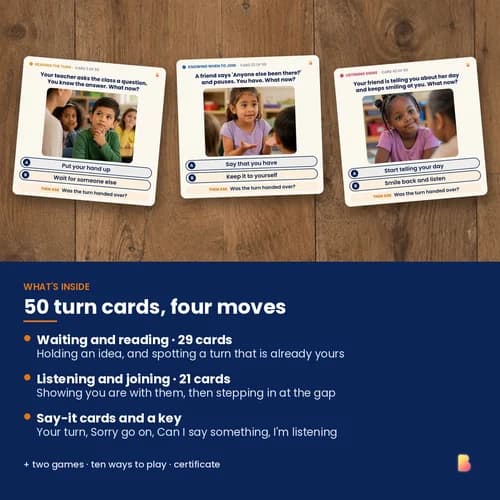
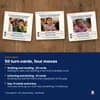
- Sets / Flashcards / Activities: 50 photo cards, 4 say-it cards, 2 games, practice log, certificate
- Visuals / Illustrations: Real-life photographs, color-coded paddles, visual answer key
Educational Benefits
1. Advanced Social Communication Skills
- Strengthens children's ability to read subtle social cues in conversation.
- Teaches when to wait, respond, or return a turn in real-life scenarios.
- Promotes flexible thinking and adaptability in group interactions.
2. Listening Signs and Engagement
- Encourages children to recognize and use a variety of listening signs.
- Helps them show engagement beyond just eye contact or nodding.
- Supports children who communicate with AAC or alternative methods.
3. Conversation Timing and Turn Recognition
- Builds awareness of when a conversational turn is truly available.
- Reduces interruptions and missed opportunities to join in.
- primary_keyword supports mastery of nuanced timing in dialogue.
4. Self-Correction and Social Repair
- Guides children to notice and mend conversational missteps.
- Fosters confidence in apologizing and rejoining after an interruption.
- lsi_terms[4] is practiced through real-life photo scenarios.
5. Inclusion for Diverse Communicators
- Designed for children with speech delay, autism, or those using AAC.
- Ensures full participation through visual choices and parity for all responses.
- Promotes social inclusion and peer understanding in mixed-ability groups.
Instructions for Use
Step 1: Print or Open the PDF Resource
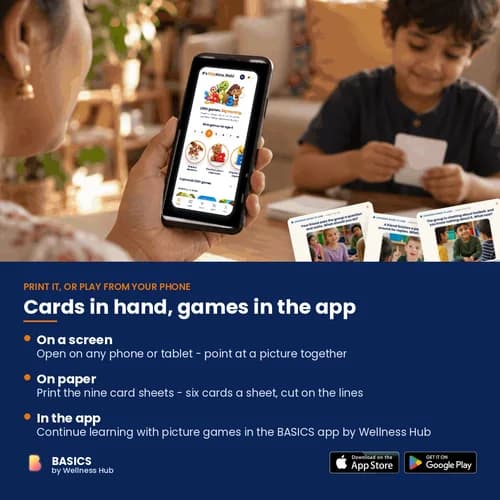
- Print the cards single- or double-sided, or open on a tablet or computer.
- Laminate for durability if using in groups or therapy.
- Use color-coded paddles for easy sorting and visual support.
Step 2: Introduce the Deck and Sample Card
- Show the labelled sample card to explain how each scenario works.
- Discuss the four move types, including reading the turn.
- Demonstrate how to choose between paddle A and B.
Step 3: Model a Turn-Taking Scenario
- Act out a card with the child, modeling both correct and tempting moves.
- Highlight listening signs as you demonstrate each option.
- Encourage the child to observe and describe what happens.
Step 4: Practice Choosing the Right Move
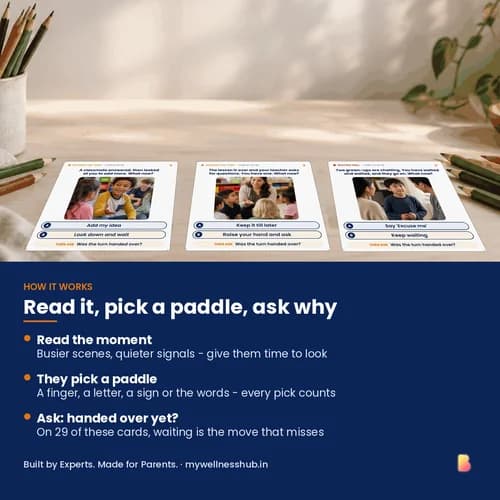
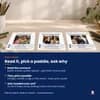
- Let the child read the moment and pick a paddle for their answer.
- Ask, "Was the turn handed over?" to prompt reflection.
- lsi_terms[0] is reinforced as children decide when to wait or respond.
Step 5: Check Answers with the Visual Key
- Use the answer key to see what each move looks like to others.
- Discuss why one move is the turn-taking choice and the other a common mistake.
- lsi_terms[2] comes into play as children compare outcomes.
Step 6: Play Games and Track Progress
- Try included games like The Handover and Three Seconds for variety.
- Use the practice log and certificate to celebrate skill growth.
- Encourage everyday carryover by spotting tricky moments outside practice.
Activities Using the Resource
1. Reading the Turn Photo Card Game
Objective: To help children use the primary_keyword to decide when a conversational turn is truly theirs.
How to Play:
- Present a photo card and read the scenario aloud.
- Child examines the image for clues about reading the turn.
- They select paddle A or B, then explain their choice.
Skill Development:
- Improves interpretation of subtle social cues.
- Strengthens decision-making in conversation flow.
- Builds confidence in group dialogue.
2. Listening Signs Charades
Objective: To practice recognizing and demonstrating listening signs in real-life situations.
How to Play:
- Show a card featuring listening signs in action.
- Child acts out the sign (e.g., nodding, looking, holding up a paddle).
- Others guess which listening sign is being shown.
Skill Development:
- Expands nonverbal communication skills.
- Encourages observation of peer behaviors.
- Reinforces expressive and receptive language.
3. Knowing When to Join Role Play
Objective: To support children in identifying the right moment to join a conversation using the primary_keyword.
How to Play:
- Set up a scenario from the cards where joining is tricky.
- Child decides when to use their say-it card or paddle.
- Discuss what cues signaled the right timing.
Skill Development:
- Enhances group participation strategies.
- Teaches self-monitoring in social settings.
- Promotes flexible turn-taking.
4. Turn-Taking Mistake Fixer
Objective: To build skills in mending an interruption or missed turn using real-life photo scenarios.
How to Play:
- Present a card where a tempting mistake is made.
- Child practices using a say-it card to repair the moment.
- Role-play both the mistake and the repair.
Skill Development:
- Develops self-correction techniques.
- Fosters resilience after social errors.
- Increases comfort with conversational repair.
5. Waiting Well Challenge
Objective: To strengthen patience and self-control during ambiguous conversational pauses.
How to Play:
- Select a Waiting Well card from the deck.
- Child holds up the correct paddle and waits for a signal to proceed.
- Reflect on how waiting felt and what signs showed it was time to speak.
Skill Development:
- Builds impulse control in conversation.
- Reinforces patience in social exchanges.
- Encourages mindful listening.
6. Group Answer Round Robin
Objective: To practice answering questions asked of a group and giving a turn back appropriately.
How to Play:
- Use a card where a question is posed to everyone.
- Each child takes a turn responding, then passes the turn with a say-it card.
- Discuss how the turn moved and what made it fair.
Skill Development:
- Promotes fair sharing of speaking time.
- Strengthens group communication routines.
- Encourages awareness of conversational equity.
Frequently Asked Questions
Q1: What age group or developmental stage is Whose Turn? Trickier Moments best for?
A1: This resource is designed for elementary-aged children and up who are ready for advanced turn-taking skills. It specifically targets those who have mastered basic waiting and now need to handle more subtle conversational cues. Children practicing reading the turn in group or adult conversations will benefit most.
Q2: Can these photo cards be used for group social skills sessions?
A2: Yes, these cards are ideal for group work in classrooms or therapy groups. The scenarios encourage discussion, peer modeling, and collaborative decision-making. For best results, use the paddles and say-it cards to let each child participate in reading the turn.
Q3: Are these cards suitable for speech therapy with children who use AAC?
A3: Absolutely. The resource offers full AAC parity, allowing children to point, sign, or tap their paddle choice as a complete answer. This ensures equal participation for AAC users and supports a wide range of communication styles.
Q4: How should I print and prepare the cards for repeated use?
A4: Print single- or double-sided on sturdy paper and laminate for durability. Laminated cards withstand frequent handling in therapy or classroom settings. Store the paddles and say-it cards together for easy access during sessions.
Q5: Does this resource support children with autism or those who struggle with social cues?
A5: Yes, it is specifically designed for children with autism, speech delay, or challenges in reading subtle social signals. The real-life photographs and color-coded paddles provide clear visual supports. You can scaffold learning by modeling moves and gradually increasing independence.
Q6: Can I use this PDF on a tablet or computer without printing?
A6: Yes, the PDF is screen-ready and works well on tablets, computers, or interactive whiteboards. Children can point to or verbally indicate their paddle choice during digital sessions. This makes it convenient for teletherapy or blended learning environments.
Q7: What specific conversation skills and learning goals does this resource target?
A7: The cards focus on reading the turn, listening signs, and knowing when to join or wait in conversation. Children practice giving a turn back, answering group questions, and repairing interruptions. These skills build social awareness and flexible communication in real-life situations.
Q8: What are the licensing and usage rights for Whose Turn? Trickier Moments?
A8: Purchase includes a single-user license for individual, classroom, or therapy use. You may print or display the PDF for your own sessions but not share it outside your organization. For multi-site or commercial use, contact Wellness Hub for extended licensing options.
Q9: How do I receive and download my digital PDF after purchase?
A9: After purchase, you will receive an instant download link via email from Wellness Hub. The PDF can be saved to your device for immediate use. If you encounter issues, customer support is available to assist with access.
Q10: What is Wellness Hub's refund or exchange policy for digital resources?
A10: Wellness Hub offers refunds or exchanges for digital resources if you experience technical problems that cannot be resolved. Contact support within 14 days of purchase with your order details. They are committed to ensuring customer satisfaction with every resource.
Usage Rights and Restrictions
Allowed Usage:
- Personal use by parents, teachers, and therapists.
- Printable for classroom, home, or therapy settings.
- Can be used in group or one-on-one learning sessions.
Not Allowed:
- Reselling, redistributing, or modifying the resource for commercial use.
- Sharing publicly (e.g., on blogs, social media, or websites) without permission.
- Uploading the file to public sharing platforms.
If you need a bulk license for schools or therapy centers, please contact us.
Conclusion
Whose Turn? Trickier Moments: Turn-Taking Photo Cards PDF empowers children to master the subtle art of conversation timing, supporting those who are ready for more advanced social skills. Designed for learners who have moved beyond basic waiting, it helps children navigate complex group interactions and become more confident communicators.
Through focused practice with reading the turn and knowing when to join, children build essential skills for home, classroom, and therapy settings. The resource encourages flexible thinking and self-awareness, making it especially valuable for children who communicate using AAC or who need extra support with social cues.
Download Whose Turn? Trickier Moments: Turn-Taking Photo Cards PDF today and help your child or students build real-world confidence in conversation timing and social participation.