

Whose Is It Cards — 43 Printable Possessive Pronoun Flashcards for His, Her, Their, My and Your
₹80
₹160
You save ₹80
4.8 (36 ratings)
Grade Levels
Pre-K – Kindergarten (Ages 4–6)
Content Overview
Format: PDF | Pages: 19 | Features: 43 picture cards for possessive pronouns, owner identification, and sentence practice
Categories
Share


About the Product
Introduction
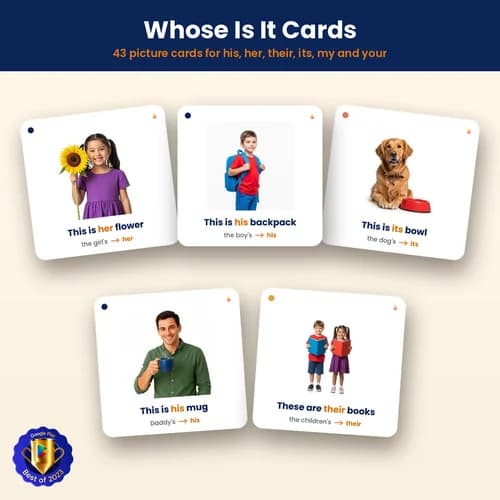
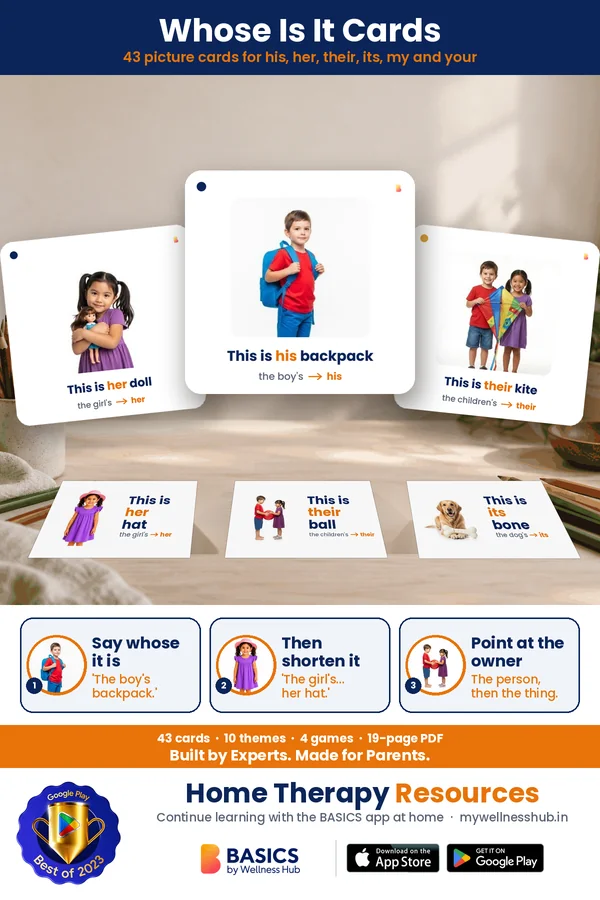
The Possessive Pronouns Picture Cards PDF is a 19-page digital resource designed to help children master owner words like his, her, their, its, my, and your. Created for young learners—including those with speech delay, autism, or who use AAC—these 43 illustrated cards make learning whose things belong to whom clear and engaging. Each card features a vivid image, a color-coded sentence, and a helpful swap line to show the connection between the owner and the object.
Children practice skills such as his versus her and understanding one owner versus two by using the cards in structured activities and games. The method encourages saying whose it is the long way before switching to the short way, supporting the transition from phrases like the boy's ball to his ball. This approach helps children build confidence and accuracy with possessive pronouns in real-life situations.
Families, teachers, and therapists can use these cards in a variety of settings, including home, classroom, and therapy sessions. The resource supports interactive play, group activities, and individual practice, making it a flexible tool for reinforcing possessive pronouns and owner identification.
Product Details
- Resource Name: Possessive Pronouns Picture Cards PDF
- Format: Printable and screen-ready PDF
- Total Pages: 19
- Grade Level: Pre-K, Kindergarten, Early Elementary
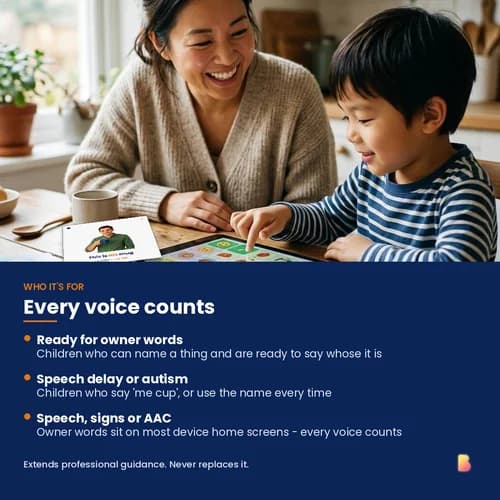
- Designed For: Children developing possessive pronouns, including those with speech delay, autism, or using AAC
- Printing Notes: Suitable for color or black-and-white printing; cards can be laminated for durability
- Best Used In: Home, classroom, speech therapy, and special education settings
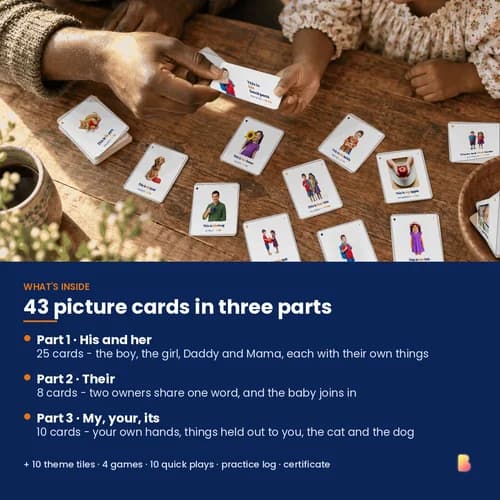
- Sets / Flashcards / Activities: 43 picture cards, 10 theme tiles, 4 games, 10 play ideas, practice log, certificate
- Visuals / Illustrations: Colorful photographs and clear illustrations showing owners and their things
Educational Benefits
1. Possessive Pronoun Mastery
- Children learn to accurately use possessive pronouns in context.
- Practice with his, her, their, its, my, and your builds foundational grammar skills.
- The primary_keyword supports confident owner identification in daily language.
2. Owner and Object Association
- Visual cues link each owner to their belongings, reinforcing understanding.
- Children point to the owner and the object, strengthening association.
- This approach aids those who benefit from concrete, visual learning.
3. One vs. Multiple Owners Recognition
- Activities highlight the difference between single and plural ownership.
- Children sort and compare cards to distinguish one owner (his, her) from two (their).
- This skill is essential for clear, precise communication.
4. AAC and Sign Language Inclusion
- Resource ensures full AAC parity for children using alternative communication.
- Cards and games are accessible for those who sign or use speech devices.
- Inclusive design supports every learner's expressive language development.
5. Real-Life Language Transfer
- Practice with these cards prepares children for real-world conversations.
- Carryover activities encourage use of possessive pronouns beyond the lesson.
- Children gain independence and clarity in daily communication.
Instructions for Use
Step 1: Print and Prepare the Cards
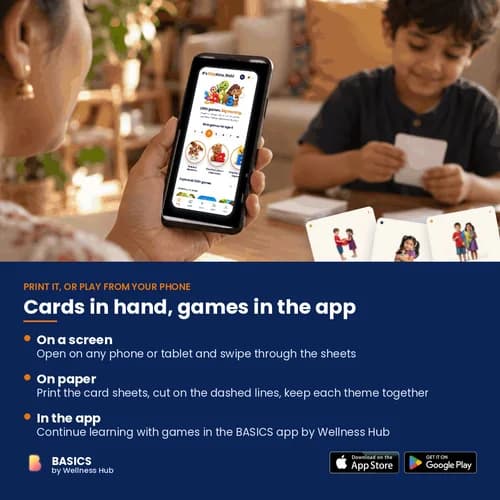
- Print the PDF single-sided on sturdy paper or cardstock.
- Cut out each picture card and theme tile along the lines.
- Laminate for durability and easy cleaning.
Step 2: Introduce Possessive Pronouns
- Present a small set of cards, focusing on one owner word like his or her.
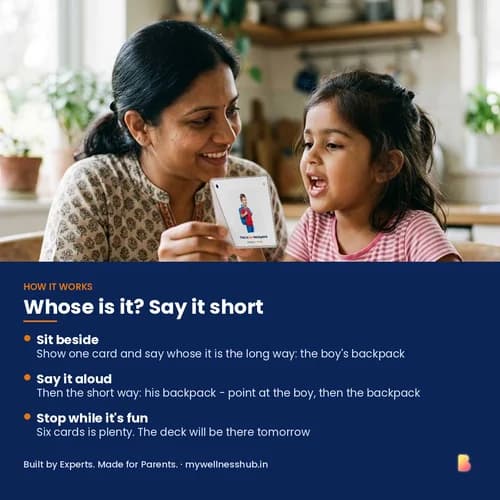
- Model the long way (the boy's ball) before the short way (his ball).
- Use clear pointing to connect owner and object.
Step 3: Play the "Sort by Owner" Game
- Mix cards from different themes and spread them out.
- Ask the child to group cards by owner, such as all their things together.
- Sorting helps reinforce the concept of one versus two owners.
Step 4: Practice "Long Way, Short Way" Sentences
- Encourage the child to say the full phrase, then the pronoun version.
- For example, "the girl's doll… her doll" for language flexibility.
- lsi_terms[0] is naturally reinforced in this step.
Step 5: Engage with AAC or Signs
- Invite children using AAC or sign language to select and express owner words.
- Provide time for device use or signing to ensure full participation.
- lsi_terms[2] fits seamlessly here for inclusive learning.
Step 6: Track Progress and Celebrate Success
- Use the practice log to note achievements and challenges.
- Display the certificate when a child masters owner words.
- Review "say-it-all-day" ideas for daily language carryover.
Activities Using the Resource
1. Sorting Cards by Owner Word
Objective: To build recognition of possessive pronouns by grouping cards with the same owner word.
How to Play:
- Lay out a mix of cards showing his, her, their, its, my, and your.
- Ask the child to sort cards into piles by owner word (e.g., all his together).
- Discuss each group, pointing to the owner and object for clarity.
Skill Development:
- Improves sorting and categorization skills.
- Reinforces visual discrimination of owner words.
- Builds confidence in possessive pronoun use.
2. Long Way to Short Way Sentence Practice
Objective: To help children transition from full ownership phrases to the primary_keyword in natural speech.
How to Play:
- Show a card with both the long way and short way lines.
- Read aloud: "The boy's backpack… his backpack."
- Encourage the child to repeat both versions, pointing to the owner and object.
Skill Development:
- Strengthens sentence structure awareness.
- Supports auditory memory for language patterns.
- Builds flexibility in spoken grammar.
3. Owner Identification Game with Pointing
Objective: To develop the ability to match owners to their belongings using possessive pronouns.
How to Play:
- Present a card and ask, "Whose is this?"
- Child points to the owner in the picture, then the object.
- Child says the owner word (e.g., her, their) in a full sentence.
Skill Development:
- Enhances owner-object association.
- Encourages expressive language.
- Practices turn-taking and attention.
4. AAC Device or Sign Language Expression
Objective: To support children using AAC or sign language in expressing the primary_keyword accurately.
How to Play:
- Show a card and model the possessive pronoun on an AAC device or with a sign.
- Invite the child to select or sign the matching owner word.
- Reinforce by repeating the sentence together.
Skill Development:
- Promotes inclusive communication.
- Builds symbol-to-word connection.
- Increases expressive vocabulary.
5. My and Your Perspective-Taking Activity
Objective: To teach children to distinguish between my and your using point-of-view cards.
How to Play:
- Show a "my" card (from the child's view) and a "your" card (object held out).
- Ask, "Whose is this?" and discuss how the answer changes with perspective.
- Practice switching roles and repeating sentences.
Skill Development:
- Develops perspective-taking.
- Clarifies pronoun use in conversation.
- Strengthens self-other awareness.
6. Real-Life Object Hunt with Owner Words
Objective: To transfer possessive pronoun skills from cards to real objects in the environment.
How to Play:
- Hide familiar items around the room (e.g., your ball, my apple).
- Give clues using owner words and have the child find and name each object.
- Child uses a sentence with the correct possessive pronoun for each find.
Skill Development:
- Applies language to real-world settings.
- Boosts listening and comprehension.
- Encourages active participation and recall.
Frequently Asked Questions
Q1: What age group is best for the Possessive Pronouns Picture Cards PDF?
A1: The Possessive Pronouns Picture Cards PDF is designed for children ages 3 to 8, including preschoolers and early elementary students. The cards use clear visuals and simple sentences to support young learners developing owner word skills. Children with speech delay, autism, or those using AAC also benefit from the accessible format.
Q2: Can I use these cards for group activities in a classroom?
A2: Yes, these cards are suitable for small groups or whole-class activities. Teachers can use games like "Sort by Owner" and "Whose Is It?" to encourage participation and discussion. Group use helps reinforce possessive pronouns through peer modeling and interactive play.
Q3: Are these cards appropriate for speech therapy sessions?
A3: Absolutely, speech therapists use these cards to target possessive pronouns and owner identification. The resource supports structured practice, visual cues, and repetition for children with speech or language delays. Therapists can adapt activities for individual or group goals.
Q4: What is the best way to print and prepare the cards for repeated use?
A4: Print the cards on thick paper or cardstock for durability and laminate them to withstand frequent handling. Laminated cards are easy to clean and can be used with dry-erase markers for extra activities. Cut out each card and theme tile along the lines for organized storage.
Q5: How does this resource support children with special needs or AAC users?
A5: The visual layout, color-coded sentences, and swap lines make owner words clear for all learners, including those with special needs. Full AAC parity ensures children using speech devices or sign language can participate equally. You can model responses on devices or with signs and allow extra response time.
Q6: Can I use the Possessive Pronouns Picture Cards PDF on a tablet or computer without printing?
A6: Yes, the PDF is screen-ready for use on tablets, computers, or interactive whiteboards. Display cards digitally for group modeling, remote learning, or teletherapy sessions. Children can point, name, or use AAC devices while viewing the cards on-screen.
Q7: What specific skills and learning goals do these cards target?
A7: The cards build mastery of possessive pronouns, owner identification, and the difference between one and two owners. Children learn to use words like his, her, their, its, my, and your in real sentences. The resource also supports perspective-taking and flexible sentence building.
Q8: What are the licensing and usage rights for this PDF resource?
A8: Your purchase grants a single-user license for personal, classroom, or therapy use. You may print or display the PDF for your own students or clients but may not share or resell it. For multi-user or school-wide licenses, contact Wellness Hub for options.
Q9: How do I download and access the Possessive Pronouns Picture Cards PDF after purchase?
A9: After purchase, you receive an instant download link via email and on your Wellness Hub account page. The PDF is compatible with all major devices and easy to save or print. If you have trouble accessing your file, Wellness Hub customer support can help.
Q10: What is Wellness Hub's refund or exchange policy for digital resources?
A10: Wellness Hub offers refunds or exchanges for digital resources if you experience technical issues or receive the wrong product. Contact support within 7 days of purchase with your order details. Please note that refunds are not provided for change of mind after download.
Usage Rights and Restrictions
Allowed Usage:
- Personal use by parents, teachers, and therapists.
- Printable for classroom, home, or therapy settings.
- Can be used in group or one-on-one learning sessions.
Not Allowed:
- Reselling, redistributing, or modifying the resource for commercial use.
- Sharing publicly (e.g., on blogs, social media, or websites) without permission.
- Uploading the file to public sharing platforms.
If you need a bulk license for schools or therapy centers, please contact us.
Conclusion
Possessive Pronouns Picture Cards PDF gives children a clear, visual path to mastering owner words in daily language. Designed for learners ages 3 to 8—including those with speech delay, autism, or who use AAC—it supports confident use of his, her, their, its, my, and your through real-life images and simple, color-coded sentences.
Children build strong owner identification skills and learn to distinguish between one and two owners while practicing in home, classroom, or therapy settings. The resource also develops perspective-taking, helping kids understand the difference between my and your in conversation.
Start building essential language skills—download the Possessive Pronouns Picture Cards PDF today and empower your child to use owner words with confidence and clarity.