

What Do I Do? Thinking It Through — 25 Printable Fold-and-Reveal Social Situation Flip Cards, Medium to Hard
₹80
₹160
You save ₹80
5 (55 ratings)
Grade Levels
Grade 1 – Grade 4 (Ages 6–10)
Content Overview
Format: PDF | Pages: 24 | Features: 25 fold-and-reveal cards, real photos, social skills, problem solving, self-regulation
Categories
Share


About the Product
Introduction
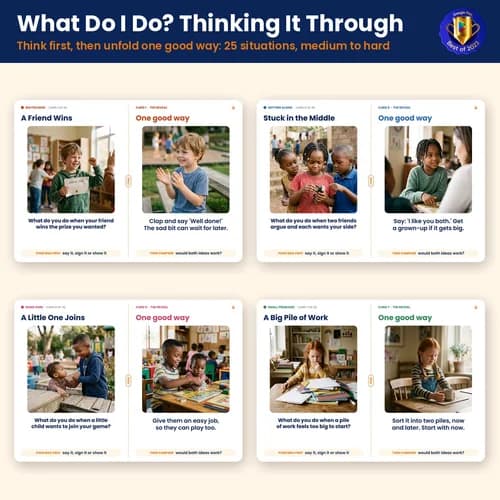
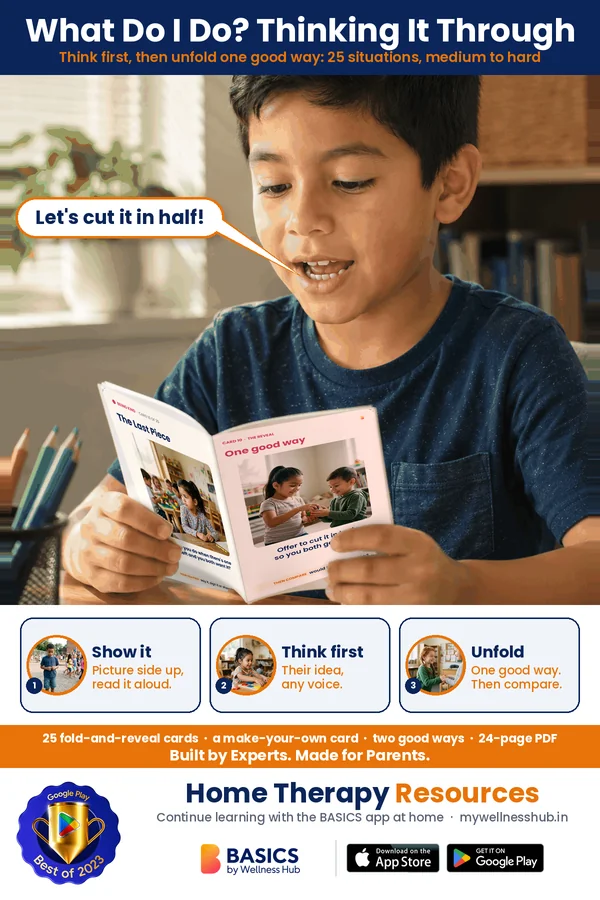
The What Do I Do? Deck 3: Tricky Situations Fold-and-Reveal Cards PDF is a 24-page digital resource created for children aged 7–12 who need extra support with social problem-solving. Each card presents a real-life scenario with a photo and a question, then folds to reveal one good way to respond—always after the child shares their own idea. This interactive format encourages children to think first, compare responses, and build confidence in handling busier places and trickier feelings.
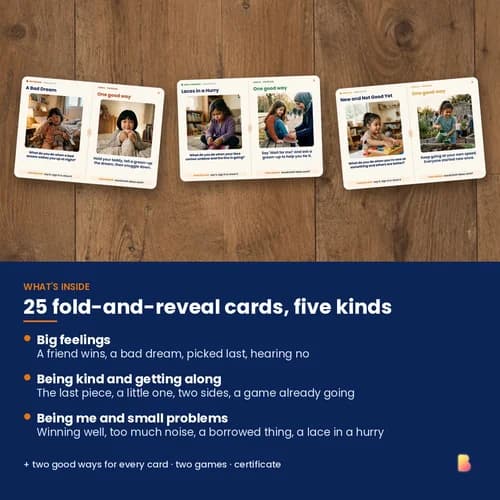
Children practice thinking before acting, generating a plan, and handling disappointment as they work through five types of situations: Big Feelings, Being Kind, Getting Along, Being Me, and Small Problems. The cards offer measurable outcomes like improved self-regulation, better social comparison skills, and increased independence in social settings. Every scenario is designed to help children develop flexible thinking and positive peer interactions.
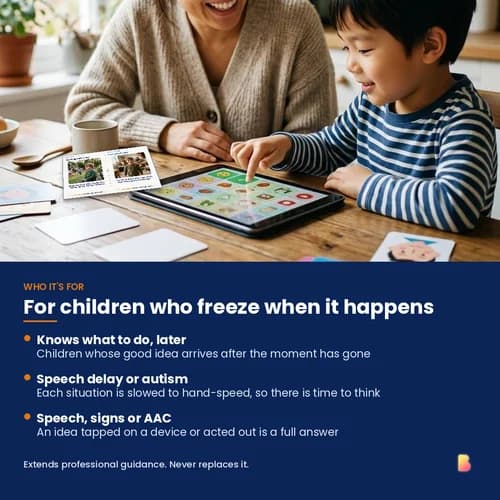
Perfect for home, classroom, and therapy use, these cards support children with speech delay, autism, or those using AAC. The fold-and-reveal method makes it easy to use in group lessons, one-on-one therapy, or family discussions. The format encourages everyone to join in, whether communicating by speech, sign, or device.
Product Details
- Resource Name: What Do I Do? Deck 3: Tricky Situations Fold-and-Reveal Cards PDF
- Format: Printable and screen-ready PDF
- Total Pages: 24
- Grade Level: 2–6 (Ages 7–12)
- Designed For: Social skills practice, speech therapy, special education, home learning
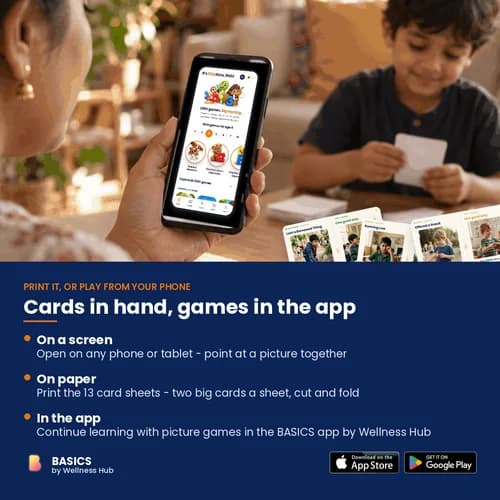
- Printing Notes: Print single-sided, cut and fold for interactive use
- Best Used In: Home, classroom, therapy sessions
- Sets / Flashcards / Activities: 25 fold-and-reveal cards, 1 make-your-own card, 2 bonus games
- Visuals / Illustrations: Real-life photos on every card, labeled sample card, visual instructions
Educational Benefits
1. Builds Social Problem-Solving Skills
- Children learn to analyze tricky situations and generate their own solutions first.
- The fold-and-reveal format encourages independent thinking before seeing an example.
- Practicing with real scenarios boosts confidence in social decision-making.
2. Strengthens Flexible Thinking
- Each card presents new challenges requiring children to adapt their responses.
- Comparing their idea with "one good way" models flexible, open-minded problem-solving.
- This process helps children handle unexpected changes in social settings.
3. Enhances Self-Regulation and Emotional Control
- Children practice thinking before acting, especially in moments of disappointment or frustration.
- They learn to pause, consider options, and respond calmly to big feelings.
- This skill supports better behavior and emotional balance in group environments.
4. Supports Communication for All Learners
- The resource is fully accessible for children using speech, signs, or AAC devices.
- Children with speech delay or autism can participate equally and express their ideas.
- The cards promote inclusion and communication growth for diverse learners.
5. Encourages Positive Peer Interactions
- By working through the primary_keyword, children learn kindness, honesty, and empathy.
- They practice being a good winner, handling disagreements, and helping others.
- These skills foster stronger friendships and smoother group dynamics.
Instructions for Use
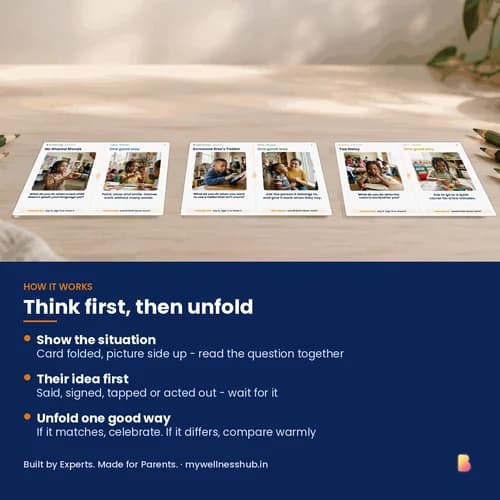
Step 1: Print and Prepare the Cards
- Download the PDF and print single-sided on A4 or Letter paper.
- Cut each card along the dotted line, then fold to hide the answer side.
- Laminate for durability if using in groups or therapy.
Step 2: Introduce the Situation Card
- Show the situation side with photo and question to the child or group.
- Read the scenario aloud or let the child read it independently.
- Encourage them to think about what they might do in that situation.
Step 3: Prompt for the Child's Idea
- Ask the child to share, sign, or use AAC to give their own response.
- Wait for their idea before unfolding the card to reveal the example.
- Praise all attempts—every idea is valued in this activity.
Step 4: Reveal and Compare the Good Way
- Unfold the card to show the suggested response and its photo.
- Discuss how their idea and the card's idea are similar or different.
- Use this step to naturally introduce the skill of comparing solutions.
Step 5: Explore Additional Solutions
- Refer to the Two Good Ways page to discuss a second possible response.
- Encourage children to brainstorm even more ways to handle the situation.
- This step supports generating a plan and flexible thinking.
Step 6: Extend with Games and Reflection
- Play included games like Situation Theatre for extra practice with social skills.
- Use the practice log or Good Ideas Pile to track progress and celebrate growth.
- Regular use helps children apply these skills in real-life situations.
Activities Using the Resource
1. Social Situation Card Discussion
Objective: To practice thinking before acting in social situations using the What Do I Do? Deck 3: Tricky Situations Fold-and-Reveal Cards PDF.
How to Play:
- Present a situation card (e.g., Big Feelings or Being Kind) with the photo and question visible.
- Ask the child to share, sign, or use AAC to express their idea before revealing the suggested response.
- Unfold the card, compare the child's idea with the good way, and discuss similarities or differences.
Skill Development:
- Builds social problem-solving and independent response generation.
- Reinforces self-regulation and emotional control.
- Improves comparison and flexible thinking skills.
2. Two Good Ways Brainstorm
Objective: To generate multiple solutions for one social scenario, promoting flexible thinking.
How to Play:
- After discussing the first good way, turn to the Two Good Ways page for a second suggestion.
- Encourage the child to think of a third or fourth possible response for the same situation.
- Write or draw all ideas, then talk about which might work best and why.
Skill Development:
- Expands creative problem-solving and idea generation.
- Encourages open-mindedness in social settings.
- Strengthens evaluation and decision-making skills.
3. Situation Sorting Game
Objective: To categorize situations by type (e.g., Big Feelings, Being Me, Small Problems) and build sorting skills.
How to Play:
- Mix up several cards from the deck.
- Ask the child to sort them into groups based on the situation type using the visual labels or photos.
- Discuss what makes each group similar or different.
Skill Development:
- Develops classification and sorting abilities.
- Increases awareness of different social challenges.
- Enhances visual discrimination and attention to detail.
4. Role-Play with Props
Objective: To act out tricky situations using real-life objects, supporting generalization of social skills.
How to Play:
- Choose a card (e.g., Getting Along or Being Kind) and gather simple props (toy, cup, paper).
- Take turns acting out the scenario and possible responses, using speech, signs, or AAC.
- Reflect on how it felt and what worked well.
Skill Development:
- Improves expressive communication and social participation.
- Builds confidence in handling real-world situations.
- Reinforces understanding of social cues and routines.
5. Good Ideas Pile Challenge
Objective: To collect and review positive responses for various situations, reinforcing recall and self-reflection.
How to Play:
- After each card, write or draw the child's idea and the card's good way on slips of paper.
- Add these to the Good Ideas Pile for future reference.
- At the end of the week, review the pile and celebrate creative or thoughtful solutions.
Skill Development:
- Strengthens memory and retrieval of social strategies.
- Promotes self-reflection and pride in progress.
- Supports ongoing skill reinforcement and growth.
6. Situation Theatre Group Game
Objective: To practice group participation and perspective-taking using the What Do I Do? Deck 3: Tricky Situations Fold-and-Reveal Cards PDF.
How to Play:
- In a small group, select a card and assign roles for each child to act out the scenario.
- Each child offers a possible response before revealing the card's suggestion.
- Discuss how different ideas might work in real life and why.
Skill Development:
- Fosters teamwork and turn-taking skills.
- Encourages empathy and understanding of others' perspectives.
- Enhances group communication and social confidence.
Frequently Asked Questions
Q1: What age range is best for the What Do I Do? Deck 3: Tricky Situations Fold-and-Reveal Cards PDF?
A1: This resource is designed for children ages 7–12, typically grades 2–6. The scenarios and language are appropriate for tweens navigating more complex social situations. Younger or older children may also benefit with adult guidance.
Q2: Can I use these fold-and-reveal cards with a small group in my classroom?
A2: Yes, these cards work well for small group activities and social skills lessons. The interactive format encourages every child to share their idea before seeing the suggested response. Try rotating roles so each child gets a turn to reveal and compare.
Q3: Are these cards suitable for speech therapy sessions, especially for children with autism?
A3: Absolutely, these cards are ideal for speech therapy and support children with autism or speech delays. The visual cues and step-by-step prompts help children practice expressing ideas, using AAC, or signing. Therapists can use the cards to model, prompt, and reinforce flexible thinking.
Q4: What is the best way to print and prepare the fold-and-reveal cards for repeated use?
A4: Print single-sided on A4 or Letter paper, then cut and fold each card as directed. Laminating the cards adds durability for classroom or therapy use. Store them in a labeled envelope or binder for easy access.
Q5: How does this resource support children with special needs or those using AAC?
A5: The cards are fully accessible for children using speech, signs, or AAC devices. Each activity values all forms of communication and encourages participation at any level. Adults can model responses and accept ideas tapped, signed, or spoken.
Q6: Can I use the PDF on a tablet or computer without printing?
A6: Yes, the PDF is screen-ready for use on tablets, computers, or interactive whiteboards. Children can view the situation, discuss their ideas, and then scroll or tap to reveal the good way. This digital option is helpful for teletherapy or remote learning.
Q7: What specific social skills and learning goals do these cards target?
A7: The primary_keyword helps children practice thinking before acting, comparing solutions, and handling disappointment. Skills include flexible thinking, self-regulation, honesty, kindness, and getting along in busy or tricky situations. Regular use builds independence and confidence in real-life social settings.
Q8: What are the licensing and usage rights for this PDF resource?
A8: Purchase includes a single-user license for personal, classroom, or therapy use. Sharing, posting, or redistributing the file beyond your immediate setting is not permitted. For team or school-wide licensing, please contact Wellness Hub directly.
Q9: How do I receive and download my What Do I Do? Deck 3: Tricky Situations Fold-and-Reveal Cards PDF?
A9: After purchase, you receive an instant download link via email from Wellness Hub. The PDF is ready for immediate use on any device. Save a backup copy for future access.
Q10: What is Wellness Hub's refund or exchange policy for digital resources?
A10: Wellness Hub does not offer refunds or exchanges on digital downloads once delivered. If you experience technical issues or receive the wrong file, contact support for prompt assistance. They are committed to ensuring you have a positive experience with every resource.
Usage Rights and Restrictions
Allowed Usage:
- Personal use by parents, teachers, and therapists.
- Printable for classroom, home, or therapy settings.
- Can be used in group or one-on-one learning sessions.
Not Allowed:
- Reselling, redistributing, or modifying the resource for commercial use.
- Sharing publicly (e.g., on blogs, social media, or websites) without permission.
- Uploading the file to public sharing platforms.
If you need a bulk license for schools or therapy centers, please contact us.
Conclusion
The What Do I Do? Deck 3: Tricky Situations Fold-and-Reveal Cards PDF empowers children to handle complex social moments with greater confidence and independence. Designed for ages 7–12, it supports those who need extra practice with social problem-solving, including children who use AAC or communicate in nontraditional ways. Its interactive format ensures every child's idea is valued before any example is revealed.
Through repeated use, children develop flexible thinking and learn to compare different responses in real time. The cards foster self-regulation and encourage honesty as children navigate busier places and trickier feelings, making them a valuable tool for home, classroom, and therapy settings.
Bring the What Do I Do? Deck 3: Tricky Situations Fold-and-Reveal Cards PDF into your learning environment today to help children build stronger social skills, practice honesty, and approach everyday challenges with thoughtful solutions.