



What Do I Do? The Big Situations — 25 Printable Fold-and-Reveal Social Situation Flip Cards, Hard Level
₹80
₹160
You save ₹80
4.9 (56 ratings)
Grade Levels
Grade 3 – Grade 4 (Ages 8–11)
Content Overview
Format: PDF | Pages: 24 | Features: 25 fold-and-reveal cards for big feelings and problem solving
Categories
Share


About the Product
Introduction
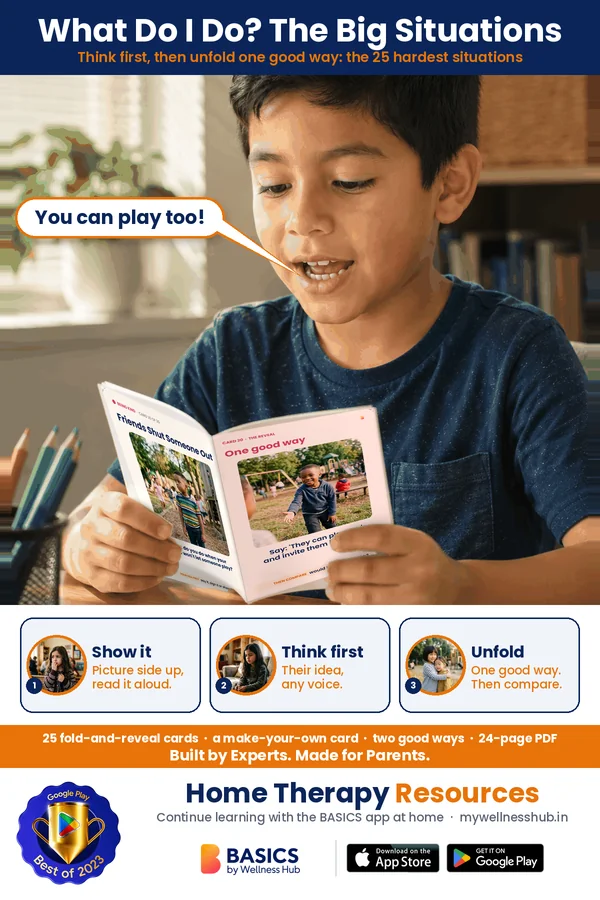
The What Do I Do? Social Situation Cards – Hard Level PDF is a 24-page printable and screen-ready resource designed for children ready to tackle complex social challenges. This deck features 25 fold-and-reveal cards, each presenting a real-life situation with a photo and a thought-provoking question. Perfect for children who have mastered basic social scenarios, these cards encourage deeper thinking and self-expression before revealing a positive response.
Learners practice skills like comparing two ideas and repairing a friendship, supporting growth in emotional regulation and social problem-solving. Each card prompts children to think before acting, generate their own plan, and handle big feelings or changes. The resource fosters honest kindness, coping with disappointment, and standing up for others, making it ideal for building independence and confidence in social settings.
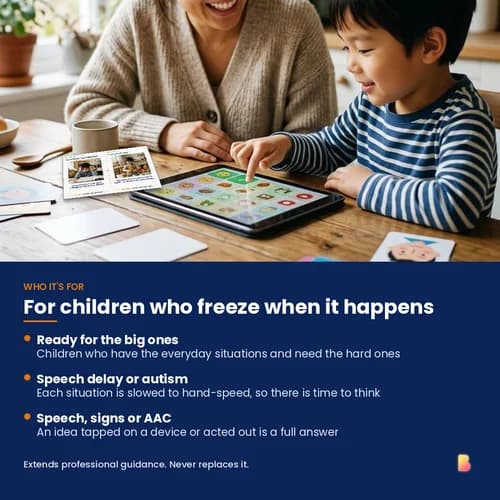
Families, educators, and therapists can use these cards in a variety of settings, including home, classroom, and therapy sessions. The fold-and-reveal format supports children who communicate verbally, with signs, or AAC, and is especially helpful for those navigating autism or speech delays. Use the cards for group discussions, individual practice, or as part of a structured social communication program.
Product Details
- Resource Name: What Do I Do? Social Situation Cards – Hard Level PDF
- Format: Printable and screen-ready PDF
- Total Pages: 24
- Grade Level: Elementary and up
- Designed For: Children ready for advanced social problem-solving, including those with speech delay or autism
- Printing Notes: Print single-sided, cut and fold cards for best use
- Best Used In: Home, classroom, therapy sessions
- Sets / Flashcards / Activities: 25 fold-and-reveal situation cards, plus one make-your-own card
- Visuals / Illustrations: Real-life photos on every card, with clear situation and solution images
Educational Benefits
1. Enhances Social Problem-Solving Skills
- Promotes thinking before acting in challenging social scenarios.
- Encourages children to generate their own solutions first.
- Builds confidence in handling complex peer interactions.
2. Strengthens Emotional Regulation Strategies
- Guides children through big feelings like anger, disappointment, and anxiety.
- Supports practice of coping skills for changes and setbacks.
- Helps children recognize and manage strong emotions constructively.
3. Fosters Honest Kindness and Empathy
- Teaches ways to show genuine kindness, even when it's difficult.
- Encourages understanding others' perspectives in tough moments.
- Reinforces including others and standing up for someone being teased.
4. Develops Flexible Thinking and Comparison
- Children compare their ideas to the "one good way" on each card.
- Promotes flexible thinking by considering multiple responses.
- Supports growth in adapting plans and learning from examples.
5. Supports AAC and Diverse Communication
- Full AAC parity ensures all children can participate equally.
- Children who use signs or devices can express their ideas fully.
- The primary_keyword, What Do I Do? Social Situation Cards – Hard Level PDF, is accessible for children with speech delay or autism.
Instructions for Use
Step 1: Print and Prepare the Cards
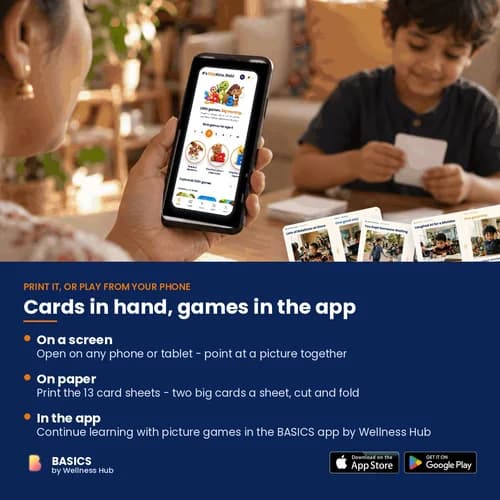
- Print the PDF single-sided on A4 or Letter paper for best results.
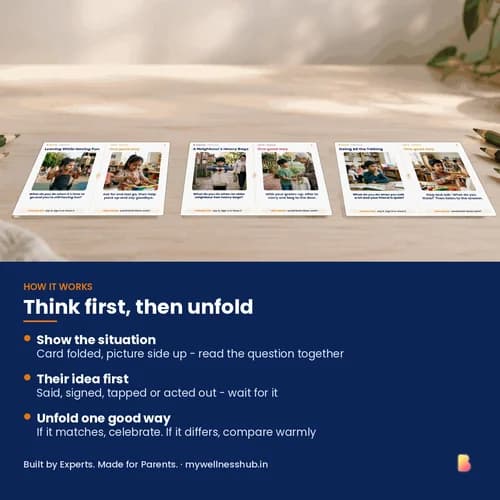
- Cut out each card along the guidelines, keeping situation and solution sides connected.
- Fold each card in half so the solution is hidden behind the situation photo.
Step 2: Introduce the Situation Prompt
- Show the child only the situation side with the photo and question.
- Read the scenario aloud or allow the child to read it independently.
- Encourage the child to think about the social problem presented.
Step 3: Invite the Child's Own Response
- Ask the child, "What would you do?" and wait for their answer.
- Accept responses given verbally, with signs, or using AAC.
- Allow time for the child to generate a plan using thinking before acting.
Step 4: Reveal and Discuss One Good Way
- Unfold the card to show the "one good way" solution and its photo.
- Compare the child's idea to the suggested response in a supportive way.
- Discuss similarities and differences, using comparing two ideas as a skill focus.
Step 5: Explore the Two Good Ways Page
- After each card, refer to the Two Good Ways page for a second solution.
- Talk about how different approaches can both be helpful.
- Encourage flexible thinking and openness to new strategies.
Step 6: Extend with Games and Everyday Carryover
- Try included games like Situation Theatre or What Would Teddy Do? for group practice.
- Use the Good Ideas Pile or practice log to track progress and celebrate success.
- Carry over skills to real-life moments, reinforcing learning beyond the cards.
Activities Using the Resource
1. Social Situation Card Sorting Game
Objective: To build flexible thinking by sorting What Do I Do? Social Situation Cards – Hard Level PDF into categories based on the type of challenge.
How to Play:
- Lay out all cards and sort into groups: big feelings, being kind, getting along, being me, small problems.
- Discuss what makes each situation fit its group.
- Invite the child to share a personal example for one card in each group.
Skill Development:
- Categorizing social scenarios for pattern recognition
- Expanding vocabulary for emotional and social concepts
- Connecting personal experience to social learning
2. Two Good Ways Comparison Activity
Objective: To compare two ideas for handling a situation and practice generating alternative solutions.
How to Play:
- Present a card and ask the child for their idea before revealing the solution.
- After unfolding, read both the child's idea and the card's "one good way."
- Use the Two Good Ways page to discuss a second possible response.
Skill Development:
- Comparing two ideas for flexible problem-solving
- Practicing respectful discussion of differences
- Building confidence in sharing personal solutions
3. Acting Out Big Feelings Scenarios
Objective: To practice expressing and managing strong emotions using realistic role-play.
How to Play:
- Select a big feelings card (e.g., so angry you want to hit).
- Role-play the situation, encouraging the child to act out both their idea and the suggested way.
- Reflect together on how each approach might feel and what could happen next.
Skill Development:
- Emotional regulation through guided practice
- Perspective-taking in emotionally charged moments
- Safe rehearsal of coping strategies
4. Stand Up for Someone Card Discussion
Objective: To develop empathy and strategies for supporting peers in challenging social moments.
How to Play:
- Choose a card about standing up for someone (e.g., friends won't let someone play).
- Ask the child what they would do, then reveal the suggested response.
- Brainstorm other ways to include or support the excluded person.
Skill Development:
- Empathy for others' feelings and needs
- Generating inclusive solutions
- Practicing social advocacy skills
5. Honest Kindness Scenario Swap
Objective: To encourage honest kindness in tricky situations by exploring different responses.
How to Play:
- Pick a being kind card (e.g., a gift you don't like).
- Invite the child to suggest a kind response before revealing the card's idea.
- Swap roles: the adult gives a scenario, and the child responds with two ways to be kind.
Skill Development:
- Practicing honest but gentle communication
- Expanding repertoire of kind responses
- Strengthening social awareness in sensitive moments
6. Good Ideas Pile Reflection Activity
Objective: To reinforce learning by collecting and reviewing successful strategies from the What Do I Do? Social Situation Cards – Hard Level PDF.
How to Play:
- After each session, write the child's idea and the card's "one good way" on slips of paper.
- Add them to a "Good Ideas Pile" for future review.
- At week's end, pick favorite ideas and discuss when to use them in daily life.
Skill Development:
- Reviewing and recalling effective social strategies
- Building a personal toolkit for real-life situations
- Encouraging metacognitive reflection on social growth
Frequently Asked Questions
Q1: What age range and developmental level are the What Do I Do? Social Situation Cards – Hard Level PDF designed for?
A1: These cards are best for children in elementary grades and up who have mastered basic social scenarios. The situations target advanced social problem-solving, emotional regulation, and flexible thinking. They are especially helpful for children ready to handle complex feelings and peer challenges.
Q2: Can I use these cards with small groups or in a classroom setting?
A2: Yes, the cards are ideal for group discussions, classroom social skills lessons, and peer practice. Each card's fold-and-reveal format encourages every child to share their idea before seeing a suggested response. Try rotating roles so each child gets a turn as the "idea leader" for different scenarios.
Q3: Are these cards appropriate for speech therapy or occupational therapy sessions?
A3: Absolutely. The resource supports therapy goals like thinking before acting and comparing two ideas, which are essential for communication and self-regulation. Therapists can use the cards for role-play, expressive language, and social problem-solving practice.
Q4: What is the best way to print, fold, and prepare these cards for repeated use?
A4: Print single-sided on sturdy A4 or Letter paper, then cut and fold each card as directed to hide the solution side. Laminating the cards before folding increases durability for frequent handling. Store finished cards in a labeled envelope or box for easy access.
Q5: How do these cards support children with autism or speech delays?
A5: The cards offer full AAC parity, allowing responses by speech, sign, or device. Visual supports and clear routines help children with diverse communication needs participate fully. Encourage children to use their preferred communication method and celebrate all contributions.
Q6: Can the cards be used digitally without printing?
A6: Yes, the PDF is screen-ready for use on tablets, computers, or interactive whiteboards. Present the situation side first, then reveal the solution digitally after the child responds. This format works well for teletherapy and remote learning.
Q7: What specific skills and learning goals do the cards address?
A7: The cards target thinking before acting, comparing two ideas, handling big feelings, honest kindness, and repairing peer relationships. They also build confidence in coping with change and standing up for others. Use the Two Good Ways page to further develop flexible thinking and solution generation.
Q8: What are the licensing and usage rights for the What Do I Do? Social Situation Cards – Hard Level PDF?
A8: Your purchase grants a single-user license for personal, classroom, or therapy use. Sharing, redistributing, or posting the file publicly is not permitted. For additional users or organizations, please contact Wellness Hub for group licensing options.
Q9: How do I receive and download my PDF resource after purchase?
A9: After checkout, you will receive an instant download link via email from Wellness Hub. The PDF can be saved to your device and printed or used digitally as needed. If you have trouble accessing your file, Wellness Hub's support team is ready to help.
Q10: What is Wellness Hub's refund or exchange policy for digital resources?
A10: Wellness Hub does not offer refunds or exchanges for digital downloads once delivered. This policy ensures the integrity of digital content and licensing. If you experience technical issues or receive the wrong file, contact support for prompt assistance.
Usage Rights and Restrictions
Allowed Usage:
- Personal use by parents, teachers, and therapists.
- Printable for classroom, home, or therapy settings.
- Can be used in group or one-on-one learning sessions.
Not Allowed:
- Reselling, redistributing, or modifying the resource for commercial use.
- Sharing publicly (e.g., on blogs, social media, or websites) without permission.
- Uploading the file to public sharing platforms.
If you need a bulk license for schools or therapy centers, please contact us.
Conclusion
What Do I Do? Social Situation Cards – Hard Level PDF empowers children to navigate life's toughest social moments with confidence and empathy. Designed for those ready to tackle advanced challenges, it encourages independent thinking, self-expression, and respectful comparison of ideas in a safe, supportive format.
By focusing on honest kindness and standing up for someone, this resource helps children build real-world skills for home, classroom, and therapy settings. Learners practice flexible responses, manage big feelings, and develop strategies for handling change and peer dynamics.
Give your child or students the tools for lifelong social success—download What Do I Do? Social Situation Cards – Hard Level PDF today and watch them grow into thoughtful, resilient communicators.