

What Do I Do? Growing Confident — 25 Printable Fold-and-Reveal Social Situation Flip Cards, Easy to Medium
₹80
₹160
You save ₹80
4.9 (32 ratings)
Grade Levels
Grade 1 – Grade 2 (Ages 6–8)
Content Overview
Format: PDF | Pages: 24 | Features: 25 fold-and-reveal cards for social skills and big feelings practice
Categories
Share


About the Product
Introduction
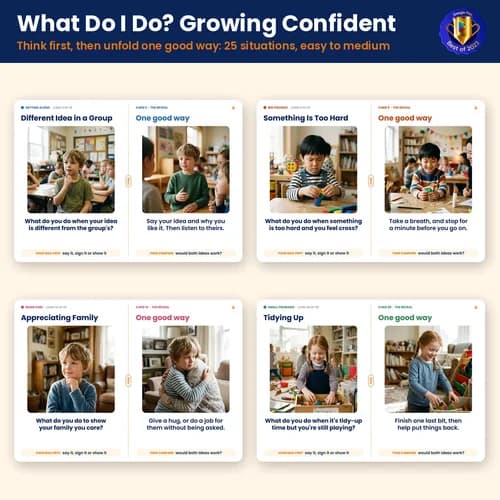
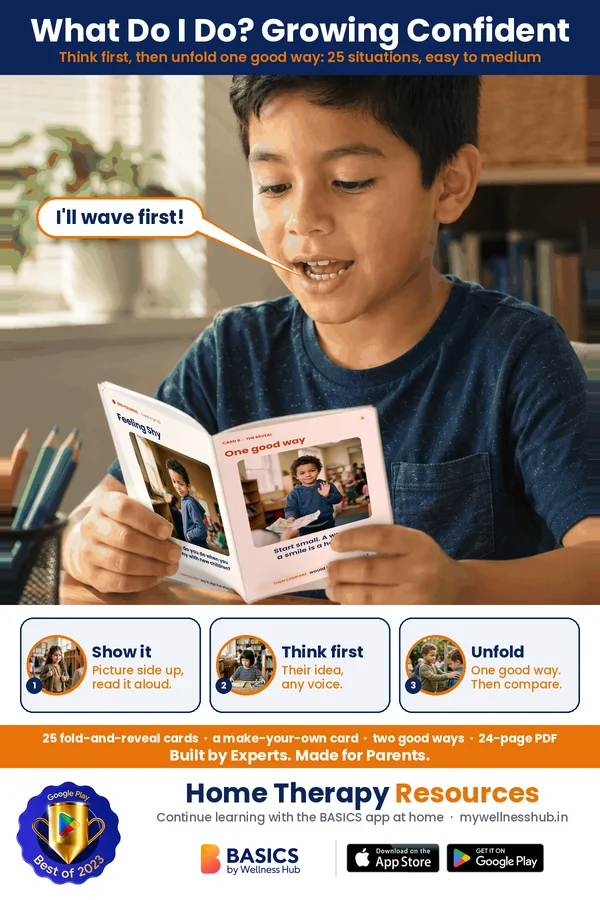
The What Do I Do? Social Situation Fold-and-Reveal Cards PDF offers a unique, interactive way for children to practice responding to real-life social scenarios with friends, feelings, and classroom challenges. This 24-page digital resource features 25 foldable cards, each presenting a photo-based situation and a single guiding question. Children are encouraged to think, say, or show their own idea first before unfolding the card to reveal one good way, making their response the priority and comparison a gentle learning step.
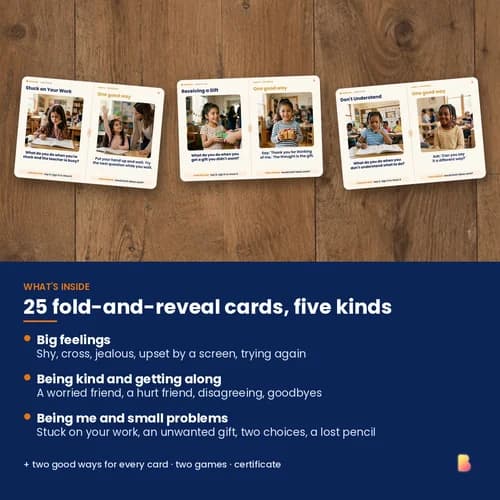
Skills like thinking before acting, generating a plan, and comparing two ideas are woven throughout the activities, supporting growth in social problem-solving. Children also practice asking for help in different ways, handling jealousy and frustration, comforting others, and showing gratitude. Each card gently guides learners to approach everyday situations with confidence and empathy, building skills that transfer into real-life interactions.
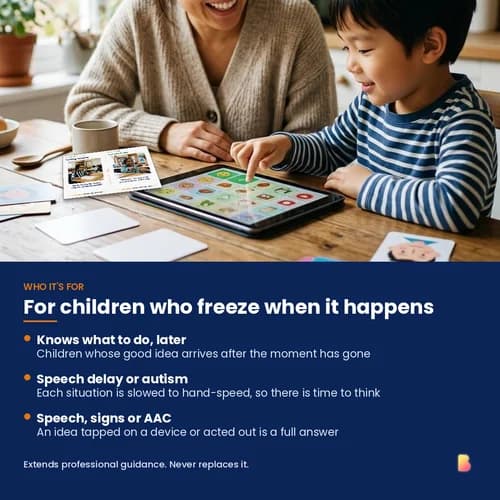
Ideal for home, classroom, and therapy settings, these cards support children who may need extra time to process social moments, including those with speech delay or autism. The fold-and-reveal method encourages participation and reflection, while the variety of situations ensures relevance across group activities, one-on-one sessions, and independent practice.
Product Details
- Resource Name: What Do I Do? Social Situation Fold-and-Reveal Cards PDF
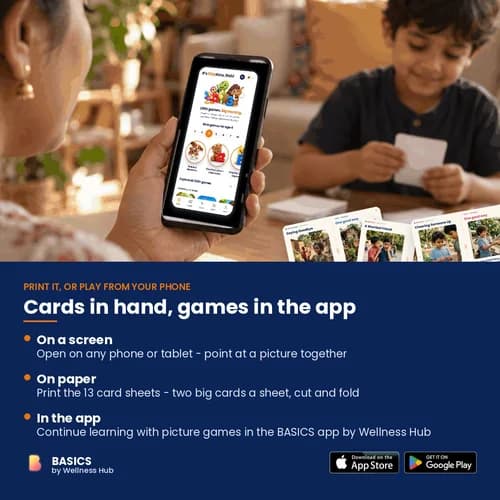
- Format: Printable and screen-ready PDF
- Total Pages: 24
- Grade Level: Elementary (ages 6–11)
- Designed For: Social skills practice, speech therapy, special education, AAC users
- Printing Notes: Print single- or double-sided, cut and fold for hands-on use; screen-friendly for digital play
- Best Used In: Home, classroom, therapy sessions
- Sets: 25 fold-and-reveal situation cards, 1 make-your-own card
- Visuals / Illustrations: Real-life photos on every card, labeled sample card, and thumbnail previews
Educational Benefits
1. Strengthens Social Problem-Solving Skills
- Children practice thinking through real-life situations before seeing suggested solutions.
- They learn to generate their own ideas and compare them to positive examples.
- This method supports independent decision-making in social settings.
2. Enhances Emotional Regulation and Coping
- Cards address big feelings like jealousy, frustration, and feeling left out.
- Learners explore ways to handle emotions constructively and calmly.
- The resource helps children recognize and manage their own emotional responses.
3. Builds Communication and Self-Expression
- Children are encouraged to say, show, or use AAC to share their ideas first.
- This supports expressive language, confidence, and alternative communication.
- The primary_keyword helps all children participate, regardless of speech ability.
4. Fosters Group Interaction and Cooperation
- Activities include scenarios about getting along, group disagreements, and teamwork.
- Children practice listening, taking turns, and respecting different perspectives.
- Comparing ideas encourages respectful discussion and collaboration.
5. Supports Flexible Thinking and Adaptability
- Each situation card offers more than one possible good way to respond.
- Children learn there are multiple solutions to social challenges.
- Comparing their idea with the card's reveal builds flexible thinking.
Instructions for Use
Step 1: Print and Prepare the Cards
- Download the PDF and print on A4 or Letter-sized paper for best results.
- Cut along the guidelines and fold each card in half as indicated.
- Laminate for durability if using frequently or with groups.
Step 2: Introduce the Situation Deck
- Show the labeled sample card and explain how each card works.
- Discuss the five types of situations included in the deck.
- Use visual previews to build familiarity and interest.
Step 3: Present a Situation Card
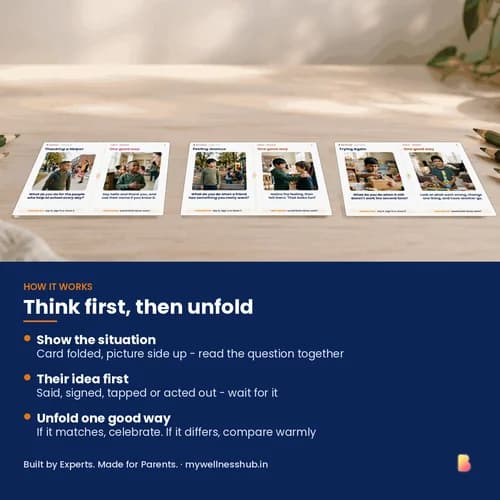
- Select a card and display the photo/question side only.
- Read the scenario aloud or let the child view and interpret it.
- Encourage the child to think before acting as they consider their response.
Step 4: Encourage the Child's Response
- Invite the child to say, show, or use AAC to share their idea.
- Allow time for independent thinking or group discussion.
- Prompt with "What would you do?" if needed.
Step 5: Reveal and Compare Solutions
- Unfold the card to show one good way with its photo.
- Compare the child's idea to the revealed solution without judgment.
- Discuss similarities, differences, and why both ideas might work.
Step 6: Extend and Reinforce Learning
- Use the Two Good Ways page for additional solution options.
- Try role-playing, group games, or the make-your-own card for extra practice.
- Encourage children to apply these strategies in real-life situations.
Activities Using the Resource
1. Social Situation Card Discussion Game
Objective: To practice thinking before acting in real-life social situations using the What Do I Do? Social Situation Fold-and-Reveal Cards PDF.
How to Play:
- Present a folded card showing only the photo and question (e.g., "What do you do when a friend has something you really want?").
- Let the child say, show, or use AAC to share their idea before unfolding.
- Reveal the suggested good way and discuss how it compares to their response.
Skill Development:
- Builds independent social problem-solving.
- Strengthens expressive communication, including AAC.
- Encourages flexible thinking and self-reflection.
2. Feelings and Reactions Sorting Activity
Objective: To identify and sort different feelings and match them to appropriate responses.
How to Play:
- Select cards from the Big Feelings set (e.g., feeling shy, frustrated).
- Ask the child to name the feeling and describe a possible reaction.
- Unfold the card to compare their idea with the suggested response.
Skill Development:
- Improves emotional recognition and labeling.
- Enhances coping strategy selection.
- Supports discussion of healthy emotional responses.
3. Kindness Chain Role-Play
Objective: To practice showing kindness in various social scenarios.
How to Play:
- Choose a Being Kind card (e.g., a friend's bad day).
- Role-play the situation with the child, switching roles after each round.
- Reveal the card's good way and try acting out both solutions.
Skill Development:
- Develops empathy and perspective-taking.
- Reinforces prosocial behaviors.
- Increases confidence in group interactions.
4. Group Problem-Solving Circle
Objective: To encourage teamwork and group cooperation using classroom or friendship scenarios.
How to Play:
- In a small group, present a Getting Along card (e.g., disagreeing in a group).
- Each child shares their idea for solving the problem.
- Reveal the card's solution and discuss similarities and differences as a group.
Skill Development:
- Fosters respectful listening and turn-taking.
- Promotes collaborative decision-making.
- Builds group discussion skills.
5. Make-Your-Own Social Situation Card
Objective: To empower children to create and solve their own social scenarios.
How to Play:
- Give the blank make-your-own card included in the PDF.
- Have the child draw or describe a social situation they've experienced.
- Work together to write a question and brainstorm one or two good ways to respond.
Skill Development:
- Encourages self-expression and creativity.
- Strengthens real-life problem-solving.
- Builds ownership of social learning.
6. Everyday Carryover Challenge
Objective: To apply strategies from the What Do I Do? Social Situation Fold-and-Reveal Cards PDF to daily routines.
How to Play:
- Choose a scenario from the deck that matches a real-life moment (e.g., tidy-up time).
- Prompt the child to use a solution from the card during the actual event.
- Reflect together afterward on how it went and what they might try next time.
Skill Development:
- Supports generalization of social skills.
- Reinforces thinking before acting in natural settings.
- Promotes self-monitoring and adaptability.
Frequently Asked Questions
Q1: What ages and grade levels are the What Do I Do? Social Situation Fold-and-Reveal Cards PDF designed for?
A1: The cards are best suited for children ages 6–11, typically in elementary grades. The scenarios and language are developmentally appropriate for this age group, supporting social-emotional learning and classroom participation. Younger or older children with similar needs may also benefit with adult guidance.
Q2: Can I use these fold-and-reveal cards with small groups or the whole class?
A2: Yes, these cards are effective for both small groups and whole-class activities. Group use encourages discussion, turn-taking, and comparing different ideas in a supportive environment. Try using a projector or printed cards for collaborative problem-solving sessions.
Q3: Are these cards suitable for speech therapy or occupational therapy sessions?
A3: Absolutely. The resource supports expressive language, AAC use, and social-emotional skill-building, making it ideal for speech or occupational therapy. Therapists can adapt prompts and pacing to individual needs, including children with autism or speech delays.
Q4: What is the best way to print and prepare the fold-and-reveal cards for hands-on use?
A4: Print the PDF single- or double-sided on A4 or Letter paper, then cut and fold each card as indicated. Laminating the cards adds durability, especially for frequent or group use. Store cards in a labeled envelope or box for easy access and organization.
Q5: How do these cards support children with special needs or who use AAC?
A5: The cards feature real-life photos, clear language, and a method that values every response, supporting a range of learning and communication styles. Children can answer by speaking, signing, or using AAC devices, with all responses considered valid. This approach encourages participation and builds confidence for children with diverse needs.
Q6: Can I use the cards digitally without printing them?
A6: Yes, the PDF is screen-friendly for use on tablets, computers, or interactive whiteboards. Display the situation side first, then reveal the solution digitally after the child shares their idea. This is especially useful for teletherapy or remote learning.
Q7: What specific skills and learning goals do these cards target?
A7: The cards focus on thinking before acting, generating a plan, comparing solutions, and handling social situations with friends and classmates. They also build skills in emotional regulation, flexible thinking, and asking for help in different ways. Children practice expressing their ideas and reflecting on positive social strategies.
Q8: What are the licensing and usage rights for this PDF resource?
A8: Purchase grants a single-user license for personal, classroom, or therapy use. Sharing, redistributing, or uploading the PDF for public access is not permitted. For multi-user or school-wide licensing, contact Wellness Hub for options.
Q9: How do I receive and download the What Do I Do? Social Situation Fold-and-Reveal Cards PDF after purchase?
A9: After purchase, you will receive an instant download link via email. The PDF can be saved and accessed on any compatible device for printing or digital use. If you have trouble accessing your file, Wellness Hub support is available to assist.
Q10: What is Wellness Hub's refund or exchange policy for digital resources?
A10: Wellness Hub does not offer refunds or exchanges for digital downloads once accessed. This policy ensures the integrity of digital content distribution. If you encounter technical issues or receive the wrong file, contact support for prompt assistance.
Usage Rights and Restrictions
Allowed Usage:
- Personal use by parents, teachers, and therapists.
- Printable for classroom, home, or therapy settings.
- Can be used in group or one-on-one learning sessions.
Not Allowed:
- Reselling, redistributing, or modifying the resource for commercial use.
- Sharing publicly (e.g., on blogs, social media, or websites) without permission.
- Uploading the file to public sharing platforms.
If you need a bulk license for schools or therapy centers, please contact us.
Conclusion
The What Do I Do? Social Situation Fold-and-Reveal Cards PDF empowers children to build real-world social skills through hands-on, reflective practice. Designed for elementary-aged learners, it supports those who benefit from extra time and visual cues, including children with speech delays or who use AAC. Each card encourages children to think for themselves first, making every response valued and every learning moment meaningful.
By focusing on generating a plan and comparing solutions, this resource helps children grow in confidence across home, classroom, and therapy settings. Skills like asking for help and handling frustration are woven into relatable scenarios, while the gentle, non-corrective approach fosters self-expression and positive self-esteem.
Download the What Do I Do? Social Situation Fold-and-Reveal Cards PDF today and give your child or students a supportive way to practice social thinking, kindness, and flexible problem-solving in everyday life.