
What Do I Do? First Steps — 25 Printable Fold-and-Reveal Social Situation Flip Cards, Easy Level
₹80
₹160
You save ₹80
5 (44 ratings)
Grade Levels
Pre-K – Kindergarten (Ages 4–7)
Content Overview
Format: PDF | Pages: 24 | Features: 25 fold-and-reveal cards for thinking before acting and social problem-solving
Categories
Share


About the Product
Introduction
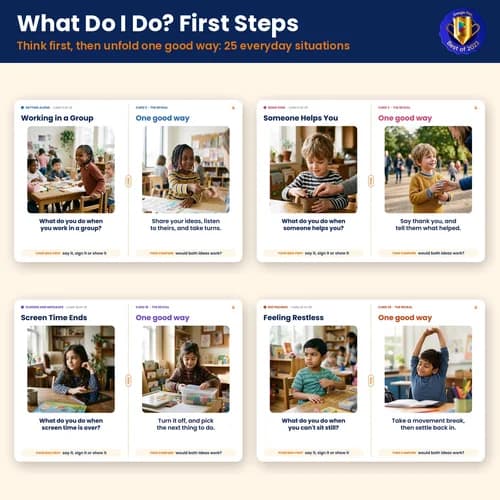
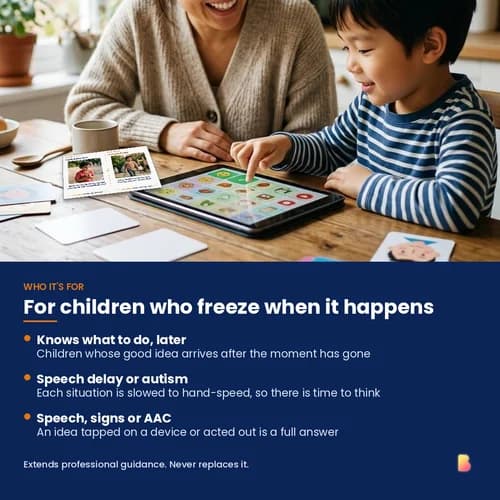
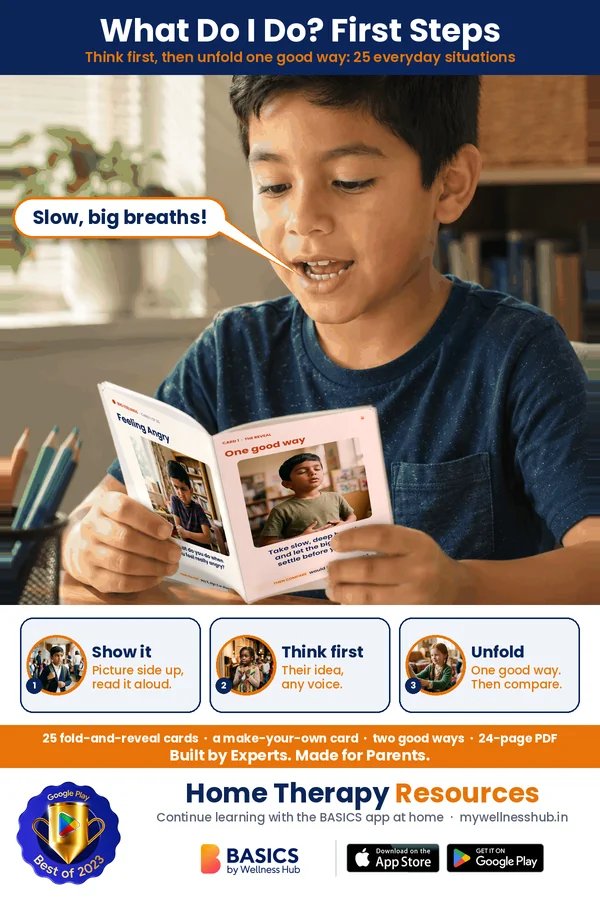
The What Do I Do? Fold-and-Reveal Social Situation Cards: Easy Level PDF is a 24-page digital resource created for children beginning to learn social thinking skills. Each of the 25 cards presents a real-life scenario with a photo and a simple question, inviting children to think, respond, and then compare their idea with a positive example hidden behind the fold. This interactive format supports children with speech delays, autism, or those using AAC, making social learning accessible and engaging.
Children practice skills like thinking before acting, generating a plan, and comparing two ideas, all while working through relatable situations such as handling big feelings or being kind. The easy level cards focus on building confidence in responding to everyday challenges, helping children learn calming a big feeling and asking for help in a supportive, non-corrective way. Each card encourages children to share their own ideas first, then see one good way as a gentle comparison.
Families, teachers, and therapists can use these cards in many settings—at home for daily practice, in classrooms for social skills groups, or in therapy sessions for targeted support. The cards cover situations like fairness and online safety basics, making them perfect for coaching children through real-world moments. The fold-and-reveal method keeps learning interactive and ensures every child's idea is valued.
Product Details
- Resource Name: What Do I Do? Fold-and-Reveal Social Situation Cards: Easy Level PDF
- Format: Printable and screen-ready PDF
- Total Pages: 24
- Grade Level: Elementary/Primary (ages 5–10)
- Designed For: Children learning social skills, including those with speech delay, autism, or using AAC
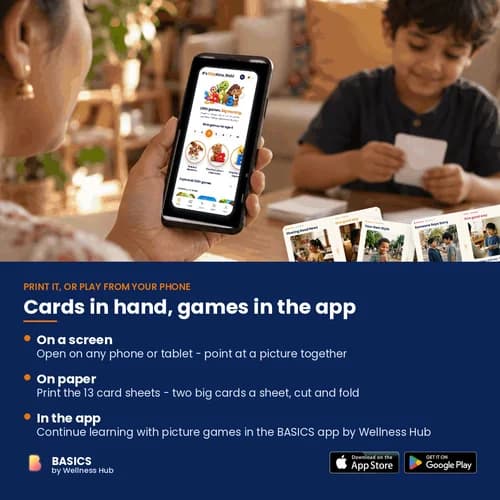
- Printing Notes: Print single-sided, cut and fold cards for hands-on use; also suitable for digital display
- Best Used In: Home, classroom, therapy sessions
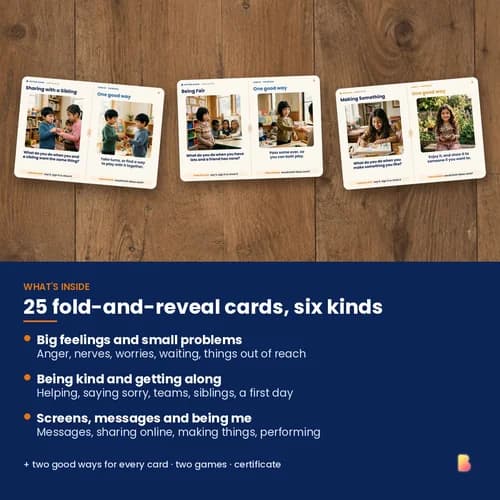
- Sets / Flashcards / Activities: 25 fold-and-reveal situation cards, 1 make-your-own card, 2 social games, practice log, certificate
- Visuals / Illustrations: Real-life photos for each situation and solution, color-coded by situation type
Educational Benefits
1. Strengthens Social Problem-Solving Skills
- Children practice thinking before acting in everyday situations.
- They learn to generate a plan for what to do next.
- primary_keyword supports real-life decision-making with gentle comparison.
2. Encourages Emotional Regulation Strategies
- Promotes calming a big feeling through relatable scenarios.
- Children see positive ways to manage anger, worry, and nerves.
- Helps build self-control and emotional awareness.
3. Builds Communication and Expressive Skills
- Supports children who use speech, signs, or AAC to share ideas.
- Fosters confidence in expressing thoughts before seeing solutions.
- Compares two ideas, showing that every answer is valued.
4. Reinforces Asking for Help in Social Contexts
- Teaches when and how to ask for help in group or solo situations.
- Shows practical examples of seeking support from peers or adults.
- lsi_terms[4] is naturally integrated in everyday scenarios.
5. Fosters Kindness and Fairness in Peer Interactions
- Demonstrates being kind, fair, and inclusive with friends and classmates.
- Encourages children to notice others' feelings and respond thoughtfully.
- Promotes positive social habits for group settings.
Instructions for Use
Step 1: Print and Prepare the Cards
- Print the PDF single-sided on sturdy paper for best results.
- Cut out each card along the lines, then fold as shown.
- Laminate for extra durability and repeated use.
Step 2: Display a Situation Card
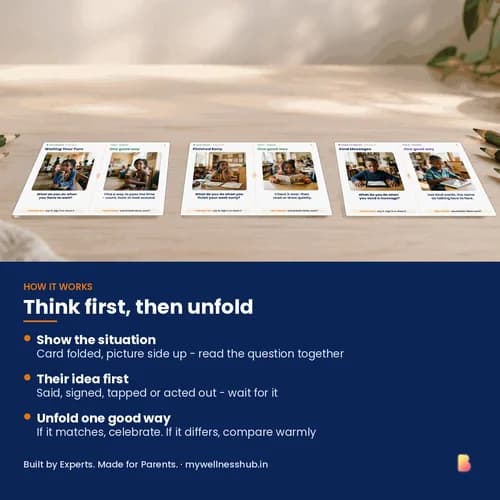
- Show the child the front (situation) side with its photo and question.
- Encourage them to read or listen to the scenario.
- lsi_terms[0] is practiced as they consider their first response.
Step 3: Invite the Child's Own Idea
- Ask the child, "What would you do?" before revealing any answer.
- Allow time for them to speak, sign, or use AAC to respond.
- Praise all efforts, focusing on their unique thinking.
Step 4: Reveal and Compare One Good Way
- Unfold the card to show the positive example and its photo.
- Read or describe the good way together, comparing it to their idea.
- lsi_terms[2] comes into play as you discuss similarities or differences.
Step 5: Explore a Second Good Way (Optional)
- Refer to the Two Good Ways page for an extra solution.
- Discuss how different choices can both be helpful.
- Encourage flexible thinking and openness to new strategies.
Step 6: Reinforce Learning with Games and Logs
- Play included games like Situation Theatre or What Would Teddy Do?
- Use the practice log to track progress and celebrate growth.
- Award the certificate when the child shows consistent social thinking.
Activities Using the Resource
1. Social Situation Card Sorting Game
Objective: To help children identify and categorize different types of situations using the What Do I Do? Fold-and-Reveal Social Situation Cards.
How to Play:
- Mix cards from all six color-coded categories (e.g., Big Feelings, Being Kind).
- Ask the child to sort cards by type, using the color or scenario clues.
- Discuss what makes each group similar or different.
Skill Development:
- Improves classification and sorting abilities.
- Reinforces understanding of social context cues.
- Builds vocabulary for describing everyday situations.
2. Think Before You Act Role-Play
Objective: To practice thinking before acting in social scenarios using the primary_keyword.
How to Play:
- Select a card showing a challenging situation (e.g., feeling angry).
- Child acts out what they might do before the card is unfolded.
- Compare their response to the "one good way" revealed on the card.
Skill Development:
- Strengthens impulse control and reflection.
- Encourages expressive communication.
- Supports flexible problem-solving.
3. Comparing Two Good Ways Discussion
Objective: To develop flexible thinking by exploring multiple solutions to a social problem.
How to Play:
- Present a situation card and let the child share their idea.
- Reveal the card's "one good way," then check the Two Good Ways page for another.
- Discuss how both solutions could help and when to use each.
Skill Development:
- Enhances perspective-taking and reasoning.
- Encourages open-mindedness to new strategies.
- Builds confidence in generating options.
4. Calming Big Feelings Practice
Objective: To teach children how to calm a big feeling using real-life scenarios.
How to Play:
- Use cards from the Big Feelings set (anger, nerves, worry).
- Child identifies their feeling and chooses a calming strategy shown on the card.
- Practice the strategy together, like taking deep breaths or asking for help.
Skill Development:
- Increases emotional awareness and vocabulary.
- Teaches practical self-regulation skills.
- Fosters independence in managing emotions.
5. Asking for Help Card Challenge
Objective: To build confidence in asking for help in various situations using the primary_keyword.
How to Play:
- Pick cards where asking for help is a good solution (e.g., something out of reach).
- Child practices saying, signing, or using AAC to ask for help before the card is unfolded.
- Celebrate their effort and compare with the card's example.
Skill Development:
- Boosts self-advocacy and communication.
- Reinforces social problem-solving.
- Encourages respectful help-seeking behavior.
6. Good Ideas Pile Game
Objective: To recognize and celebrate positive social choices across different scenarios.
How to Play:
- Each time the child shares a helpful idea, place the card in a "Good Ideas Pile."
- Review the pile at the end of the session, highlighting different types of good choices.
- Award the included certificate for consistent participation and growth.
Skill Development:
- Promotes self-reflection and pride in progress.
- Encourages consistency in positive behavior.
- Supports goal-setting and achievement tracking.
Frequently Asked Questions
Q1: What ages and grade levels are the What Do I Do? Fold-and-Reveal Social Situation Cards: Easy Level PDF designed for?
A1: These cards are best for children ages 5–10 in elementary or primary grades. The easy level scenarios and visual supports make them accessible for beginners in social learning. They are especially helpful for children just starting to practice thinking before acting.
Q2: Can these social situation cards be used with groups in a classroom or therapy setting?
A2: Yes, the cards are ideal for small groups or whole-class social skills activities. Each card's interactive format encourages discussion, turn-taking, and peer learning. Try using color-coded sets for group games or role-play stations.
Q3: Are the cards suitable for speech therapy or occupational therapy sessions?
A3: Absolutely, these cards support expressive communication, AAC use, and flexible problem-solving in therapy. Therapists can prompt children to generate their own ideas before revealing a model answer. The cards also help practice emotional regulation and planning skills.
Q4: What is the best way to print, cut, and fold the situation cards for hands-on use?
A4: Print single-sided on sturdy paper, then cut each card along the lines and fold as shown. Laminating the cards increases durability for repeated handling. Store the cards by color category for easy access during sessions.
Q5: How are these cards adapted for children with special needs, such as autism or speech delay?
A5: The resource uses real-life photos, simple questions, and a non-corrective reveal to support diverse learners. Children can respond using speech, signs, or AAC, and every idea is valued before showing a model answer. The visual structure and gentle comparison foster confidence and understanding.
Q6: Can I use these cards on a tablet or computer without printing them?
A6: Yes, the PDF is screen-ready for digital display on tablets, computers, or interactive whiteboards. Children can view the situation, share their idea, and then see the good way by scrolling or clicking to reveal. This makes the resource flexible for teletherapy or classroom tech use.
Q7: What specific social skills and learning goals do these cards target?
A7: The cards build thinking before acting, generating a plan, and comparing two ideas in real situations. Children also practice calming big feelings, asking for help, kindness, fairness, and online safety basics. Each card supports the development of communication and social reasoning.
Q8: What are the licensing and usage rights for this PDF resource from Wellness Hub?
A8: Purchase includes a single-user license for personal, classroom, or therapy use. You may print or display the PDF for your own sessions but not share or distribute it to others. For multi-user or school-wide licensing, contact Wellness Hub for options.
Q9: How do I download and access the What Do I Do? Fold-and-Reveal Social Situation Cards: Easy Level PDF after purchase?
A9: After purchase, you receive an instant download link via email or your Wellness Hub account. The PDF can be saved to your device for immediate use. If you have trouble accessing your file, Wellness Hub support will assist promptly.
Q10: What is Wellness Hub's refund or exchange policy for digital resources?
A10: Wellness Hub offers refunds or exchanges on digital resources if you experience technical issues or receive the wrong product. Contact customer support within 7 days of purchase for assistance. Please note that refunds are not available for accidental purchases of correctly delivered PDFs.
Usage Rights and Restrictions
Allowed Usage:
- Personal use by parents, teachers, and therapists.
- Printable for classroom, home, or therapy settings.
- Can be used in group or one-on-one learning sessions.
Not Allowed:
- Reselling, redistributing, or modifying the resource for commercial use.
- Sharing publicly (e.g., on blogs, social media, or websites) without permission.
- Uploading the file to public sharing platforms.
If you need a bulk license for schools or therapy centers, please contact us.
Conclusion
The What Do I Do? Fold-and-Reveal Social Situation Cards: Easy Level PDF empowers children to build foundational social thinking skills in a supportive and engaging way. Designed for young learners, including those with speech delays or autism, this resource values every child's idea and encourages participation through real-life scenarios and interactive play.
Children develop expressive communication and kindness as they practice sharing their thoughts and comparing solutions. Whether at home, in the classroom, or during therapy, the cards foster emotional growth and fairness by guiding children through everyday challenges with gentle prompts and positive examples.
Start using the What Do I Do? Fold-and-Reveal Social Situation Cards: Easy Level PDF today to help your child or students gain confidence, develop fairness, and build essential social skills for life.