

Two-Word Request Phrase Cards PDF – Early Speech for Kids
₹80
₹160
50% off
0 (0 ratings)
Grade Levels
Pre-K – Kindergarten (Ages 2-6)
Content Overview
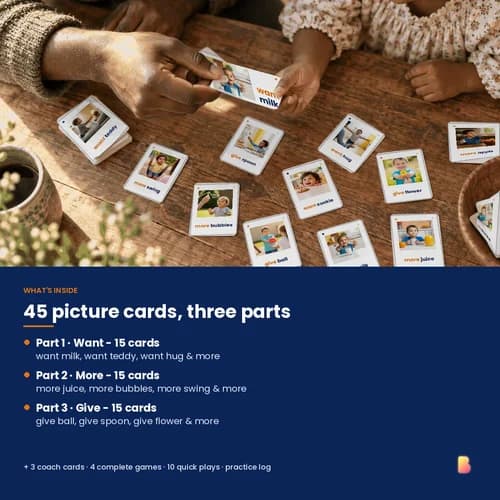
Format: PDF | Pages: 22 | Features: 45 two-word request cards, builds requesting objects and food
Categories
Share


About the Product
Introduction
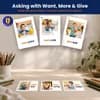
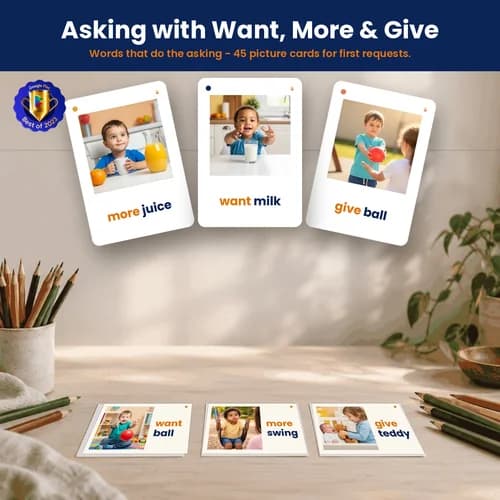
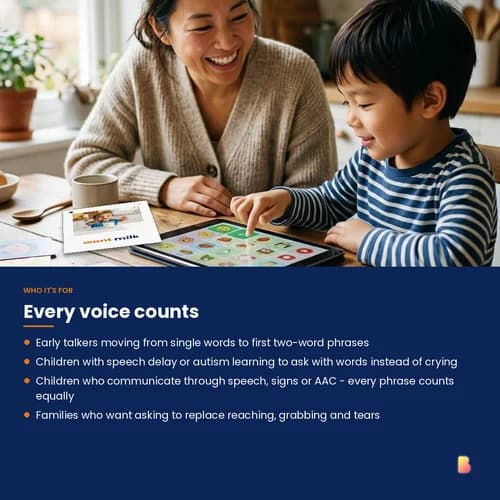
The First Requests Two-Word Phrase Cards PDF is a 22-page digital resource designed for children at the first-phrase stage, including those with speech delay, autism, or who use signs or AAC. This set features 45 illustrated cards that help children practice early request phrases in a clear, request-word-first format. Parents, therapists, and educators can use these cards to support communication growth in children who are just beginning to combine words.
Children will practice two-word phrase expansion as they learn to request objects, food, and comfort, ask for more, and share with others. The resource encourages replacing reaching and crying with asking, helping children build confidence and independence in everyday communication. Each card and activity focuses on real-life situations, making skill development both meaningful and measurable.
Families, teachers, and therapists can use these cards during play, daily routines, or structured sessions to support giving and sharing. The included games and coach cards offer flexible options for home, classroom, and therapy settings, ensuring that every child can participate and progress at their own pace.
Product Details
- Resource Name: First Requests Two-Word Phrase Cards PDF
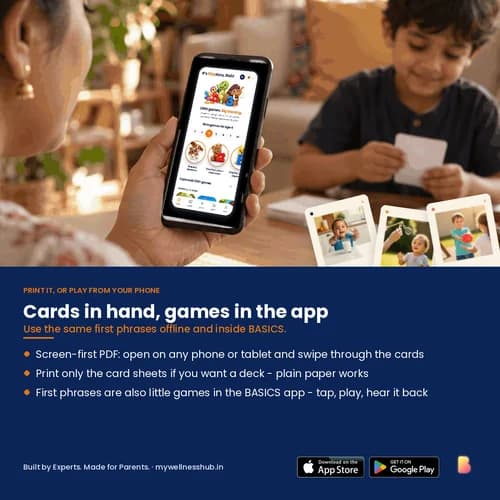
- Format: Printable and screen-ready PDF
- Total Pages: 22
- Grade Level: Early childhood, Pre-K, Kindergarten
- Designed For: Children at first-phrase stage, speech delay, autism, AAC users
- Printing Notes: Suitable for color or black-and-white printing
- Best Used In: Home, classroom, speech therapy
- Sets / Flashcards / Activities: 45 two-word phrase cards, 3 coach cards, 4 games, 10 plays, practice log, carryover pages
- Visuals / Illustrations: Child-friendly, clear illustrations for each phrase card
Educational Benefits
1. Builds Functional Communication Skills
- Children learn to use two-word phrases to express wants and needs.
- Supports early sentence formation using real-life objects and actions.
- Helps replace nonverbal cues with clear verbal or AAC requests.
2. Encourages Social Interaction and Sharing
- Promotes turn-taking and cooperative play during card games and activities.
- Teaches children to request items from peers or adults, fostering social bonds.
- Encourages giving and sharing through structured practice.
3. Expands Vocabulary and Phrase Length
- Introduces new nouns and verbs in a fixed, request-word-first format.
- Reinforces phrase expansion by pairing familiar words with new objects.
- Supports children as they move from single words to two-word combinations.
4. Supports AAC and Diverse Communication Styles
- Ensures full AAC parity so all children can participate, regardless of speech ability.
- Visuals and clear structure help children who use signs, devices, or gestures.
- Promotes inclusion and confidence for children with autism or speech delay.
5. Reinforces Positive Behavior and Independence
- First Requests Two-Word Phrase Cards encourage asking instead of reaching or crying.
- Children gain confidence as their requests are understood and met.
- Practice log and carryover pages support skill transfer to daily routines.
Instructions for Use
Step 1: Print or Display the Cards
- Print the PDF in color or black-and-white, or open on a tablet or computer.
- Cut out the 45 two-word phrase cards for hands-on activities.
- Laminate cards for durability if using in therapy or classroom.
Step 2: Introduce the Request Frames
- Start with want phrases to teach the structure of requesting objects.
- Model each phrase clearly, emphasizing the request-word-first format.
- Encourage the child to imitate or use their AAC system.
Step 3: Play the Included Games
- Engage the child with activities like Help the Animals or Finish My Phrase.
- Games reinforce requesting objects and encourage two-word phrase use.
- Use visuals to support understanding and participation.
Step 4: Practice Giving and Sharing
- Incorporate give phrases during play or snack time for natural practice.
- Prompt the child to use give ball or give spoon in context.
- Reinforce sharing skills while supporting communication growth.
Step 5: Track Progress and Carry Over Skills
- Use the practice log to note successes and areas for growth.
- Encourage families to use the cards in daily routines for consistency.
- Review carryover pages for tips on generalizing skills at home.
Step 6: Adjust for Individual Needs
- Select cards and activities based on the child's current skill level.
- Use coach cards and tricks to motivate and support engagement.
- Incorporate two-word phrase expansion as the child masters each frame.
Activities Using the Resource
1. Two-Word Request Card Sorting
Objective: To help children distinguish between want, more, and give phrases using the First Requests Two-Word Phrase Cards.
How to Play:
- Lay out a mix of cards and three sorting mats labeled want, more, and give.
- Ask the child to place each card under the correct request word.
- Encourage them to say or sign the phrase as they sort.
Skill Development:
- Builds phrase discrimination and categorization
- Reinforces two-word phrase expansion
- Supports visual scanning and matching
2. Real Object Request Game
Objective: To practice making requests for objects, food, and comfort using two-word phrases.
How to Play:
- Place real items (milk, ball, bubbles) that match the cards on a table.
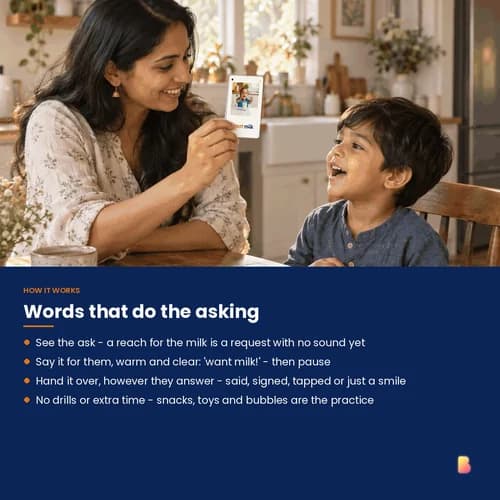
- Show a card (e.g., want milk) and prompt the child to use the phrase to request the item.
- Hand over the item, modeling the phrase if needed.
Skill Development:
- Strengthens functional requesting
- Connects visual cards to real-world objects
- Encourages turn-taking and social interaction
3. More Game with Repeated Requests
Objective: To teach children to ask for recurrence using more phrases from the First Requests Two-Word Phrase Cards.
How to Play:
- Use cards like more bubbles or more swing during play.
- Pause the activity and prompt the child to use the more phrase to continue.
- Respond immediately to reinforce the request.
Skill Development:
- Teaches recurrence and persistence in communication
- Expands phrase length in context
- Builds cause-and-effect understanding
4. Give and Share Activity
Objective: To promote giving and sharing by using give phrases with peers or adults.
How to Play:
- Use give cards (e.g., give ball, give spoon) during snack or play.
- Prompt the child to use the phrase before handing an item to someone.
- Reinforce by modeling sharing and praising attempts.
Skill Development:
- Encourages social sharing and cooperation
- Develops turn-taking skills
- Fosters expressive communication
5. Finish My Phrase Interactive Play
Objective: To support two-word phrase expansion by prompting children to complete familiar requests.
How to Play:
- Hold up a card and say the first word (e.g., "want...").
- Encourage the child to finish the phrase using the picture cue.
- Celebrate correct responses and model as needed.
Skill Development:
- Builds expressive language and phrase completion
- Supports auditory processing
- Increases confidence in communication
6. AAC Device Phrase Practice
Objective: To ensure full AAC parity by practicing two-word requests on a speech device or with signs.
How to Play:
- Show a card and help the child find and select the matching phrase on their AAC device.
- Practice with want, more, and give phrases in short sessions.
- Reinforce by providing the requested item or action.
Skill Development:
- Supports AAC navigation and use
- Reinforces two-word phrase structure
- Builds independence in communication choices
Frequently Asked Questions
Q1: What age or developmental stage is the First Requests Two-Word Phrase Cards PDF designed for?
A1: This resource is intended for children at the first-phrase stage, typically ages 2–6 or anyone using single words or gestures to communicate. It supports early communicators, including those with speech delay, autism, or who use AAC. Children should have a handful of single words or consistent reaching and pointing before starting.
Q2: Can these two-word phrase cards be used in a classroom group setting?
A2: Yes, these cards are suitable for small group activities in early childhood or special education classrooms. Group use encourages turn-taking, peer modeling, and social sharing. Try using the included games like Help the Animals to engage several children at once.
Q3: Are the cards appropriate for speech therapy sessions with children who use AAC?
A3: Absolutely, the First Requests Two-Word Phrase Cards PDF offers full AAC parity for speech therapy. Each phrase is designed for easy modeling on speech devices or with signs. Therapists can prompt children to use their AAC system while practicing want, more, and give phrases.
Q4: What is the best way to print and prepare these cards for repeated use?
A4: Print the cards in color or black-and-white on sturdy paper, then laminate for durability. Laminated cards withstand frequent handling in therapy or classroom settings. Cut out each card and organize them by request word for easy access during sessions.
Q5: How does this resource support children with autism or significant speech delay?
A5: The visual structure and predictable phrase frames help children with autism or speech delay understand and use early requests. Cards and activities are designed for flexibility, allowing for differentiation and individualized support. Use coach cards and tricks to adapt prompts and pacing for each child.
Q6: Can I use the First Requests Two-Word Phrase Cards PDF on a tablet or computer without printing?
A6: Yes, the PDF is screen-ready and can be displayed on tablets, computers, or interactive whiteboards. Digital use is ideal for teletherapy, classroom projection, or when printing is not possible. Children can point to or select phrases directly on the screen.
Q7: What specific communication skills will children develop using this resource?
A7: Children will learn to request objects, food, and comfort, ask for more, and practice giving and sharing. The resource targets two-word phrase expansion and helps replace reaching or crying with clear, functional requests. Regular use supports expressive language growth and builds independence.
Q8: What are the licensing and usage rights for the First Requests Two-Word Phrase Cards PDF?
A8: Your purchase grants a single-user license for personal, classroom, or therapy use. Sharing or distributing the file beyond your immediate setting is not permitted. For multi-user or clinic-wide licensing, please contact Wellness Hub directly.
Q9: How do I receive and download my PDF after purchase from Wellness Hub?
A9: After purchase, you will receive an instant download link via email from Wellness Hub. The PDF can be saved and accessed on any compatible device. If you have trouble downloading, Wellness Hub's support team can assist promptly.
Q10: What is Wellness Hub's refund or exchange policy for digital resources?
A10: Wellness Hub does not offer refunds or exchanges for digital downloads once delivered. This policy ensures the integrity of digital content. If you experience technical issues or receive the wrong file, contact support for a resolution.
Usage Rights and Restrictions
Allowed Usage:
- Personal use by parents, teachers, and therapists.
- Printable for classroom, home, or therapy settings.
- Can be used in group or one-on-one learning sessions.
Not Allowed:
- Reselling, redistributing, or modifying the resource for commercial use.
- Sharing publicly (e.g., on blogs, social media, or websites) without permission.
- Uploading the file to public sharing platforms.
If you need a bulk license for schools or therapy centers, please contact us.
Conclusion
First Requests Two-Word Phrase Cards PDF empowers children at the first-phrase stage—including those with speech delay, autism, or who use AAC—to communicate needs and wants more clearly. Designed for families, educators, and therapists, it provides an accessible way to build early language and independence through real-life practice and engaging activities.
Children develop essential requesting skills and phrase expansion while learning to ask for objects, food, and comfort in a supportive environment. The resource fits seamlessly into home routines, classroom lessons, and therapy sessions, making it easy to encourage sharing and social interaction.
Start building confident communication—download First Requests Two-Word Phrase Cards PDF and help your child replace reaching and crying with meaningful, two-word requests for everyday needs.