

The Curiosity Show Flip Deck — 61 Printable WH Question and Answer Fold-and-Flip Cards
₹80
₹160
You save ₹80
4.9 (36 ratings)
Grade Levels
Pre-K – Kindergarten (Ages 4–7)
Content Overview
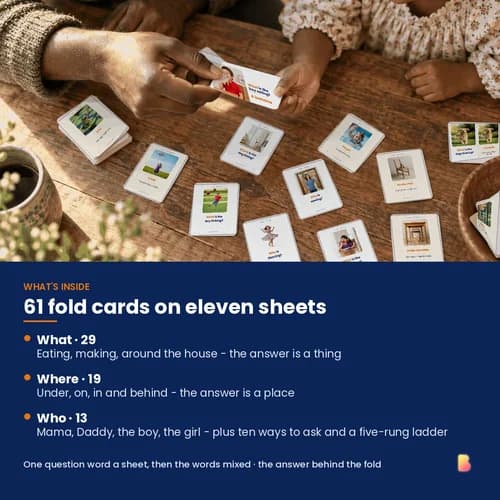
Format: PDF | Pages: 17 | Features: 61 fold-over cards to practice answering what, where, who questions
Categories
Share


About the Product
Introduction
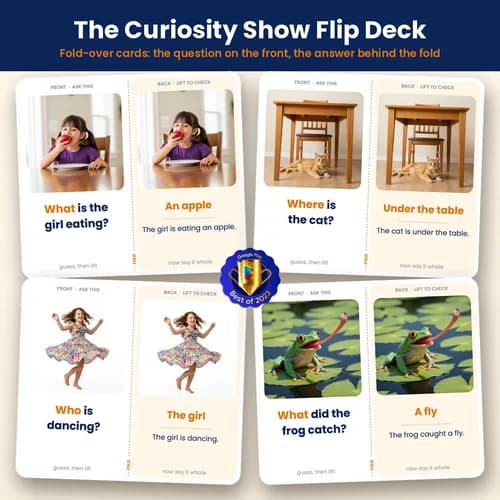
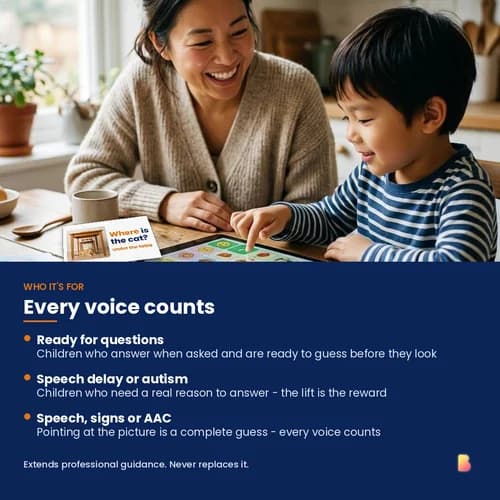
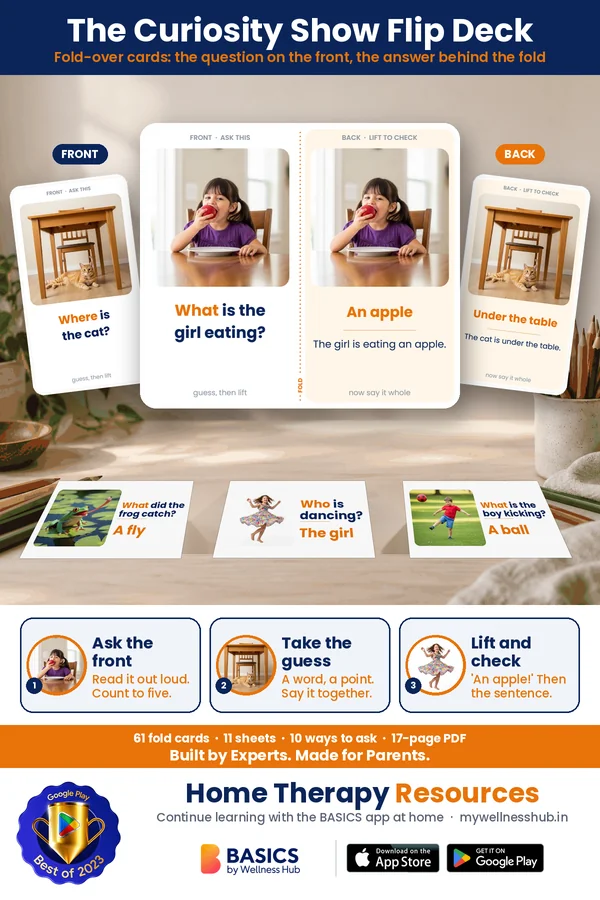
The Fold-Over What, Where, and Who Question Cards PDF is a 17-page digital resource created for children developing question-answering skills. This interactive set features 61 fold-over cards, each with a colorful picture and a clear question word in orange, making it easy for young learners to focus on what, where, and who questions. Designed for children ready to guess answers before checking, it supports those with speech delay, autism, or who use AAC or sign communication.
Answering what, where, and who questions builds skills in telling question words apart and using location concepts like in, on, under, and behind. Children practice guessing answers, checking their responses, and repeating full sentences, which strengthens their understanding and expressive language. The cards also encourage the shift from answering questions to asking them, supporting more independent communication.
Home, classroom, and therapy settings all benefit from these fold-over cards, especially for practicing where questions with in, on, under, and behind. Parents, teachers, and therapists can use them for structured turn-taking, group activities, or one-on-one language sessions. The cards are ideal for repeated practice, making learning both engaging and effective for a wide range of learners.
Product Details
- Resource Name: Fold-Over What, Where, and Who Question Cards PDF
- Format: Printable and screen-ready PDF
- Total Pages: 17
- Grade Level: Pre-K, Kindergarten, Early Elementary
- Designed For: Children developing question-answering skills, including those with speech delay, autism, or using AAC/signs
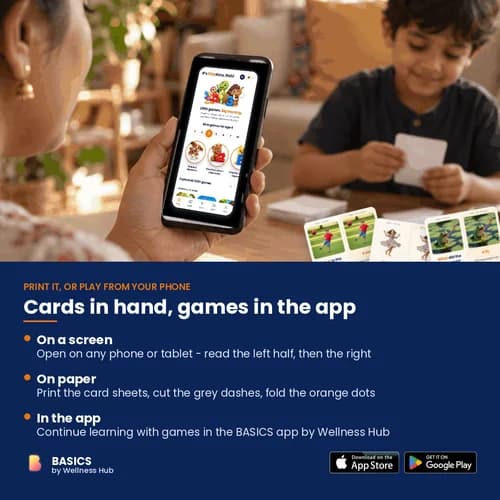
- Printing Notes: Print double-sided, cut and fold as instructed; also usable on screen by covering half the card
- Best Used In: Home, classroom, and therapy settings
- Sets / Flashcards / Activities: 61 fold-over question cards
- Visuals / Illustrations: Colorful, child-friendly illustrations on every card
Educational Benefits
1. Builds Question Word Recognition
- Children learn to distinguish what, where, and who through repeated exposure.
- Orange-highlighted question words help reinforce visual identification.
- Supports early comprehension of different question types.
2. Strengthens Expressive Language Skills
- Learners practice forming full sentences after checking answers.
- Encourages repetition and verbalization for stronger language output.
- The fold-over format motivates children to say answers aloud.
3. Enhances Guessing and Predictive Thinking
- Children guess answers before lifting the card to check.
- Promotes active thinking and participation in each turn.
- primary_keyword supports this essential skill-building routine.
4. Develops Understanding of Location Concepts
- Cards include where questions with in, on, under, and behind.
- Visual prompts help children grasp spatial relationships.
- This resource supports lsi_terms[4] as a key learning focus.
5. Fosters Independent Communication
- Children progress from answering to asking their own questions.
- Supports AAC users and those with speech delays in structured practice.
- Encourages turn-taking and self-initiated conversation.
Instructions for Use
Step 1: Print and Prepare the Cards
- Print the PDF double-sided on sturdy paper for best results.
- Cut along the lines and fold each card as shown on the Start here page.
- Laminate for durability if frequent use is expected.
Step 2: Introduce the Question Words
- Show a few cards and point out the orange-highlighted what, where, and who.
- Explain that each card asks a different type of question.
- Use lsi_terms[0] to help children recognize each question word.
Step 3: Model the Guess-Then-Lift Routine
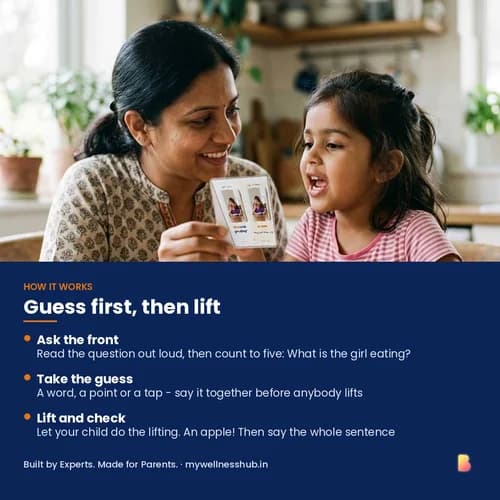
- Read the question aloud and count to five before revealing the answer.
- Encourage the child to guess by speaking, pointing, or tapping.
- Remind them: always guess before lifting the card.
Step 4: Practice Location Concepts with Where Cards
- Focus on cards that use in, on, under, and behind for spatial learning.
- Ask the child to describe where something is before checking.
- This step supports lsi_terms[2] in a natural context.
Step 5: Encourage Full Sentence Responses
- After revealing the answer, have the child repeat the full sentence shown.
- Model the sentence if needed and practice together.
- Use this step to build expressive language and confidence.
Step 6: Transition to Asking Questions
- Prompt the child to use the cards to ask you or peers a question.
- Use the asking ladder to support moving from answering to asking.
- Celebrate progress as children take more initiative in communication.
Activities Using the Resource
1. Guessing Game with What, Where, and Who
Objective: To build confidence in answering what, where, and who questions using the fold-over cards.
How to Play:
- Select a card and show the front with the question word highlighted.
- Ask the child to guess the answer before lifting the fold.
- Reveal the answer and say the full sentence together.
Skill Development:
- Distinguishes between what, where, and who question types.
- Practices turn-taking in structured guessing.
- Strengthens sentence repetition and expressive language.
2. Sorting Cards by Question Word
Objective: To improve recognition of question words and categorize cards based on what, where, and who.
How to Play:
- Lay out several cards face up.
- Ask the child to sort them into piles: what, where, and who.
- Review each pile, naming the question word and its color.
Skill Development:
- Enhances visual scanning and sorting skills.
- Reinforces question word identification.
- Builds attention to detail in language tasks.
3. Practicing Location Concepts with Where Cards
Objective: To develop understanding of spatial words like in, on, under, and behind using the resource.
How to Play:
- Choose a where card that features a location concept.
- Have the child describe where the object or person is before checking.
- Lift the card to confirm and repeat the full sentence.
Skill Development:
- Builds spatial awareness with everyday vocabulary.
- Improves comprehension of location-based questions.
- Encourages use of prepositions in speech.
4. Turn-Taking Question and Answer Circle
Objective: To foster social communication and group participation using the fold-over question cards.
How to Play:
- Sit in a small group and pass a card around the circle.
- Each child takes a turn guessing the answer before lifting the fold.
- Everyone repeats the full answer together.
Skill Development:
- Practices group turn-taking and listening.
- Supports peer modeling of question-answer routines.
- Increases comfort with group speaking.
5. Creating New Questions with Blank Cards
Objective: To encourage children to generate their own what, where, and who questions.
How to Play:
- Provide blank fold-over cards from the PDF.
- Help the child draw a picture and write a question word in orange.
- Take turns guessing and revealing the new answers.
Skill Development:
- Promotes creative thinking and question formulation.
- Strengthens understanding of question structure.
- Builds ownership of learning through personalized content.
6. AAC and Sign Language Practice with Fold-Over Cards
Objective: To support children using AAC or sign language in answering and asking what, where, and who questions.
How to Play:
- Present a card and model answering using AAC or signs.
- Encourage the child to respond by pointing, signing, or using their device.
- Reveal the answer and model the full sentence with AAC or signs.
Skill Development:
- Increases AAC/sign proficiency for question-answer routines.
- Builds receptive and expressive communication skills.
- Supports inclusive participation for all learners.
Frequently Asked Questions
Q1: What age group is best for the Fold-Over What, Where, and Who Question Cards PDF?
A1: This resource is ideal for children ages 3–8, including preschoolers and early elementary students. The simple questions and engaging visuals make it accessible for both emerging and developing communicators. Older children with speech delay or autism also benefit from the structured practice.
Q2: Can I use these fold-over cards in a classroom group activity?
A2: Yes, these cards are perfect for small group or whole-class activities. The fold-over design encourages turn-taking and peer interaction, making them engaging for group learning. Try passing a card around a circle so each child can guess and check in turn.
Q3: Are these cards suitable for speech therapy sessions with children who use AAC?
A3: Yes, the cards are designed for full AAC parity and support children who use speech devices or sign language. Children can point, tap, or use their device to answer before lifting the card. The visual structure and clear question words help therapists target expressive and receptive language goals.
Q4: What is the best way to print and prepare the fold-over cards?
A4: Print the PDF double-sided on sturdy paper, then cut and fold as shown in the instructions. Laminating the cards increases durability for repeated use in therapy or classroom settings. For best results, use color printing to highlight the orange question words.
Q5: How are the cards differentiated for children with special needs?
A5: The cards use clear visuals, color-coded question words, and simple sentences to support diverse learners. They are effective for children with autism, speech delays, or those learning to use AAC. You can slow the pace, model responses, or use pointing and gesture support for additional scaffolding.
Q6: Can I use these cards digitally without printing them?
A6: Yes, the resource is screen-ready and can be used on tablets or computers. Cover half the card on-screen to hide the answer, just like the fold-over method. This flexibility is especially helpful for teletherapy or remote learning.
Q7: What specific skills will children develop using these question cards?
A7: Children will strengthen their ability to answer and ask what, where, and who questions, and learn to distinguish between these question words. The cards also target location concepts like in, on, under, and behind, as well as the turn-taking routine of guessing before checking. Over time, learners build expressive language and independent communication skills.
Q8: What are the licensing and usage rights for this PDF resource?
A8: Purchase includes a single-user license for personal, classroom, or therapy use. You may print and use the resource with your own students or clients, but sharing or distributing the file to others is not permitted. For school-wide or clinic-wide use, please contact Wellness Hub for extended licensing options.
Q9: How do I receive and download the Fold-Over What, Where, and Who Question Cards PDF?
A9: After purchase, you will receive an email with a secure download link for the PDF. The file is ready for immediate use on any device or for printing. If you have trouble accessing your download, Wellness Hub's support team can assist promptly.
Q10: What is Wellness Hub's refund or exchange policy for digital resources?
A10: Wellness Hub does not offer refunds or exchanges on digital PDF resources due to their downloadable nature. However, if you experience technical issues or receive a faulty file, the support team will provide a replacement or help resolve the problem. Customer satisfaction and resource quality are top priorities.
Usage Rights and Restrictions
Allowed Usage:
- Personal use by parents, teachers, and therapists.
- Printable for classroom, home, or therapy settings.
- Can be used in group or one-on-one learning sessions.
Not Allowed:
- Reselling, redistributing, or modifying the resource for commercial use.
- Sharing publicly (e.g., on blogs, social media, or websites) without permission.
- Uploading the file to public sharing platforms.
If you need a bulk license for schools or therapy centers, please contact us.
Conclusion
The Fold-Over What, Where, and Who Question Cards PDF offers a unique, interactive way for children to build essential question-answering skills. Designed for young learners, including those with speech delays, autism, or who use AAC, this resource helps children practice guessing, checking, and using full sentences in a supportive environment.
By focusing on question word recognition and encouraging expressive language, children gain confidence as they answer and ask questions. The cards are perfect for home, classroom, or therapy use, and support skill-building in both structured and playful settings.
Empower your learners and make language practice engaging—download the Fold-Over What, Where, and Who Question Cards PDF today and watch children develop communication skills that last a lifetime.