


Polite Pick: Harder to Say — 50 Printable Manners Cards for Apologising and Disagreeing Kindly
₹80
₹160
You save ₹80
4.9 (46 ratings)
Grade Levels
Grade 1 – Grade 4 (Ages 6–10)
Content Overview
Format: PDF | Pages: 31 | Features: 50 polite-choice cards for practicing social skills and polite communication
Categories
Share


About the Product
Introduction
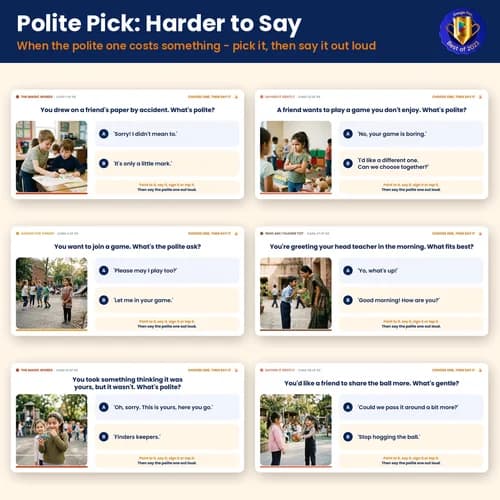
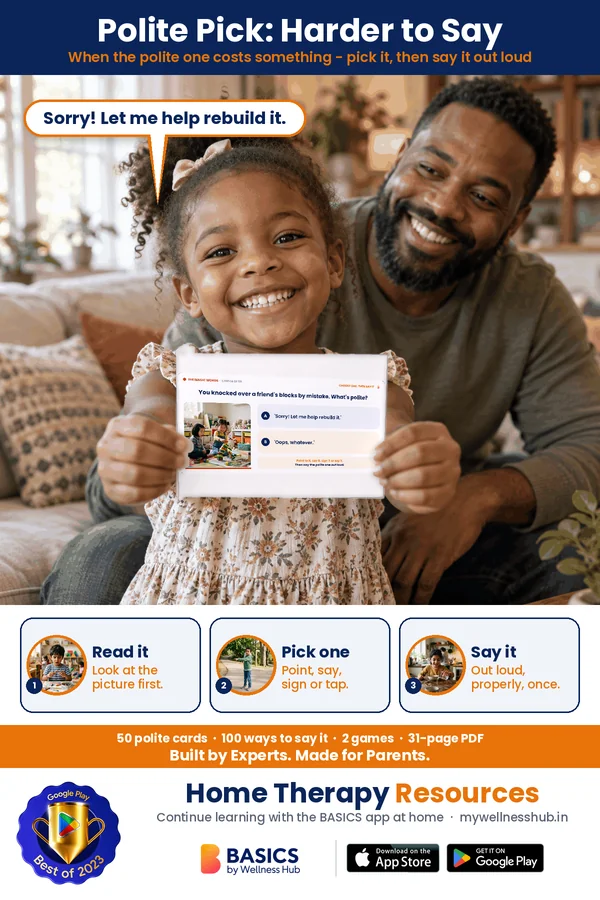
Polite Pick: Costly Choices Picture Cards is a 31-page digital PDF designed for children who know polite words but struggle to use them when it feels hard. This resource features 50 real-life scenarios where the polite response asks children to give up something—like an excuse, a turn, or a quick answer. Each card presents a photo, a question, and two ways to reply: one polite, one blunt, making it ideal for children with speech delay, autism, or those using AAC.
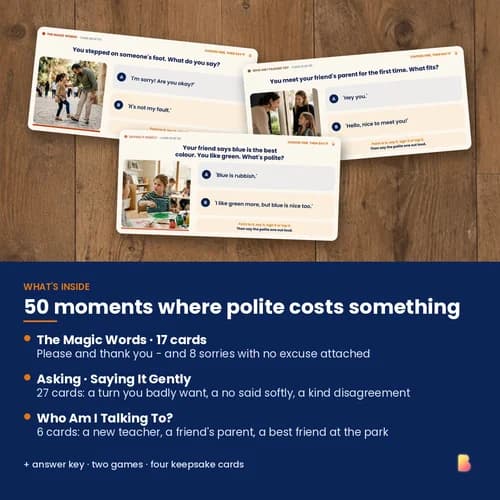
Children practice apologising with no but, as well as skills like asking in a way that leaves room for no and disagreeing politely while holding a view. The cards also help with matching register to the listener and naming what the polite answer gives up. With every scenario, learners build confidence in using polite language even when it feels difficult, and measurable outcomes include increased social awareness and improved communication.
Perfect for home, classroom, and therapy use, these cards support real conversations and social coaching. The Who Am I Talking To? section encourages children to adjust their language for different people, making the resource flexible for group games, individual practice, or speech sessions. Parents, teachers, and therapists can use these cards to invite—not test—children to try new ways of speaking.
Product Details
- Resource Name: Polite Pick: Costly Choices Picture Cards
- Format: Printable and screen-ready PDF
- Total Pages: 31
- Grade Level: Elementary and up
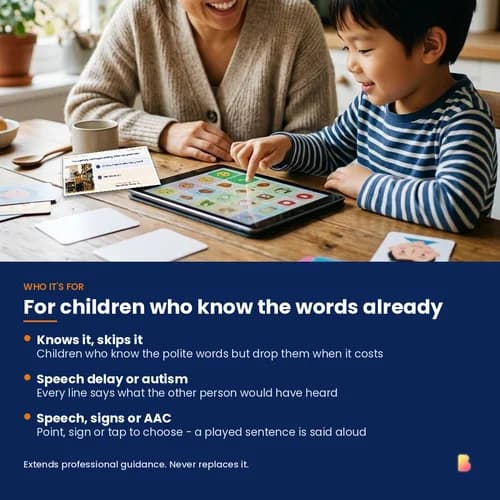
- Designed For: Children with speech delay, autism, AAC users, and all learners practicing polite choices
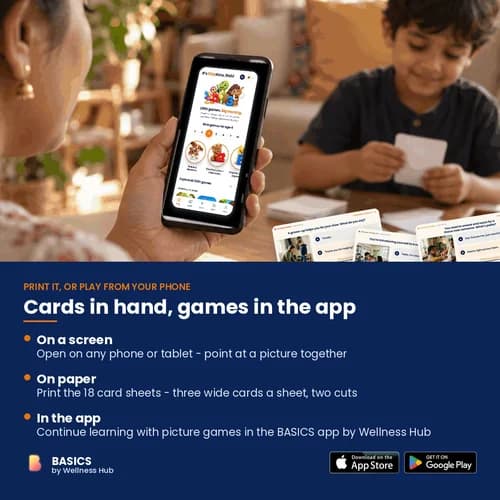
- Printing Notes: Print single- or double-sided; cards fit three to a sheet
- Best Used In: Home, classroom, speech therapy, social skills groups
- Sets / Flashcards / Activities: 50 picture cards, 4 keepsake cards, answer key, games, practice log
- Visuals / Illustrations: Real-life photos for each scenario
Educational Benefits
1. Builds Social Communication Skills
- Children practice responding to real-life situations with both polite and blunt options.
- They learn to recognize the impact of their words on others.
- Using Polite Pick: Costly Choices Picture Cards helps make social exchanges more thoughtful.
2. Strengthens Apologising and Assertiveness
- Learners master apologising with no but, owning mistakes without excuses.
- They gain confidence in expressing needs while leaving room for no.
- This supports assertive, respectful interactions in daily life.
3. Enhances Perspective-Taking and Empathy
- Children explore what each polite answer costs—like giving up an excuse or a quick reply.
- They reflect on how their choices affect others' feelings and responses.
- This process deepens empathy and perspective-taking skills.
4. Supports AAC and Inclusive Communication
- Cards are fully accessible for AAC users—pointing, signing, or device use count as full answers.
- Visuals and clear scenarios help children with speech delay or autism participate equally.
- The resource encourages communication in any mode, supporting every learner.
5. Develops Register Awareness and Adaptability
- Children practice matching their language to different listeners, such as teachers or friends.
- They learn to adjust tone and word choice for each social context.
- This adaptability prepares them for varied real-world conversations.
Instructions for Use
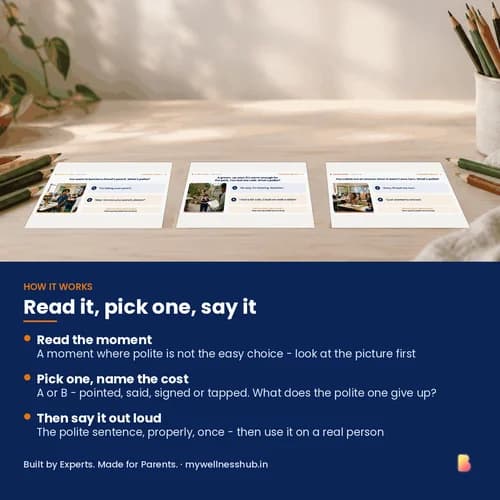
Step 1: Print or Open the PDF
- Print the cards on sturdy paper or open the PDF on a tablet or computer.
- Cut out the cards if using printed versions for hands-on activities.
- Laminate for durability and repeated use.
Step 2: Introduce the Four Card Types
- Show the child the four kinds: Magic Words, Asking For Things, Saying It Gently, Who Am I Talking To?
- Briefly explain what makes each type unique using clear examples.
- This builds understanding of apologising and register awareness.
Step 3: Choose and Present a Scenario
- Let the child pick a card or select one together based on daily situations.
- Read the scenario, question, and both answer options aloud.
- Encourage the child to observe the photo and context.
Step 4: Practice Saying the Polite Answer
- Ask the child to say, sign, or select the polite answer out loud or on their device.
- Remind them that any communication mode is valid for this activity.
- Model the polite response first if needed.
Step 5: Discuss What the Polite Answer Costs
- Guide the child to name what is given up (e.g., an excuse, a quick turn).
- Use prompts like, "What did you have to let go of to be polite?"
- This step supports perspective-taking and social communication.
Step 6: Play Games and Track Progress
- Use included games, practice log, and keepsake cards for extra engagement.
- Try activities like Sorry With Nothing After It or What Does It Cost?
- Celebrate successes and note growth using the Certificate of Harder to Say.
Activities Using the Resource
1. Polite Versus Blunt Card Sort
Objective: To distinguish between polite and blunt responses using real-life scenarios from the primary_keyword.
How to Play:
- Lay out several cards showing both polite and blunt answers.
- Ask the child to sort cards into "polite" and "blunt" piles, explaining their choices.
- Discuss what the polite answer gives up in each case.
Skill Development:
- Builds social reasoning by comparing language choices.
- Increases awareness of polite language in context.
- Strengthens ability to identify social cues.
2. Practicing Apologising Without Excuses
Objective: To master apologising with no but in everyday situations.
How to Play:
- Select cards featuring apologising scenarios (e.g., broken crayon, spilled drink).
- Have the child practice saying the apology aloud, leaving out any excuses.
- Use the keepsake card "Sorry that means it" as a visual reminder.
Skill Development:
- Improves sincere apology skills.
- Reduces reliance on excuses or justifications.
- Reinforces responsibility for actions.
3. Asking for Things with Room for No
Objective: To practice asking for things politely while allowing the other person to say no.
How to Play:
- Pick cards from the Asking For Things set (e.g., joining a game, getting a turn).
- Role-play both the polite and blunt ways to ask, using the photos as cues.
- Discuss how the polite way leaves space for the other person's choice.
Skill Development:
- Encourages assertive yet respectful requests.
- Teaches turn-taking and patience.
- Develops understanding of consent in social settings.
4. Matching Register to the Listener
Objective: To adapt language and tone based on who the child is talking to.
How to Play:
- Use Who Am I Talking To? cards (e.g., shopkeeper, friend's parent).
- Present a scenario and ask the child to choose the most appropriate way to speak.
- Practice switching register by repeating the same request for different listeners.
Skill Development:
- Increases register awareness.
- Builds adaptability in communication.
- Enhances perspective-taking with different social roles.
5. What Does the Polite Answer Cost?
Objective: To identify and name what is given up when choosing the polite answer.
How to Play:
- After practicing a scenario, ask, "What did you have to let go of to be polite?"
- Use cards where the cost is clear (e.g., giving up an excuse or quick answer).
- Encourage the child to state the cost out loud or on their device.
Skill Development:
- Deepens self-reflection on social choices.
- Fosters empathy by considering others' feelings.
- Supports emotional regulation in communication.
6. Saying It Gently Practice Round
Objective: To practice disagreeing or suggesting gently using real-life examples.
How to Play:
- Select cards from the Saying It Gently set (e.g., suggesting a different game, music too loud).
- Take turns role-playing both the blunt and gentle responses.
- Use prompts to discuss how the gentle answer changes the conversation.
Skill Development:
- Strengthens polite disagreement skills.
- Promotes respectful conversation even with differing views.
- Builds confidence in social negotiation.
Frequently Asked Questions
Q1: What age group is Polite Pick: Costly Choices Picture Cards designed for?
A1: Polite Pick: Costly Choices Picture Cards is suitable for elementary-aged children and up. The scenarios and language are accessible for young learners but also relevant for older children who need practice with nuanced social situations. Adjust the pace and discussion depth to match your child's developmental level.
Q2: Can these cards be used in group social skills sessions?
A2: Yes, these cards are ideal for small groups or classroom social skills lessons. They encourage discussion, role-play, and peer feedback on polite versus blunt responses. Try circle time games or partner activities to maximize engagement.
Q3: Are the cards appropriate for speech therapy with children who use AAC?
A3: Absolutely. The cards are fully accessible for AAC users, allowing responses by pointing, signing, or using a device. Encourage children to use their preferred communication mode for every activity.
Q4: What is the best way to print and prepare the cards for repeated use?
A4: Print the cards single- or double-sided on thick paper and laminate them for durability. Cut along the lines to create individual cards, then store them in a box or pouch. Laminated cards are easy to wipe clean and withstand frequent handling.
Q5: Does this resource support children with autism or speech delay?
A5: Yes, it was designed with children with autism, speech delay, and other communication needs in mind. The real-life photos, clear scenarios, and predictable structure help reduce anxiety and support understanding. Use visual cues and model responses to scaffold learning.
Q6: Can I use the PDF on a tablet or computer without printing?
A6: Yes, the PDF is screen-ready for use on tablets, computers, or interactive whiteboards. Children can point, tap, or verbally respond to scenarios without needing printed cards. This flexibility supports therapy sessions, classrooms, and telepractice.
Q7: What specific skills will my child develop using this resource?
A7: Children will practice apologising with no but, asking politely while leaving room for no, and matching register to the listener. They also learn to name what the polite answer costs and to disagree gently while holding their view. These skills build social awareness and adaptability in real-life situations.
Q8: What are the usage rights for Polite Pick: Costly Choices Picture Cards?
A8: Your purchase grants a single-user or single-classroom license for personal or professional use. You may print or display the PDF for your own sessions but not share, resell, or distribute it. For wider use, please contact Wellness Hub for licensing options.
Q9: How do I receive and download my digital PDF after purchase?
A9: After purchase, you will receive an email with a secure download link for the PDF. Downloads are typically instant, but check your spam folder if you do not see the email. For any issues, Wellness Hub's support team can assist promptly.
Q10: What is Wellness Hub's refund or exchange policy for digital resources?
A10: Wellness Hub does not offer refunds or exchanges on digital downloads due to their instant-access nature. If your file is corrupted or you encounter technical issues, contact support for a replacement. Please review all product details before purchasing to ensure it meets your needs.
Usage Rights and Restrictions
Allowed Usage:
- Personal use by parents, teachers, and therapists.
- Printable for classroom, home, or therapy settings.
- Can be used in group or one-on-one learning sessions.
Not Allowed:
- Reselling, redistributing, or modifying the resource for commercial use.
- Sharing publicly (e.g., on blogs, social media, or websites) without permission.
- Uploading the file to public sharing platforms.
If you need a bulk license for schools or therapy centers, please contact us.
Conclusion
Polite Pick: Costly Choices Picture Cards empowers children to navigate real-life social moments where being polite means giving up an excuse, a quick answer, or the easy way out. Designed for learners who know the words but need practice using them when it matters most, this resource is ideal for children with speech delay, autism, or those who communicate with AAC.
Through focused practice, children develop apologising with no but and learn to disagree or ask for things in a way that respects others. The cards encourage register awareness, helping children adjust their language for different listeners and situations at home, in class, or during therapy.
Start using Polite Pick: Costly Choices Picture Cards today to help your child build confidence, empathy, and adaptable communication skills that last a lifetime.