

Picture Talk: Everyday Places — 10 Printable Busy Scene Posters with 80 Talking Points for Speech Therapy
₹80
₹160
You save ₹80
4.8 (38 ratings)
Grade Levels
Pre-K – Kindergarten (Ages 4–7)
Content Overview
Format: PDF | Pages: 20 | Features: 10 busy scene posters, joint attention, commenting, describing, observing actions
Categories
Share


About the Product
Introduction
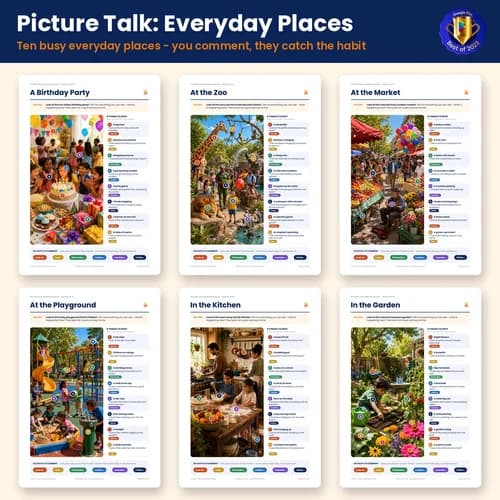
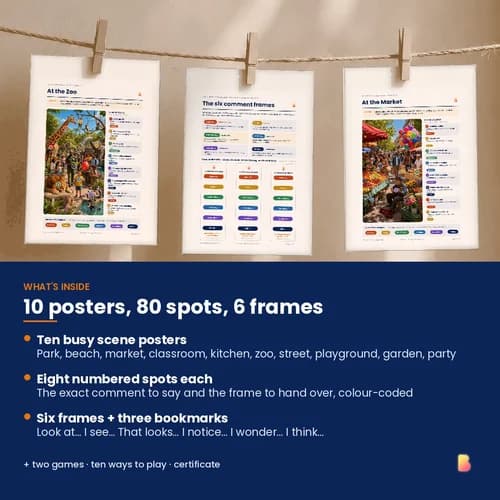
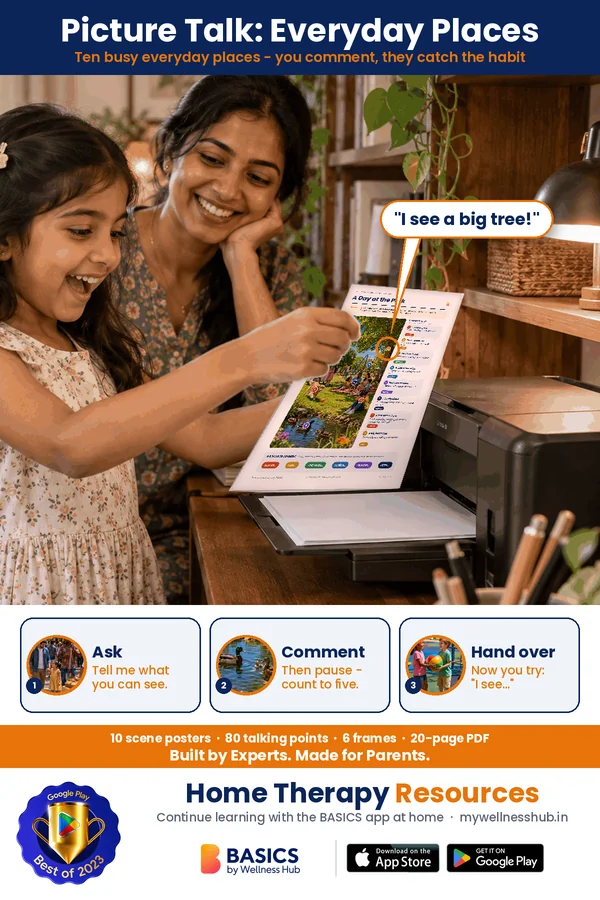
Picture Talk: Busy Scene Commenting Posters PDF offers a vibrant and interactive way for children to practice commenting in real-life settings. This 20-page digital resource features ten full-page busy scene posters, each designed to spark conversations and build language skills in young learners, including those with speech delays or who use AAC. With color-coded comment frames and clear visual cues, children can explore scenes like A Day at the Park, At the Beach, and In the Kitchen while learning to share what they see, think, and wonder.
Children develop essential skills such as observing actions and interpreting feelings and reasons through guided practice with these posters. Each scene includes eight numbered spots, encouraging children to use phrases like I notice… and I think… as they build confidence in expressing their ideas. Measurable outcomes include improved commenting, describing, and the ability to chain comments into a simple story, supporting both expressive and receptive communication growth.
Families, educators, and therapists will find these posters versatile for home, classroom, and therapy sessions. The resource supports children who are ready to move beyond simple naming, making it ideal for joint attention and interactive storytelling in group or one-on-one settings. The included games, cut-out bookmarks, and practice log offer multiple ways to keep engagement high and learning consistent.
Product Details
- Resource Name: Picture Talk: Busy Scene Commenting Posters PDF
- Format: Printable and screen-ready PDF
- Total Pages: 20
- Grade Level: Pre-K, Kindergarten, Early Elementary
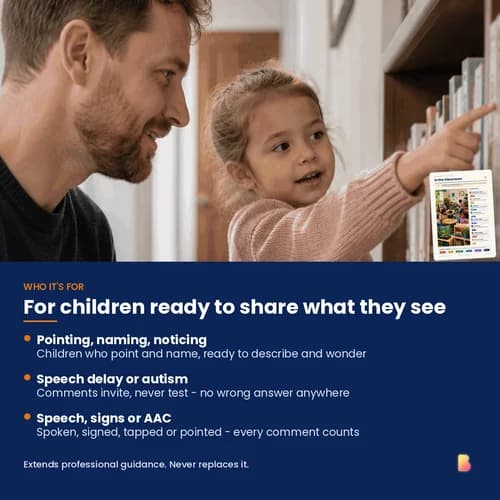
- Designed For: Children developing commenting and describing skills, including AAC users and those with speech delay or autism
- Printing Notes: Suitable for color printing; can be laminated for repeated use
- Best Used In: Home, classroom, speech therapy, and special education settings
- Sets / Flashcards / Activities: 10 busy scene posters, 6 comment frames, 2 games, practice log, cut-out bookmarks
- Visuals / Illustrations: Full-color, detailed busy scene illustrations with numbered spots and visual comment cues
Educational Benefits
1. Builds Commenting and Describing Skills
- Children learn to move beyond naming by using structured frames to describe scenes.
- They gain confidence in sharing observations and ideas aloud or with AAC.
- primary_keyword supports growth in expressive language for all communication styles.
2. Strengthens Joint Attention and Social Interaction
- Guided comment frames encourage shared focus between child and adult.
- Children practice taking conversational turns and responding to others' ideas.
- These skills lay the foundation for collaborative play and group learning.
3. Enhances Observing Actions and Details
- Numbered spots prompt children to notice and talk about specific scene elements.
- They develop careful observation habits and learn to express what they see.
- This attention to detail supports later reading and comprehension skills.
4. Fosters Interpreting Feelings and Reasons
- Children use prompts to wonder about characters' emotions and actions.
- They practice thinking about why things happen and how others might feel.
- This builds empathy and early perspective-taking abilities.
5. Supports Chaining Comments into Stories
- Children link observations using sentence frames to create simple storylines.
- They learn to sequence ideas and build narrative skills naturally.
- commenting practice becomes a bridge to storytelling and conversation.
Instructions for Use
Step 1: Print or Display the Posters
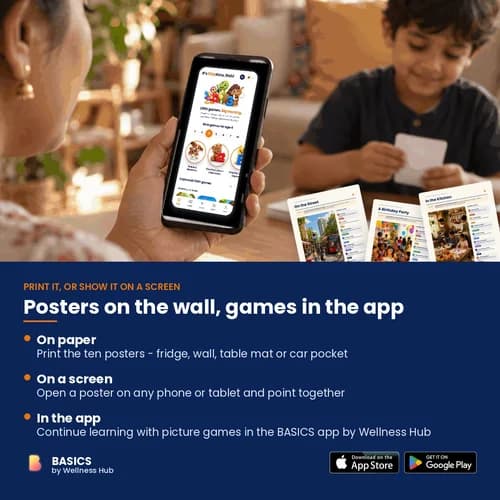
- Choose to print the PDF in color or display it on a screen for group sessions.
- Laminating posters increases durability for repeated use.
- Keep posters accessible for spontaneous practice.
Step 2: Introduce the Comment Frames
- Show the six color-coded sentence frames and explain their meanings.
- Model how to use each frame for joint attention and describing.
- Encourage children to point, sign, or speak their comments.
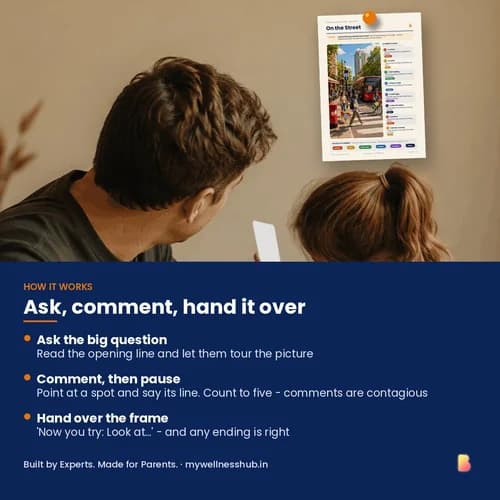
Step 3: Explore a Scene Together
- Select a busy scene poster and review the numbered spots as a group.
- Guide the child to use the observing actions frame for their first comment.
- Pause after each comment to allow the child to process and respond.
Step 4: Practice Commenting with Prompts
- Hand over a sentence frame and read the matching comment aloud.
- Invite the child to repeat, sign, or tap the comment as appropriate.
- Use lsi_terms[0] naturally: Encourage describing skills by prompting, "That looks fun because…"
Step 5: Play the Included Games
- Try "I Spy, With Frames" or "The Story of the Scene" for interactive practice.
- Use the practice log to track progress and celebrate new skills.
- Incorporate lsi_terms[2] by prompting children to chain comments into a story.
Step 6: Carry Over to Daily Routines
- Encourage commenting during everyday activities using the provided bookmarks.
- Prompt children to notice, wonder, and describe in real-life settings.
- Revisit posters regularly to reinforce skills and maintain engagement.
Activities Using the Resource
1. Busy Scene Commenting Game
Objective: To practice using the primary_keyword for sharing observations and building expressive language.
How to Play:
- Choose a scene (e.g., At the Market) and review the numbered spots.
- Take turns making comments using the color-coded frames, such as "I notice…" or "I think…".
- Encourage the child to point, sign, or speak each comment about what they see.
Skill Development:
- Builds commenting and describing skills with visual support.
- Strengthens joint attention and turn-taking.
- Supports expressive language for AAC users and speakers.
2. Describing Details Challenge
Objective: To develop describing skills by focusing on specific features and actions in the scene.
How to Play:
- Select a poster and pick one numbered spot.
- Ask the child to use the "That looks…" frame to describe what's happening or how something appears.
- Prompt for more detail: "What else do you notice about it?"
Skill Development:
- Expands descriptive vocabulary and sentence structure.
- Encourages careful observation of actions and details.
- Increases confidence in sharing ideas aloud or with AAC.
3. Joint Attention Picture Walk
Objective: To build joint attention by sharing focus on a busy scene and commenting together.
How to Play:
- Sit side by side and look at a poster (e.g., In the Garden).
- Use the "Look at…" frame to direct attention to a numbered spot.
- Pause and wait for the child to respond or comment back.
Skill Development:
- Fosters shared focus and social engagement.
- Practices conversational turn-taking.
- Reinforces the use of visual cues for communication.
4. Chaining Comments into a Story
Objective: To use the primary_keyword for linking observations and creating a simple narrative.
How to Play:
- Choose a scene and start with a comment using "I see…" or "I notice…".
- Invite the child to add another comment, chaining ideas together.
- Continue until you've created a short story about the scene.
Skill Development:
- Develops sequencing and narrative skills.
- Encourages logical connections between ideas.
- Supports storytelling using structured frames.
5. Observing Actions and Reactions
Objective: To practice observing actions and interpreting feelings or reasons in context.
How to Play:
- Pick a busy scene with visible actions (e.g., At the Playground).
- Use the "I wonder…" frame to prompt thoughts about what's happening or why.
- Discuss possible feelings or reasons behind each action.
Skill Development:
- Enhances observation and inferencing abilities.
- Builds empathy and perspective-taking.
- Strengthens reasoning about actions and emotions.
6. Comment Jar Turn-Taking Game
Objective: To promote commenting practice and social interaction in a group or pair.
How to Play:
- Place comment frames in a jar and take turns drawing one.
- Each player uses the frame to make a comment about a numbered spot.
- Continue until all frames are used, celebrating creative or thoughtful comments.
Skill Development:
- Improves turn-taking and group participation.
- Provides repeated practice with structured commenting.
- Encourages flexible thinking and expression.
Frequently Asked Questions
Q1: What ages and developmental stages are the Picture Talk: Busy Scene Commenting Posters best for?
A1: These posters are ideal for children ages 3–8 who can point and name and are ready to practice describing and commenting. They support early elementary learners, children with speech delay, and AAC users. Children at the stage of sharing observations and building expressive language will benefit most.
Q2: Can I use these busy scene posters with small groups or in a classroom setting?
A2: Yes, these posters are designed for flexible use in classrooms, therapy groups, or at home. The large, detailed scenes and color-coded comment frames make them easy to share with multiple children at once. Try group games or collaborative storytelling to encourage peer interaction.
Q3: Are the posters suitable for speech therapy or AAC sessions?
A3: Absolutely, these posters are highly effective for speech therapy and AAC intervention. They provide structured opportunities for practicing commenting, describing, and joint attention using visual supports. Therapists can model, prompt, and adapt the comment frames for any communication method.
Q4: What is the best way to print and prepare the commenting posters for repeated use?
A4: Print the posters in color on sturdy paper and laminate them for durability. Laminated posters can be wiped clean and used with dry-erase markers for interactive practice. Store them in a binder or display them on an easel for easy access during sessions.
Q5: How do these posters support children with special needs or communication differences?
A5: The resource is designed with full AAC parity and supports children with autism, speech delay, or other communication needs. Visual cues, clear frames, and flexible response options (speaking, signing, pointing, or tapping) make it accessible for diverse learners. You can scaffold support by modeling comments and gradually increasing independence.
Q6: Can the posters be used on a tablet or computer without printing?
A6: Yes, the PDF is screen-ready and works well on tablets, computers, or interactive whiteboards. Children can point to numbered spots or use digital annotation tools to practice commenting. This option is perfect for teletherapy, remote learning, or on-the-go sessions.
Q7: What specific language and social skills will children develop with this resource?
A7: Children will build skills in commenting, describing, joint attention, and interpreting actions and feelings. The structured frames promote expressive language and help children chain comments into simple stories. Socially, children practice turn-taking, perspective-taking, and collaborative conversation.
Q8: What are the usage rights for the Picture Talk: Busy Scene Commenting Posters PDF?
A8: Your purchase includes a single-user license for personal, classroom, or therapy use. Redistribution, resale, or sharing outside your immediate setting is not permitted. For multi-site or organizational licensing, please contact Wellness Hub directly.
Q9: How do I receive and access my digital download after purchase?
A9: After purchase, you will receive an instant download link via email. The PDF file is compatible with all major devices and can be saved for future use. If you have trouble accessing your file, Wellness Hub's support team is ready to assist.
Q10: What is Wellness Hub's refund or exchange policy for digital resources?
A10: Wellness Hub offers refunds or exchanges for digital resources if there is a technical issue or the file is defective. Please contact support within 7 days of purchase with your order details. The team will resolve your concern promptly to ensure satisfaction.
Usage Rights and Restrictions
Allowed Usage:
- Personal use by parents, teachers, and therapists.
- Printable for classroom, home, or therapy settings.
- Can be used in group or one-on-one learning sessions.
Not Allowed:
- Reselling, redistributing, or modifying the resource for commercial use.
- Sharing publicly (e.g., on blogs, social media, or websites) without permission.
- Uploading the file to public sharing platforms.
If you need a bulk license for schools or therapy centers, please contact us.
Conclusion
Picture Talk: Busy Scene Commenting Posters PDF empowers children to build real-world communication skills through engaging, guided practice. Designed for young learners, AAC users, and those with speech delay, it offers a supportive framework for expressing ideas, sharing observations, and connecting with others in everyday scenes.
Children develop joint attention and interpreting feelings as they use these posters at home, in classrooms, or during therapy. The resource encourages flexible communication, allowing comments to be spoken, signed, or pointed, and supports growth in both language and social understanding.
Start your journey with Picture Talk: Busy Scene Commenting Posters PDF today and help your child gain confidence in commenting, describing, and connecting with the world around them.