

On Topic or Off? The Quiet Takeover — 50 Printable Cards for Spotting Conversation Hijacks
₹80
₹160
You save ₹80
4.8 (44 ratings)
Grade Levels
Grade 1 – Grade 4 (Ages 6–10)
Content Overview
Format: PDF | Pages: 31 | Features: 50 reply cards for practicing staying on topic and conversation skills
Categories
Share


About the Product
Introduction
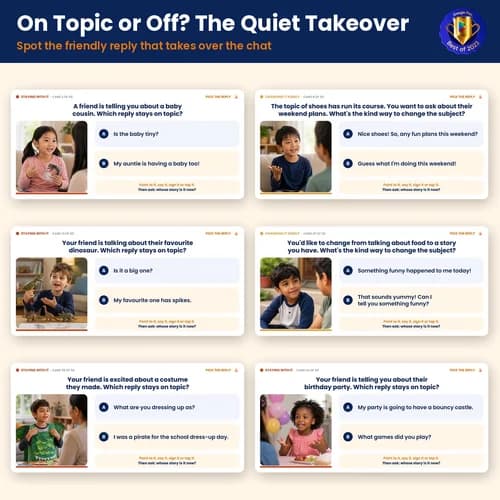
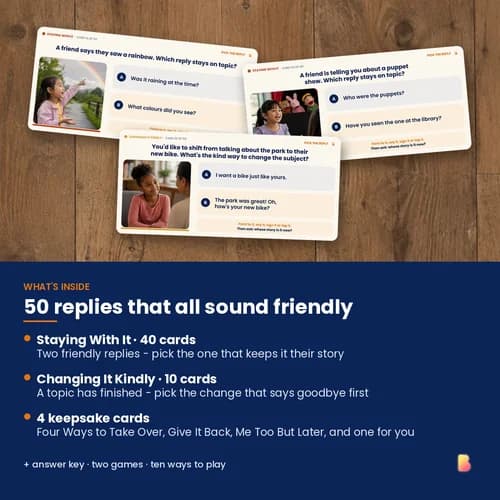
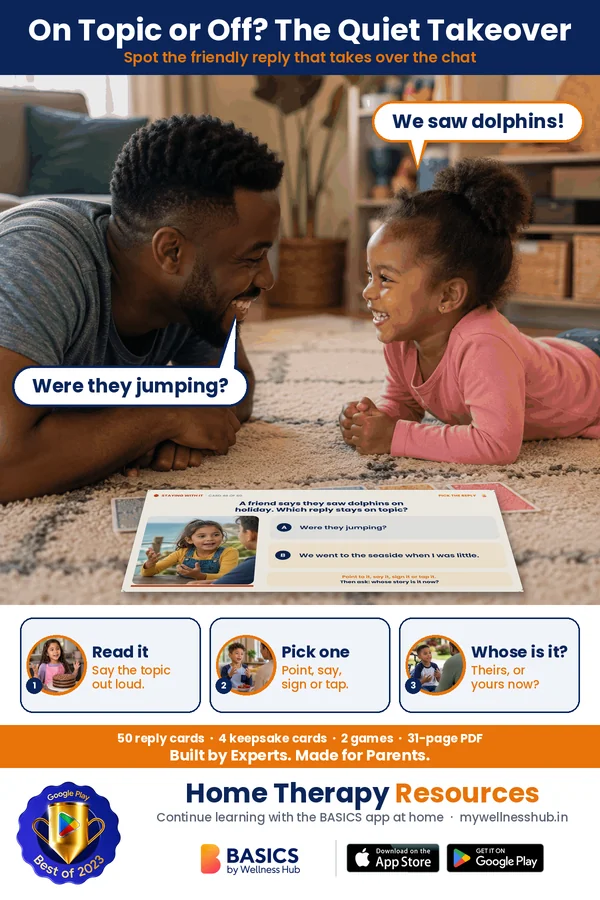
Staying On Topic: Reply Cards for Conversation Skills (Deck 2) is a 31-page digital PDF designed for children who find it challenging to keep conversations focused on their friend's story. This resource features 50 reply cards, each with a real-life photo, a friend's statement, and two possible replies—one that stays on topic and one that gently shifts away. Created for use with children who may have speech delays, autism, or use AAC, these cards help learners practice the subtle art of staying with someone else's topic in friendly conversation.
Learners will build skills in asking first and telling second, as well as waiting before sharing their own stories. The cards encourage children to spot when a reply takes over the conversation and to practice handing the story back to their friend. Outcomes include improved awareness of conversational flow, better listening, and the ability to recognize and respond to the four kinds of topic takeover.
Perfect for home, classroom, and therapy sessions, these cards support everyday carryover and real-world communication. The included games, answer key, and visual supports make them easy to use during speech sessions, social skills groups, or family practice. Children can respond by speaking, signing, or using AAC—ensuring accessibility for all.
Product Details
- Resource Name: Staying On Topic: Reply Cards for Conversation Skills (Deck 2)
- Format: Printable and screen-ready PDF
- Total Pages: 31
- Grade Level: Elementary and up
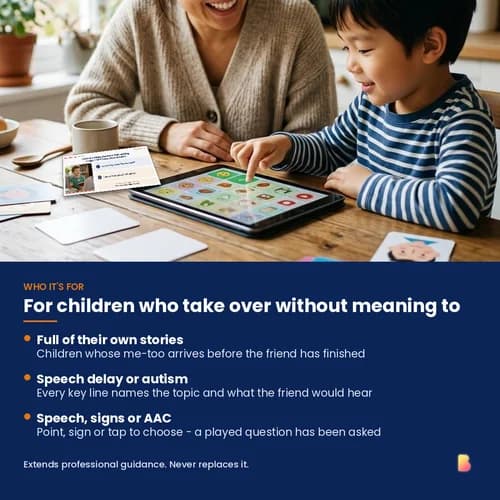
- Designed For: Children with social communication needs, including speech delay, autism, and AAC users
- Printing Notes: Three cards per sheet; color-coded by card type
- Best Used In: Home, classroom, speech therapy, and social skills groups
- Sets / Flashcards / Activities: 50 reply cards, 4 keepsake cards, 2 games, answer key, practice log
- Visuals / Illustrations: Real-life photos on every card
Educational Benefits
1. Builds Topic Maintenance Skills
- Children practice identifying when to stay with a friend's story.
- They learn to recognize subtle topic shifts in conversation.
- This strengthens awareness of conversational flow and boundaries.
2. Enhances Listening and Turn-Taking
- Learners focus on hearing whose story it is before replying.
- They develop patience by waiting their turn to share.
- Consistent practice improves active listening in real interactions.
3. Supports Social Communication for AAC Users
- Cards are fully accessible for children who use AAC or sign language.
- Every reply can be pointed to, signed, or tapped for equal participation.
- This ensures all learners can engage in conversation practice.
4. Teaches Recognizing and Repairing Topic Takeover
- Children spot four kinds of conversational takeover using real examples.
- They learn gentle ways to hand a story back to a friend.
- The resource includes strategies for repairing off-topic replies.
5. Encourages Everyday Carryover of Conversation Skills
- Staying On Topic: Reply Cards for Conversation Skills (Deck 2) offers practical scenarios children encounter daily.
- Skills transfer to home, school, and community settings.
- Everyday carryover helps reinforce progress beyond practice sessions.
Instructions for Use
Step 1: Print or Open the PDF
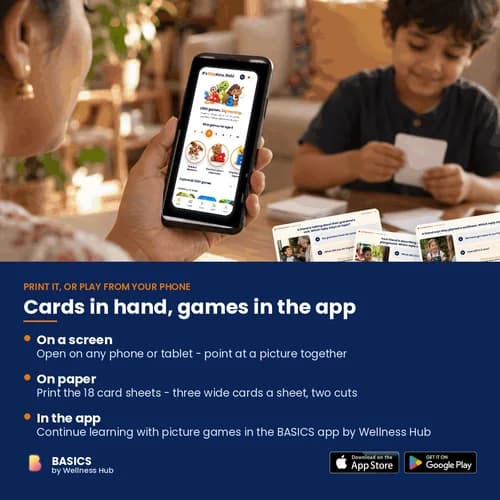
- Print the reply cards or display them on a tablet or computer.
- Cut out the cards if using printed versions for hands-on play.
- Laminate cards for durability and repeated use.
Step 2: Introduce Topic Maintenance
- Explain the skill of topic maintenance using a sample card.
- Discuss how staying with a friend's story keeps conversations connected.
- Model reading the friend's statement aloud together.
Step 3: Play a Round with a Card
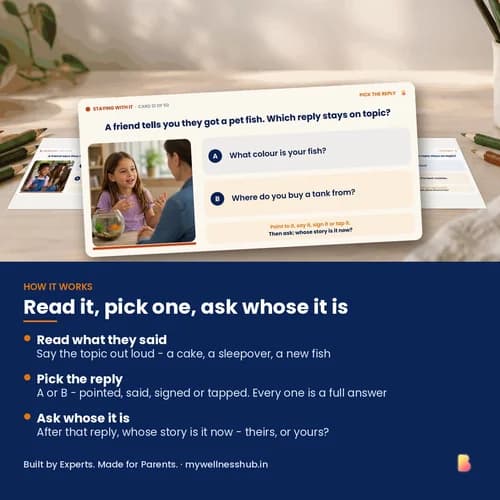
- Read the friend's line and say the topic out loud.
- Ask the child to choose between reply A and B.
- Spot if the reply keeps the conversation on the friend's story.
Step 4: Use the Answer Key for Feedback
- Check the answer key to see which reply stays on topic.
- Review what the friend would hear with each response.
- Encourage discussion about why one reply fits better.
Step 5: Practice with Games and Variations
- Try included games like Whose Is It Now? to reinforce skills.
- Incorporate the skill of asking first and telling second.
- Use the practice log to track progress over time.
Step 6: Encourage Real-Life Application
- Prompt children to use topic maintenance in daily conversations.
- Remind them to wait, listen, and hand stories back to friends.
- Celebrate successes and reflect on moments of effective communication.
Activities Using the Resource
1. Conversation Card Sorting Game
Objective: To build topic maintenance skills using the Staying On Topic: Reply Cards for Conversation Skills (Deck 2).
How to Play:
- Lay out several reply cards and read each friend's statement aloud.
- Ask the child to sort replies into two piles: "Stays on Topic" and "Takes Over."
- Review sorted cards together, discussing why each reply fits its pile.
Skill Development:
- Improves topic recognition in conversation.
- Strengthens sorting and categorization skills.
- Builds confidence in conversational choices.
2. Whose Story Is It? Turn-Taking Practice
Objective: To help children identify whose story is being discussed and practice waiting before sharing their own.
How to Play:
- Read a card's scenario and both reply options.
- Ask, "Whose story is it now?" after each reply.
- Take turns role-playing both the friend and responder.
Skill Development:
- Reinforces turn-taking and patience.
- Develops perspective-taking in conversation.
- Enhances listening and comprehension.
3. Spot the Takeover Challenge
Objective: To teach children to recognize four kinds of conversational takeover using real-life examples.
How to Play:
- Present a card and read both replies.
- Ask the child to identify if either reply is a "me-too," "swap," "edge," or "new question" takeover.
- Use the keepsake cards as visual reminders.
Skill Development:
- Increases awareness of subtle topic shifts.
- Builds vocabulary for conversation analysis.
- Supports self-monitoring in social interactions.
4. AAC and Sign Language Reply Practice
Objective: To support social communication for AAC users by practicing topic-focused replies.
How to Play:
- Show a card and read the friend's statement.
- The child selects and responds using AAC, signs, or pointing.
- Celebrate all forms of participation equally.
Skill Development:
- Promotes AAC and sign language proficiency.
- Fosters inclusive communication habits.
- Encourages expressive language growth.
5. Ask First, Then Tell Role-Play
Objective: To reinforce asking about a friend's topic before sharing personal stories.
How to Play:
- Use a reply card and discuss the friend's statement.
- Practice replying with a question or comment about the friend's story before adding personal input.
- Switch roles and repeat for multiple scenarios.
Skill Development:
- Strengthens conversational sequencing.
- Encourages empathy and curiosity.
- Teaches self-regulation in dialogue.
6. Everyday Carryover Conversation Log
Objective: To encourage real-life application of topic maintenance skills outside practice sessions.
How to Play:
- After practicing with cards, prompt the child to use a learned reply in a real conversation.
- Record the interaction in the practice log included in the resource.
- Review and celebrate successful topic maintenance at the end of the week.
Skill Development:
- Supports generalization to daily life.
- Builds self-reflection and progress tracking.
- Reinforces positive communication habits.
Frequently Asked Questions
Q1: What age group is best for using Staying On Topic: Reply Cards for Conversation Skills (Deck 2)?
A1: This resource is designed for elementary-aged children and up. The real-life scenarios and reply choices are appropriate for ages 6 to 12, but older students with social communication needs can also benefit. Adjust support and discussion depth to match the learner's age and language level.
Q2: Can these reply cards be used in a classroom group activity?
A2: Yes, the cards work well in small group or whole-class social skills lessons. Students can take turns reading, choosing replies, and discussing whose story is being followed. Group play encourages peer modeling and collaborative learning.
Q3: Are these cards suitable for speech therapy sessions, especially for children with autism?
A3: Absolutely, these reply cards are ideal for speech therapy, including sessions with autistic children. The structured choices and visual supports help target topic maintenance and perspective-taking. Therapists can use them for direct instruction, role-play, and generalization practice.
Q4: What is the best way to print and laminate the reply cards for repeated use?
A4: Print the cards on heavy paper or cardstock for durability. Laminate before cutting to ensure the cards last through frequent handling. Store them by card type or color for easy access during sessions.
Q5: How can I adapt these cards for children with special needs or different communication abilities?
A5: The cards are fully accessible for children who communicate by speaking, signing, or using AAC. You can model responses, offer choices, or use pointing and tapping as valid answers. Visual cues and the answer key support learners at varying levels.
Q6: Can the cards be used digitally on a tablet or screen without printing?
A6: Yes, the PDF is screen-ready for use on tablets, computers, or interactive whiteboards. Children can point, tap, or verbally choose their reply while viewing the cards digitally. This flexibility supports teletherapy and classroom technology integration.
Q7: What specific conversation skills and learning goals does this resource target?
A7: The cards build skills in topic maintenance, recognizing and repairing topic takeover, and asking before telling. Learners practice hearing whose story it is and waiting before sharing their own experiences. These goals support better social communication and everyday conversation success.
Q8: What are the licensing and usage rights for Staying On Topic: Reply Cards for Conversation Skills (Deck 2)?
A8: Purchase includes a single-user license for personal, classroom, or therapy use. You may print or display the resource for your own students or clients but may not share it commercially or post it online. For multi-user or school-wide licensing, contact Wellness Hub for options.
Q9: How do I receive and download the PDF after purchase from Wellness Hub?
A9: After purchase, you receive an instant download link via email and in your Wellness Hub account dashboard. The PDF is ready for immediate use on any device. If you have trouble accessing your file, Wellness Hub's support team can help.
Q10: What is Wellness Hub's refund or exchange policy for digital resources?
A10: Wellness Hub does not offer refunds or exchanges for digital downloads due to the nature of the product. If you experience technical issues or receive the wrong file, contact support for prompt assistance. They are committed to ensuring you receive the correct and accessible resource.
Usage Rights and Restrictions
Allowed Usage:
- Personal use by parents, teachers, and therapists.
- Printable for classroom, home, or therapy settings.
- Can be used in group or one-on-one learning sessions.
Not Allowed:
- Reselling, redistributing, or modifying the resource for commercial use.
- Sharing publicly (e.g., on blogs, social media, or websites) without permission.
- Uploading the file to public sharing platforms.
If you need a bulk license for schools or therapy centers, please contact us.
Conclusion
Staying On Topic: Reply Cards for Conversation Skills (Deck 2) empowers children to master the art of keeping conversations focused on their friend's story. Designed for learners who may find topic maintenance challenging, it offers real-life scenarios and visual supports to build confidence and skill in social communication.
Through repeated practice, children strengthen their ability to recognize topic shifts and develop patience in turn-taking. The resource nurtures perspective-taking and encourages children to wait, listen, and use gentle strategies for handing a story back, making it ideal for home, classroom, or therapy settings.
Start building better conversations by downloading Staying On Topic: Reply Cards for Conversation Skills (Deck 2) today and help your learners develop lasting social confidence and stronger communication habits.