




Hello or Wait? First Hellos — 25 Printable Social Scenario Photo Cards for Starting Conversations
₹80
₹160
You save ₹80
4.8 (37 ratings)
Grade Levels
Grade 1 – Grade 2 (Ages 5–8)
Content Overview
Format: PDF | Pages: 26 | Features: 25 social scenario cards, 60 photo choices, starting interactions, greetings
Categories
Share


About the Product
Introduction
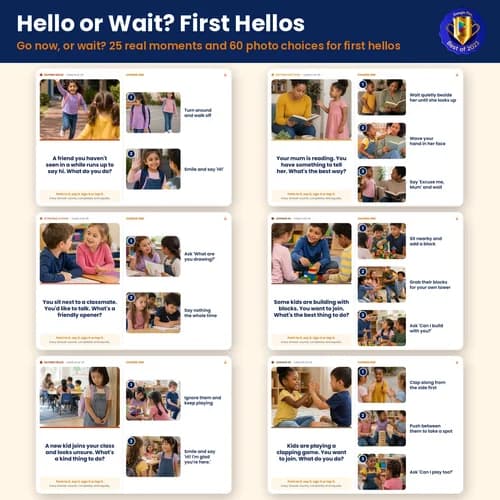
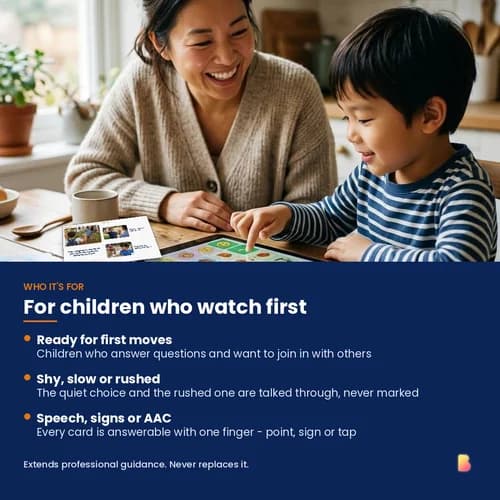
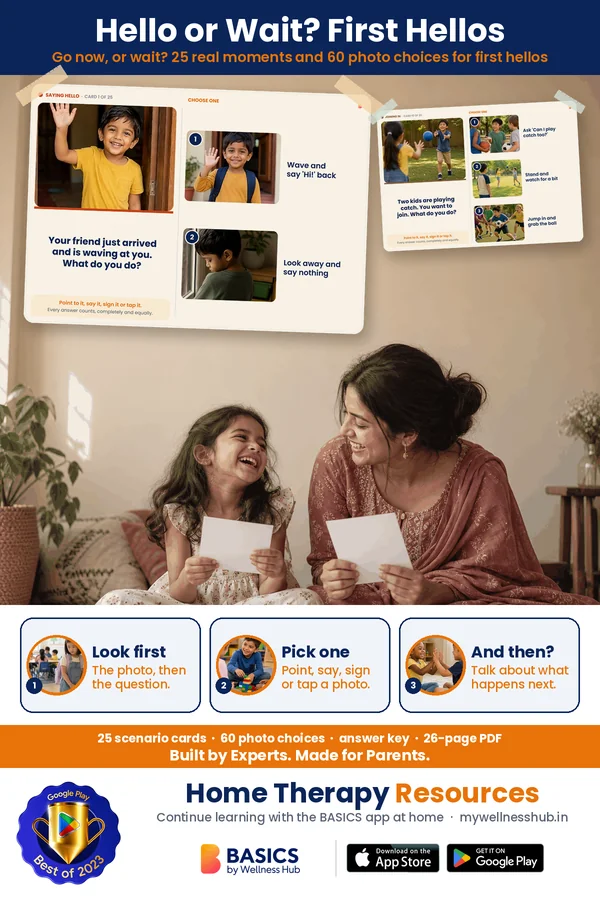
The Hello or Wait? First Moves Social Scenario Cards PDF is a 26-page digital resource designed for children learning to navigate first social interactions. This set features 25 real-life scenario cards, each with large photographs and multiple photo-based response choices, making it accessible for kids who answer questions, communicate with signs or AAC, or are just starting to join in with others. Created for children who may be shy, slow to decide, or rush into social situations, these cards offer gentle, practical support for building confidence in everyday moments.
Children practice starting interactions with peers and adults, greeting and answering greetings, and getting a busy person's attention politely. The resource also encourages reading social moments from photos and thinking ahead to possible outcomes, giving kids the tools to choose quickly and appropriately in real-life situations. Each scenario presents a question and several possible responses, helping children develop the ability to open conversations and join group activities in a supportive, non-judgmental way.
Parents, teachers, and therapists can use these cards at home, in classrooms, or during therapy sessions to support social learning and communication growth. The cards are especially useful for children with speech delay, autism, or those who benefit from visual supports, as each choice is illustrated and answerable by pointing, signing, or tapping. The flexible format makes it easy to adapt to individual needs and group settings.
Product Details
- Resource Name: Hello or Wait? First Moves Social Scenario Cards PDF
- Format: Printable and screen-ready PDF
- Total Pages: 26
- Grade Level: Elementary (ages 5–10)
- Designed For: Children developing social interaction skills, including those using AAC or with speech delay
- Printing Notes: Print single- or double-sided; cards can be cut apart for hands-on use
- Best Used In: Home, classroom, therapy, and social skills groups
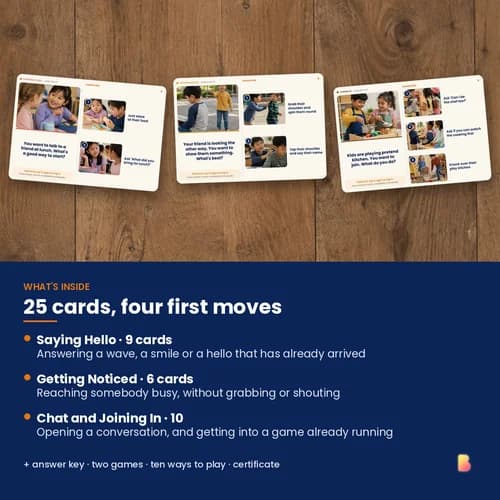
- Sets / Flashcards / Activities: 25 scenario cards, 1 keepsake card, 2 games, answer key, practice log, certificate
- Visuals / Illustrations: 60 real-life photographs for choices, large scenario images on each card
Educational Benefits
1. Social Interaction Initiation Skills
- Children practice starting conversations and joining group activities in real-life settings.
- Scenario cards encourage polite greetings and appropriate first moves with peers and adults.
- The primary_keyword supports confident participation in new social situations.
2. Visual Social Cue Recognition
- Large, real-life photographs help children identify and interpret facial expressions and body language.
- Kids learn to read social moments visually before responding.
- This builds awareness of subtle social signals in everyday life.
3. Decision-Making and Consequence Awareness
- Each scenario offers multiple choices, prompting children to think ahead about possible outcomes.
- Kids gain experience weighing options and understanding the effects of their actions.
- This strengthens quick, thoughtful decision-making in social contexts.
4. AAC and Alternative Communication Inclusion
- Children who use signs, pointing, or AAC devices can fully participate in every activity.
- The resource ensures all responses—spoken or nonverbal—are equally valued.
- This promotes inclusive learning and communication for diverse needs.
5. Flexible Practice and Confidence Building
- Cards can be used in short, gentle sessions to reduce social anxiety.
- Children revisit scenarios, try new choices, and celebrate progress with a certificate.
- This repeated, positive practice fosters lasting social confidence.
Instructions for Use
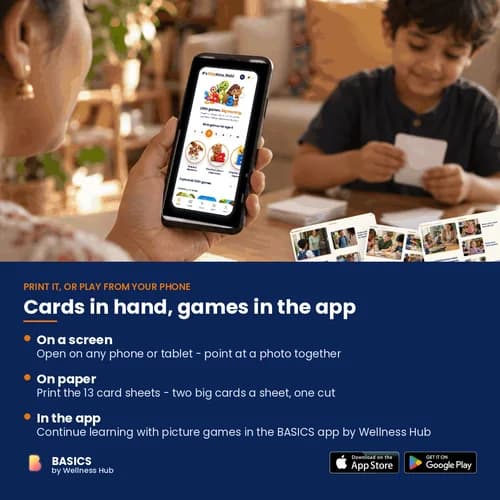
Step 1: Print or Open the PDF
- Print the scenario cards single- or double-sided, or open the file on a tablet or computer.
- Cut apart the cards for hands-on activities if using printed copies.
- Laminate for durability if cards will be used frequently.
Step 2: Introduce the Four First Moves
- Show the keepsake card and explain the four first moves: Saying Hello, Getting Noticed, Starting a Chat, Joining In.
- Use real-life examples to connect moves to familiar situations.
- Encourage children to identify which move fits each scenario.
Step 3: Present a Scenario Card
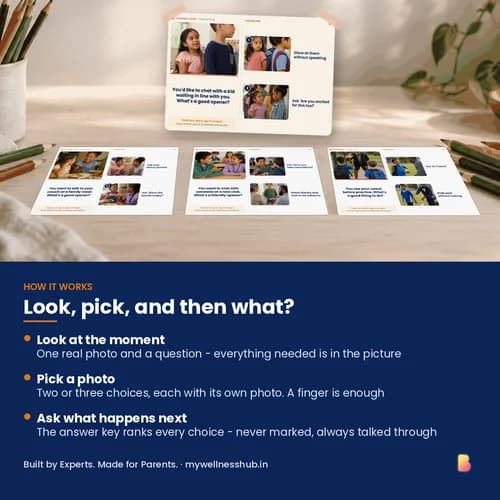
- Select a card and display the large photo and question on the left side.
- Invite the child to look closely and describe what is happening.
- For starting interactions, prompt the child to consider how they might respond.
Step 4: Explore Response Choices
- Review the two or three photo choices on the right side of the card.
- Ask the child to point, tap, sign, or say their chosen response.
- For reading social moments, discuss why each choice might be a good fit.
Step 5: Check the Answer Key and Discuss
- Refer to the answer key for feedback on the chosen response.
- Read aloud the provided line for the selected option and talk about what might happen next.
- For thinking ahead to consequences, ask, "What could happen if you choose this?"
Step 6: Rotate Activities and Celebrate Progress
- Try different cards, play one of the included games, or use the practice log to track growth.
- Celebrate successes with the Certificate of First Hellos.
- Keep sessions short and positive to build confidence over time.
Activities Using the Resource
1. Social Scenario Card Sorting Game
Objective: To build quick decision-making using the Hello or Wait? First Moves Social Scenario Cards.
How to Play:
- Lay out several scenario cards and their photo choices.
- Ask the child to sort cards by the type of first move (e.g., Saying Hello, Joining In).
- Discuss each choice and why it fits that move.
Skill Development:
- Categorizes social situations by interaction type.
- Strengthens visual discrimination using real-life photographs.
- Builds confidence in social decision-making.
2. Practicing Polite Attention-Getting
Objective: To teach polite strategies for getting a busy person's attention in real settings.
How to Play:
- Select a scenario card showing a grown-up occupied (e.g., reading or on the phone).
- Role-play using the choices: waiting, saying "Excuse me," or a gentle tap.
- Reflect on which choice is best and why.
Skill Development:
- Models respectful attention-seeking behaviors.
- Reinforces patience and turn-taking.
- Encourages expressive communication.
3. Reading Social Cues from Photos
Objective: To improve recognition of facial expressions and body language in social moments.
How to Play:
- Show a scenario card and ask the child to describe what each person might be feeling.
- Match photo choices to the emotions or cues in the main image.
- Talk about how these cues guide the next move.
Skill Development:
- Enhances interpretation of nonverbal signals.
- Develops empathy and perspective-taking.
- Supports social awareness in group settings.
4. Choosing What Happens Next
Objective: To practice predicting outcomes and thinking ahead in social interactions.
How to Play:
- Present a scenario and review the possible response photos.
- Ask, "What do you think will happen if you pick this one?"
- Use the answer key to discuss the likely consequences of each choice.
Skill Development:
- Builds cause-and-effect reasoning.
- Encourages thoughtful decision-making.
- Increases anticipation of social results.
5. AAC and Sign Communication Practice
Objective: To ensure full participation for children using AAC, signs, or pointing.
How to Play:
- Use the Hello or Wait? First Moves Social Scenario Cards in a group or one-on-one.
- Invite the child to answer by pointing, signing, or using their AAC device.
- Celebrate all forms of communication equally.
Skill Development:
- Promotes inclusive communication strategies.
- Increases expressive language in multiple modalities.
- Boosts self-advocacy and participation.
6. Three-Card Social Story Sequence
Objective: To build narrative skills and reinforce the primary_keyword through connected scenarios.
How to Play:
- Select three scenario cards and lay them out in a sequence.
- Guide the child to create a story linking the situations using the Hello or Wait? First Moves Social Scenario Cards.
- Retell the story, emphasizing the first moves in each step.
Skill Development:
- Strengthens sequencing and storytelling.
- Reinforces use of the primary_keyword in context.
- Fosters flexible thinking across social situations.
Frequently Asked Questions
Q1: What ages and developmental levels are the Hello or Wait? First Moves Social Scenario Cards best for?
A1: These scenario cards are designed for children ages 5–10 who are beginning to practice social interaction skills. They are suitable for kids who answer questions, use signs or AAC, or need support starting conversations. The real-life photos and simple choices make them accessible for a wide range of developmental levels.
Q2: Can I use these scenario cards in a classroom group activity?
A2: Yes, these cards work well in small groups or whole-class social skills lessons. Each card's large photo and multiple response choices encourage group discussion and peer modeling. Try rotating roles so every child gets a turn to choose and explain their answer.
Q3: Are the cards appropriate for speech therapy sessions with children who use AAC?
A3: Absolutely. The resource is fully inclusive for children who communicate by speaking, signing, pointing, or using AAC devices. Every answer can be given by tapping, pointing, or using a device, and all forms of communication are equally valued.
Q4: What is the best way to print and prepare the scenario cards for repeated use?
A4: Print the cards single- or double-sided on thick paper and laminate for durability. Cut along the guidelines to create individual cards for hands-on activities. Store them in a labeled envelope or box for easy access during sessions.
Q5: How does this resource support children with autism or speech delay?
A5: The cards use clear, real-life photographs and predictable formats to support children with autism or speech delay. Visual choices and gentle feedback help reduce anxiety and encourage participation. You can scaffold support by modeling, offering choices, or using the answer key to guide discussion.
Q6: Can the Hello or Wait? First Moves Social Scenario Cards be used on a tablet or computer without printing?
A6: Yes, the PDF is screen-ready and can be displayed on tablets, computers, or interactive whiteboards. Children can point, tap, or use their AAC device to select answers directly from the screen. This makes the resource flexible for in-person or teletherapy sessions.
Q7: What specific social skills and learning goals do these scenario cards target?
A7: The cards target starting interactions, greeting and answering greetings, polite attention-getting, and joining group activities. They also build skills in reading social cues, making quick decisions, and thinking ahead to consequences. Children practice these skills in real-life contexts, supporting confident participation in new situations.
Q8: What are the licensing and usage rights for the Hello or Wait? First Moves Social Scenario Cards PDF?
A8: Purchase includes a single-user license for use by one family, classroom, or therapy caseload. You may print or display the resource for your own direct work with children. Redistribution, resale, or sharing beyond your own use is not permitted.
Q9: How do I receive and download my PDF after purchase from Wellness Hub?
A9: After completing your purchase, you will receive an email with a secure download link for the PDF. The file is ready for immediate use on any device or printer. If you have trouble accessing your download, Wellness Hub customer support can assist you promptly.
Q10: What is Wellness Hub's refund or exchange policy for digital resources?
A10: Wellness Hub does not offer refunds or exchanges for digital downloads once the file has been accessed. This policy ensures the integrity of digital content distribution. If you encounter technical issues or receive the wrong file, contact support for prompt resolution.
Usage Rights and Restrictions
Allowed Usage:
- Personal use by parents, teachers, and therapists.
- Printable for classroom, home, or therapy settings.
- Can be used in group or one-on-one learning sessions.
Not Allowed:
- Reselling, redistributing, or modifying the resource for commercial use.
- Sharing publicly (e.g., on blogs, social media, or websites) without permission.
- Uploading the file to public sharing platforms.
If you need a bulk license for schools or therapy centers, please contact us.
Conclusion
Hello or Wait? First Moves Social Scenario Cards PDF offers a supportive, visual way for children to practice real-life social skills. Designed for kids who are shy, slow to join, or quick to jump in, it helps them build confidence in starting interactions and choosing their first moves. The resource is ideal for families, teachers, and therapists working with children who benefit from extra support in social settings.
Children develop essential skills like getting noticed and thinking ahead to consequences, making this tool valuable in homes, classrooms, and therapy sessions. The flexible format supports a variety of communication styles, including AAC, and encourages children to participate at their own pace.
Give your learners the chance to grow with Hello or Wait? First Moves Social Scenario Cards PDF—download now and help every child take their first step toward confident, thoughtful social participation.