

Hello or Wait? Choosing the Moment — 25 Printable Social Scenario Cards for Reading Busy or Free
₹80
₹160
You save ₹80
4.9 (33 ratings)
Grade Levels
Grade 1 – Grade 4 (Ages 6–10)
Content Overview
Format: PDF | Pages: 26 | Features: 25 social scenario cards, 58 photo choices, builds social skills and timing
Categories
Share


About the Product
Introduction
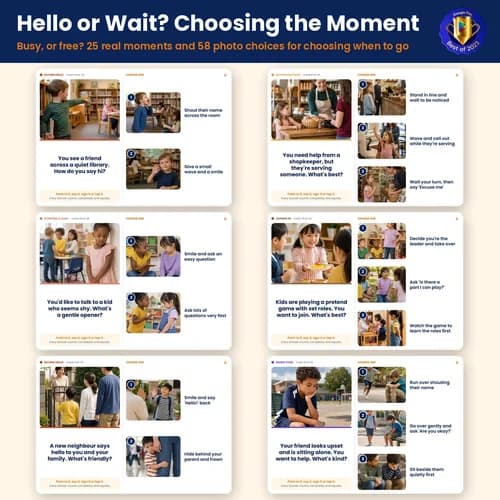
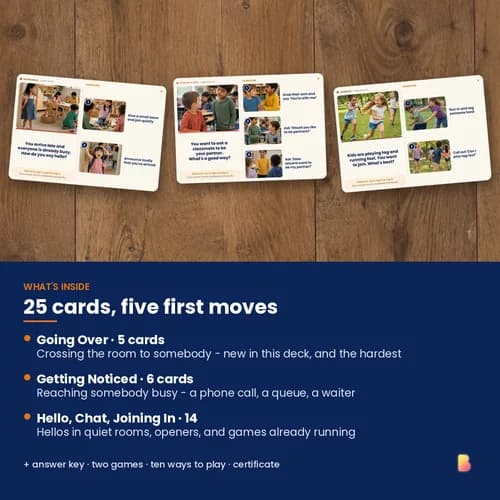
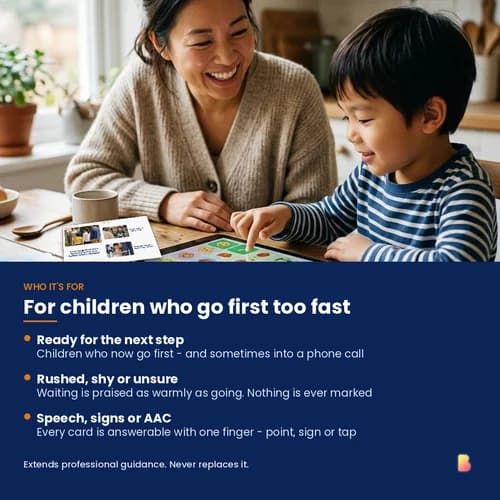
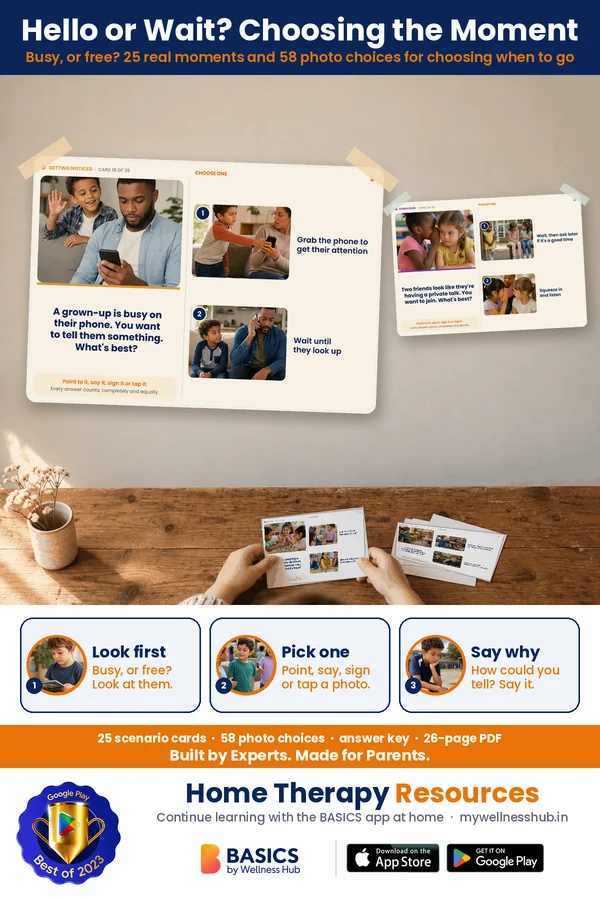
The Hello or Wait? Good Timing Social Scenario Cards PDF is a comprehensive digital resource designed for children learning to navigate the timing of first moves in social situations. This 26-page printable and screen-ready set features 25 real-life scenario cards and 58 photo choices, making it ideal for children with speech delay, autism, or those using signs or AAC. Each card presents a realistic moment, helping kids practice reading social cues and choosing the right time to interact.
Children build practical skills such as reading whether a person is busy or free and waiting for a gap in conversation. The scenarios encourage polite attention-getting, joining conversations or games at the right moment, and approaching someone who is upset. By practicing these skills, children gain confidence and measurable progress in judging timing and responding appropriately in everyday social settings.
Families, teachers, and therapists can use these cards in a variety of contexts, including home, classroom, and therapy sessions. The cards support structured practice in recognizing social signals and making decisions about when to act. With engaging photographs and clear choices, the resource is accessible for all communication styles and encourages inclusive participation.
Product Details
- Resource Name: Hello or Wait? Good Timing Social Scenario Cards PDF
- Format: Printable and screen-ready PDF
- Total Pages: 26
- Grade Level: Elementary (ages 5–12)
- Designed For: Children with speech delay, autism, or using AAC/signs; social skills groups; inclusive classrooms
- Printing Notes: Print single- or double-sided; laminate for durability
- Best Used In: Home, classroom, therapy sessions
- Sets / Flashcards / Activities: 25 scenario cards, 58 photo choices, two games, practice log, certificate
- Visuals / Illustrations: Real-life photographs on every card, labeled sample card, illustrated instructions
Educational Benefits
1. Social Cue Recognition and Interpretation
- Children practice identifying when someone is busy or free using real-life photos.
- They learn to read hands, eyes, and body language for social signals.
- This builds confidence in judging the right moment to interact.
2. Conversation Timing and Turn-Taking Skills
- Kids develop awareness of waiting for a gap before speaking or joining in.
- They practice not interrupting and recognizing finished sentences or pauses.
- These skills help children participate more smoothly in group settings.
3. Polite Attention-Getting and Initiation
- The cards teach strategies for getting a busy person's attention respectfully.
- Children learn to choose between waiting, signaling, or speaking up.
- This supports positive first moves in varied social situations.
4. Inclusive Communication Practice
- The resource supports children who use signs, AAC, or speech.
- Every answer method is valued equally, encouraging full participation.
- Children with diverse needs can access and benefit from every scenario.
5. Real-World Application of the primary_keyword
- Kids apply good timing in daily life, from class video calls to playground games.
- Practice logs and everyday carryover activities reinforce skills beyond the cards.
- The resource's realistic scenarios make learning directly relevant.
Instructions for Use
Step 1: Print and Prepare the Scenario Cards
- Print the PDF single- or double-sided for your preferred use.
- Cut out the 25 scenario cards and the Busy or Free? keepsake card.
- Laminate cards for durability and repeated handling.
Step 2: Introduce the Deck and Sample Card
- Start with the labeled sample card to model how each scenario works.
- Explain the five first moves and the deck map to the child.
- Use the coach corner tips for extra guidance.
Step 3: Play Through a Scenario Round
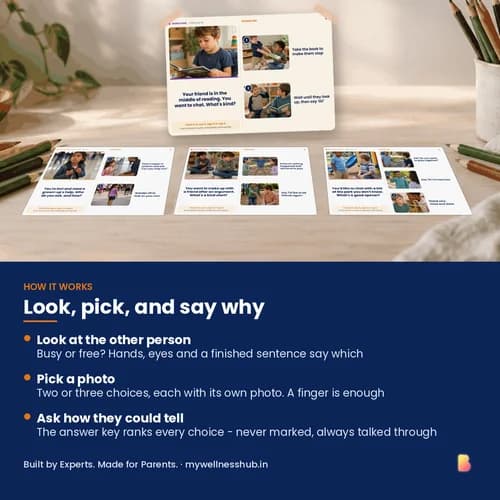
- Present a scenario card and ask the child to look at the main photo.
- Encourage them to read whether the person is busy or free (using hands, eyes, or cues).
- Let them choose a response by pointing, signing, or tapping the photo.
Step 4: Explore Choices and Social Signals
- Discuss each possible response using the numbered photo options.
- Guide the child to name the social signal they noticed before choosing.
- Reinforce that every answer is an invitation to think, not a test.
Step 5: Use the Answer Key and Feedback
- Check the answer key to see how each choice is ranked (Best, Also fine, Quiet, Rushed).
- Read aloud the provided line for the chosen response.
- Celebrate good timing and encourage trying different strategies.
Step 6: Extend Practice and Track Progress
- Play the included Busy or Free? and Wait for the Gap games for extra skill-building.
- Use the practice log to record rounds and progress in conversation timing.
- Award the Certificate of Good Timing to motivate continued growth.
Activities Using the Resource
1. Busy or Free? Photo Sorting Game
Objective: To build good timing by recognizing when a person is busy or free in real-life situations.
How to Play:
- Lay out a mix of scenario card photos showing people's hands and eyes.
- Ask the child to sort each photo into "busy" or "free" piles.
- Discuss what clues (hands, eyes, finished sentence) helped them decide.
Skill Development:
- Improves visual scanning for social cues.
- Strengthens decision-making about timing.
- Builds vocabulary for describing actions.
2. Waiting for a Gap Card Challenge
Objective: To help children use good timing by waiting for a natural pause before speaking or joining in.
How to Play:
- Present a scenario card where someone is talking or busy.
- Have the child watch for a "gap" in the action or conversation.
- Let them tap or point when they think it's the right time to go first.
Skill Development:
- Practices patience and self-control.
- Teaches recognition of conversational pauses.
- Encourages appropriate turn-taking.
3. Choosing the Best First Move
Objective: To practice selecting the most polite and effective way to start a social interaction.
How to Play:
- Show a scenario card with three photo choices for first moves.
- Read the question and each option aloud.
- Ask the child to pick the best move and explain their choice.
Skill Development:
- Builds reasoning for social decision-making.
- Reinforces understanding of polite approaches.
- Encourages expressive language.
4. Social Signal Naming Relay
Objective: To increase awareness of nonverbal cues by identifying social signals in each scenario.
How to Play:
- Show a card and ask, "What is the person's social signal?"
- The child names what they see (e.g., "She's looking at me," "He's busy with his hands").
- Take turns spotting and naming signals with a partner or group.
Skill Development:
- Enhances observation of body language.
- Expands descriptive language skills.
- Supports social-emotional learning.
5. Join the Game Role-Play
Objective: To practice joining a group activity at the right moment using good timing.
How to Play:
- Use a scenario card about joining a game already in progress.
- Act out the scene with peers or adults, taking turns being the "joiner."
- Use the card's photo choices to try different ways of joining and discuss the outcomes.
Skill Development:
- Develops confidence in group entry.
- Teaches respectful waiting and approach.
- Builds cooperation and flexibility.
6. Everyday Carryover Log
Objective: To help children apply good timing skills from the cards to real-life situations.
How to Play:
- After practicing with cards, encourage the child to notice a "good timing" moment during their day.
- Record the moment in the practice log, describing what they saw and did.
- Review the log weekly to celebrate progress and set new goals.
Skill Development:
- Promotes real-world generalization of timing skills.
- Encourages self-reflection and tracking.
- Reinforces daily social awareness.
Frequently Asked Questions
Q1: What ages and abilities are the Hello or Wait? Good Timing Social Scenario Cards PDF designed for?
A1: The resource is designed for children ages 5–12, including those with speech delay, autism, or who use AAC/signs. Real-life scenarios and clear photo choices make it accessible for a wide range of communication and developmental needs. It works well in elementary classrooms, therapy, and home settings.
Q2: Can these scenario cards be used in small groups or social skills classes?
A2: Yes, these cards are ideal for small group activities and social skills groups. Each scenario encourages discussion, turn-taking, and peer modeling of good timing strategies. Try rotating roles so every child practices reading social signals and making first moves.
Q3: Are the cards suitable for speech therapy or occupational therapy sessions?
A3: Absolutely, therapists use these cards to target social cue recognition, conversation timing, and polite initiation. The resource supports children with speech and language challenges as well as those working on pragmatic skills. Therapists can adapt the pace and focus to each child's goals.
Q4: What is the best way to print and prepare the scenario cards for repeated use?
A4: Print the PDF single- or double-sided on thick paper and laminate for durability. Cut out the 25 scenario cards and the keepsake card before use. Laminated cards are easy to clean and withstand frequent handling in therapy or classroom settings.
Q5: How does this resource support children with special needs or those who use AAC?
A5: The resource is fully inclusive, with every answer method—pointing, signing, tapping, or speaking—valued equally. Visual cues and ranked answer keys help children with autism or speech delay participate confidently. Encourage children to use their preferred communication style for every scenario.
Q6: Can the cards be used on a tablet or computer without printing?
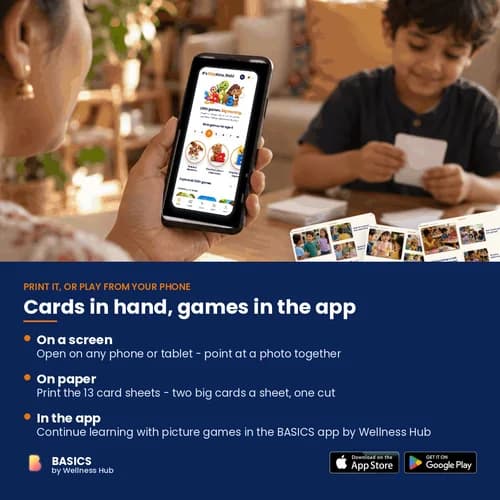
A6: Yes, the PDF is screen-ready and can be displayed on tablets, computers, or interactive whiteboards. Children can tap, point, or use AAC devices to select answers directly from the screen. This flexibility is ideal for teletherapy and digital classrooms.
Q7: What specific social skills and learning goals do these cards address?
A7: The cards build skills in reading social signals, waiting for a gap, and judging good timing for first moves. Children practice polite attention-getting, joining conversations, and approaching peers at the right moment. Progress is reinforced through games, practice logs, and real-life carryover activities.
Q8: What are the usage rights for the Hello or Wait? Good Timing Social Scenario Cards PDF?
A8: Purchase includes a single-user or classroom license for personal or professional use. You may print or display the resource for your own students, clients, or children. Redistribution or commercial sharing is not permitted.
Q9: How do I receive and download my PDF after purchase from Wellness Hub?
A9: After purchase, you will receive an instant download link via email from Wellness Hub. The PDF can be saved to your device and printed or used digitally as needed. If you have trouble accessing the file, Wellness Hub's support team is available to help.
Q10: What is Wellness Hub's refund or exchange policy for digital resources?
A10: Wellness Hub does not offer refunds or exchanges on digital PDF resources once downloaded. This policy ensures the integrity of digital content and licensing. If you experience technical issues or need support, contact Wellness Hub for prompt assistance.
Usage Rights and Restrictions
Allowed Usage:
- Personal use by parents, teachers, and therapists.
- Printable for classroom, home, or therapy settings.
- Can be used in group or one-on-one learning sessions.
Not Allowed:
- Reselling, redistributing, or modifying the resource for commercial use.
- Sharing publicly (e.g., on blogs, social media, or websites) without permission.
- Uploading the file to public sharing platforms.
If you need a bulk license for schools or therapy centers, please contact us.
Conclusion
The Hello or Wait? Good Timing Social Scenario Cards PDF empowers children to master the art of timing their first moves in real-life social situations. Designed for ages 5–12, it supports those who interrupt, rush in, or wait too long, offering practical guidance for children using speech, signs, or AAC.
By practicing reading social signals and polite attention-getting, children learn to recognize when a person is busy or free and how to approach at the right moment. The resource is effective in home, classroom, and therapy settings, fostering independence and confidence in social interactions.
Download the Hello or Wait? Good Timing Social Scenario Cards PDF today and help your child build lasting skills in social timing and respectful communication. Give them the tools to approach others thoughtfully and succeed in every social setting.