

Good Friend, Tricky Friend: The Quieter Kind — 50 Printable Friendship Skills Cards on Conditional Friendship and Standing By
₹80
₹160
You save ₹80
5 (58 ratings)
Grade Levels
Grade 3 – Grade 4 (Ages 8–10)
Content Overview
Format: PDF | Pages: 32 | Features: 50 scenario cards, real photos, social choices, friendship skills, answer key
Categories
Share


About the Product
Introduction
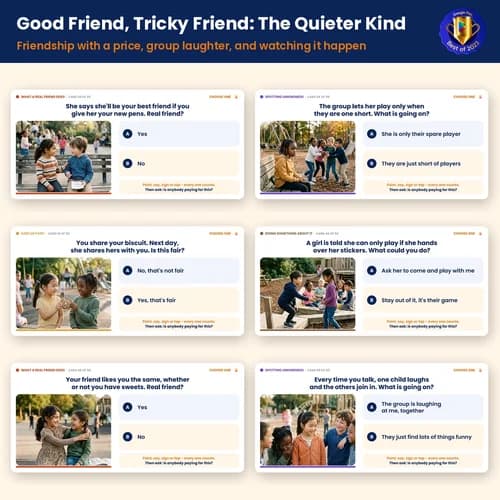
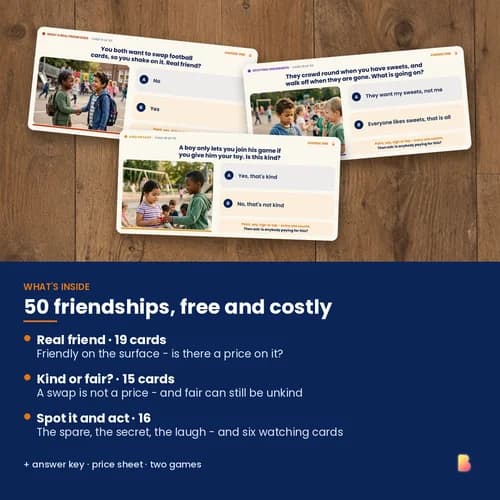
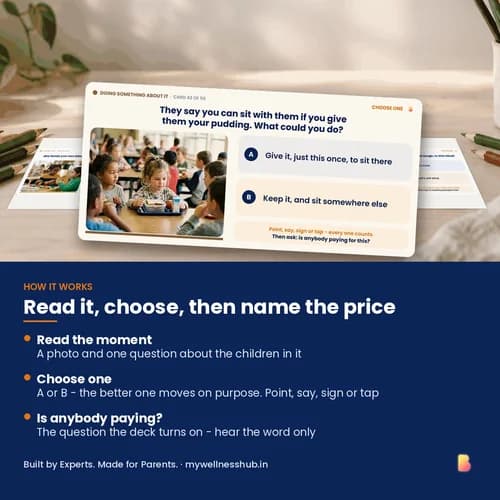
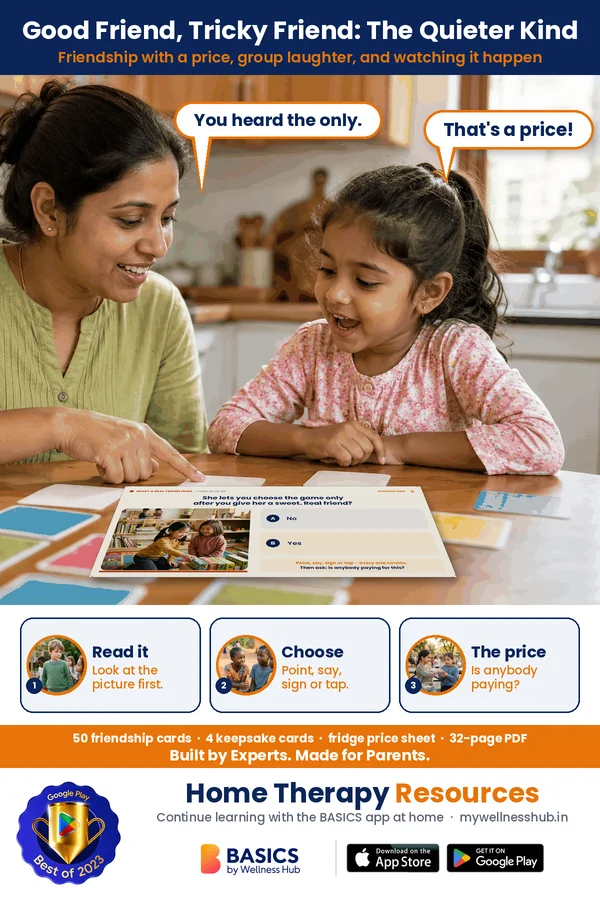
Good Friend, Tricky Friend: Friendship With a Price PDF is a 32-page digital resource designed for older children who are ready to explore the hidden costs in friendships. This set of 50 illustrated cards uses real-life scenarios and thoughtful questions to help children recognize when kindness is genuine and when it comes with strings attached. Each card features a photo, a question about the children shown, and two realistic answer choices, supporting learning in a safe, discussion-based format.
Children will practice skills like naming the price in a friendship and telling a swap from a price, with a focus on understanding subtle social cues. The resource encourages hearing the word only and not laughing along when something feels wrong, helping children build confidence in social problem-solving. Outcomes include improved awareness of fairness, empathy, and the ability to recognize and respond to unkindness that is often overlooked.
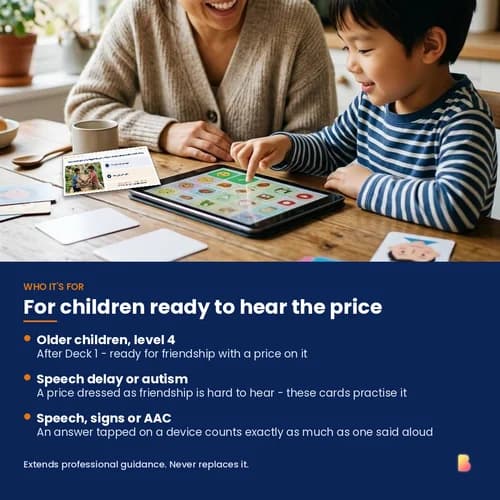
Perfect for home, classroom, and therapy settings, this resource supports children with speech delay, autism, or those who use AAC. Doing something about it is a key theme, with cards and activities designed to empower children to notice, reflect, and act when they see unfairness or exclusion. The flexible format invites open conversation and gentle coaching, making it a valuable tool for group or individual use.
Product Details
- Resource Name: Good Friend, Tricky Friend: Friendship With a Price PDF
- Format: Printable and screen-ready PDF
- Total Pages: 32
- Grade Level: Upper elementary, middle school
- Designed For: Social skills development, speech and language support, AAC users
- Printing Notes: Three cards per sheet, color-coded by card type
- Best Used In: Home, classroom, therapy sessions
- Sets / Flashcards / Activities: 50 scenario cards, four keepsake cards, answer key, games, practice log
- Visuals / Illustrations: Real-life photos on every card, clear and accessible layout
Educational Benefits
1. Social Perspective-Taking and Empathy
- Promotes understanding of how actions affect others in group and one-on-one settings.
- Encourages children to notice subtle social cues and consider different viewpoints.
- Builds empathy by exploring real-life friendship dilemmas and responses.
2. Critical Thinking in Social Situations
- Strengthens decision-making by presenting realistic choices in each scenario.
- Supports children in analyzing motives and identifying fairness in friendships.
- Helps distinguish between genuine kindness and unspoken expectations.
3. Communication and Self-Advocacy Skills
- Fosters clear communication by prompting children to express their thoughts about each card.
- Encourages use of AAC or speech for equal participation in discussions.
- Helps children practice stating boundaries and recognizing when to seek help.
4. Recognizing and Responding to Unkindness
- Teaches children to spot unkindness that is hidden or subtle, not just obvious exclusion.
- Empowers them to notice when someone is paying a price for friendship.
- Supports learning to act or check in with others, not just stay silent.
5. Inclusive Social Emotional Learning
- Ensures full participation for children using AAC, speech delay, or autism supports.
- The primary_keyword, Good Friend, Tricky Friend: Friendship With a Price PDF, provides accessible scenarios for all learners.
- Promotes fairness and belonging, making every child's answer count equally.
Instructions for Use
Step 1: Print or Display the Cards
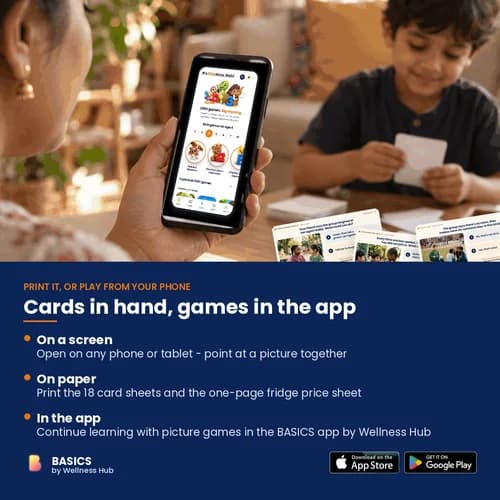
- Choose to print the PDF or use it on a tablet or computer for group or solo sessions.
- Organize cards by color-coded type for easy access.
- Printing three cards per sheet saves paper and keeps sets together.
Step 2: Introduce the Deck and Key Concepts
- Begin with the sample card and thumbnail map to explain the four card types.
- Highlight the importance of fairness and hearing the word only in scenarios.
- Set a supportive tone: cards are invitations, not tests.
Step 3: Facilitate Scenario Discussions
- Present one card at a time and read the scenario aloud.
- Encourage children to answer using their voice, signs, or AAC device.
- Prompt them to explain their reasoning, using skills like naming the price.
Step 4: Explore Games and Activities
- Use included games like Friendship With a Price and Standing Nearby for group play.
- Incorporate the practice log and The Things We Wrote Down for reflection.
- Rotate between solo, partner, and group formats for varied practice.
Step 5: Review with the Answer Key and Price Sheet
- After discussion, check the answer key for insights—focus on what each choice teaches.
- Use the fridge-ready price sheet to reinforce signs of free vs. costly friendships.
- Discuss four gentle tricks and the golden rule for ongoing learning.
Step 6: Encourage Everyday Carryover
- Prompt children to notice and discuss friendship moments outside sessions.
- Use the Certificate of Hearing the Price and four signs it is working for motivation.
- Support children in applying recognizing unkindness in real life and seeking help when needed.
Activities Using the Resource
1. Scenario Card Sorting for Spotting Unkindness
Objective: To build the ability to identify unkindness that is hidden in everyday social situations.
How to Play:
- Lay out a mix of Spotting Unkindness and What a Real Friend Does cards.
- Ask children to sort cards into "kind," "unkind," or "not sure" piles.
- Discuss each choice, focusing on clues like exclusion or secretive behavior.
Skill Development:
- Improves discrimination between genuine and disguised unkindness.
- Strengthens reasoning about social intent.
- Builds confidence in naming the price in friendships.
2. Yes/No Choice Discussion Using Good Friend, Tricky Friend: Friendship With a Price PDF
Objective: To practice decision-making and using the primary_keyword to recognize fair and unfair friendship moments.
How to Play:
- Present a card and read the scenario with both answer choices.
- Children select A or B (Yes/No or two sentences) and explain their choice.
- Compare answers and discuss what makes a friendship "free" or "costly."
Skill Development:
- Develops critical thinking about motives and fairness.
- Encourages expressive communication or AAC use.
- Reinforces understanding of the primary_keyword in real-life contexts.
3. Role-Playing Fair Swaps and Prices
Objective: To help children tell the difference between a fair swap and paying a price for inclusion.
How to Play:
- Choose Kind or Fair? cards that show swaps and "friendship with a price."
- Act out each scenario with simple props or gestures.
- Pause to ask: "Is anyone paying for this friendship? Why or why not?"
Skill Development:
- Builds perspective-taking and empathy.
- Enhances ability to spot fairness versus pressure.
- Strengthens expressive language in social play.
4. Group Game: Not Laughing Along
Objective: To support children in recognizing and resisting peer pressure to join in unkindness.
How to Play:
- Use cards where a group laughs at one child or excludes someone.
- Children decide what they would do: join in, stay silent, or act differently.
- Practice responses: "I won't laugh," "That's not okay," or "Let's include them."
Skill Development:
- Increases self-advocacy and assertiveness.
- Teaches strategies for resisting negative group dynamics.
- Improves social awareness of subtle exclusion.
5. Reflection Journal: When You See It Happen
Objective: To encourage self-reflection and planning for real-life situations involving unkindness.
How to Play:
- After a session, children choose a Doing Something About It card.
- Write or dictate a short journal entry: "What would I do if I saw this?"
- Share ideas with the group or a trusted adult for feedback.
Skill Development:
- Fosters reflective thinking and emotional regulation.
- Encourages proactive planning for tricky situations.
- Supports written or spoken communication skills.
6. AAC and Speech Parity Practice
Objective: To ensure equal participation and confidence for AAC users and children with speech delays.
How to Play:
- Present any card and prompt children to answer using their preferred method (speech, sign, or AAC).
- Celebrate all responses equally and model using AAC yourself if appropriate.
- Rotate turns so every child practices both giving and explaining answers.
Skill Development:
- Promotes inclusive communication and participation.
- Builds confidence in using AAC or alternative communication.
- Reinforces that every answer counts in group learning.
Frequently Asked Questions
Q1: What age group is Good Friend, Tricky Friend: Friendship With a Price PDF designed for?
A1: This resource is best suited for upper elementary and middle school students, typically ages 8–13. The scenarios and questions address complex social dynamics relevant to older children. It is especially helpful for those who have completed Deck 1 and are ready for deeper discussions about fairness and hidden unkindness.
Q2: Can these friendship cards be used in a classroom group setting?
A2: Yes, the cards are ideal for small groups, class discussions, or social skills groups. Each card's question and choices prompt open conversation and peer learning. Try rotating roles so every child gets a turn to answer and explain their thinking.
Q3: Are these cards appropriate for speech therapy or AAC users?
A3: Absolutely. The resource is fully accessible for children with speech delays or those who use AAC, with clear visuals and equal value given to spoken or tapped answers. Therapists can model responses and encourage expressive communication in any format.
Q4: How should I print and organize the cards for repeated use?
A4: Print the PDF in color on sturdy paper and laminate for durability. Cut along the lines to separate the three cards per sheet and organize by color-coded type. Store in labeled envelopes or boxes for easy access during sessions.
Q5: Does the resource support children with autism or special needs?
A5: Yes, it is designed for neurodiverse learners, including children with autism, ADHD, or social communication challenges. The consistent structure, real-life photos, and gentle coaching tips help all children participate fully. Use the answer key and gentle tricks to scaffold learning and build confidence.
Q6: Can I use the cards on a tablet or computer instead of printing?
A6: Yes, the PDF is screen-ready for digital use on tablets, computers, or interactive whiteboards. Children can point, tap, or use AAC to respond to each scenario. This flexibility supports teletherapy and blended learning environments.
Q7: What specific social skills and learning goals does this resource target?
A7: The cards help children recognize hidden unkindness, name the price in friendships, and distinguish fair swaps from unfair demands. They also build skills in fairness, empathy, and responding to peer pressure. Practicing with these scenarios prepares children to handle real-life tricky situations with confidence.
Q8: What are the licensing and usage rights for this PDF?
A8: Purchase includes a single-user license for use by one educator, therapist, or family. You may print or display the resource for your own sessions but may not share or distribute it outside your household or organization. For group or school-wide use, please contact Wellness Hub for additional licensing options.
Q9: How will I receive and download Good Friend, Tricky Friend: Friendship With a Price PDF?
A9: After purchase, you will receive an instant download link via email from Wellness Hub. The PDF can be saved to your device and printed or used digitally as needed. If you have trouble accessing your file, Wellness Hub's support team is available to help.
Q10: What is Wellness Hub's refund or exchange policy for digital resources?
A10: Wellness Hub does not offer refunds or exchanges on digital PDF resources once downloaded. This policy protects the integrity and copyright of their materials. If you experience technical issues or receive the wrong file, contact customer support for prompt assistance.
Usage Rights and Restrictions
Allowed Usage:
- Personal use by parents, teachers, and therapists.
- Printable for classroom, home, or therapy settings.
- Can be used in group or one-on-one learning sessions.
Not Allowed:
- Reselling, redistributing, or modifying the resource for commercial use.
- Sharing publicly (e.g., on blogs, social media, or websites) without permission.
- Uploading the file to public sharing platforms.
If you need a bulk license for schools or therapy centers, please contact us.
Conclusion
Good Friend, Tricky Friend: Friendship With a Price PDF empowers older children—including those with speech delays or who use AAC—to recognize the hidden costs in friendships and build stronger social awareness. By exploring real-life scenarios, this resource helps children identify when kindness is genuine and when it comes with strings attached, supporting their growth into confident, thoughtful friends.
Through practice, children develop the ability to name the price in social situations and reflect on fairness, while also learning strategies for self-advocacy. The flexible format makes it easy to use at home, in classrooms, or during therapy, and supports a wide range of communication styles and needs.
Download Good Friend, Tricky Friend: Friendship With a Price PDF today to help your child or students build empathy, spot unkindness, and make fair, healthy choices in their friendships. With gentle guidance and real-world examples, this resource lays the groundwork for lifelong social confidence and understanding.