

Good Friend, Tricky Friend: Spot the Signs — 50 Printable Friendship Skills Cards for Spotting Unkindness and Who to Tell
₹80
₹160
You save ₹80
4.8 (39 ratings)
Grade Levels
Grade 3 – Grade 4 (Ages 8–10)
Content Overview
Format: PDF | Pages: 32 | Features: 50 friendship cards, real-life photos, social skills, decision-making practice
Categories
Share


About the Product
Introduction
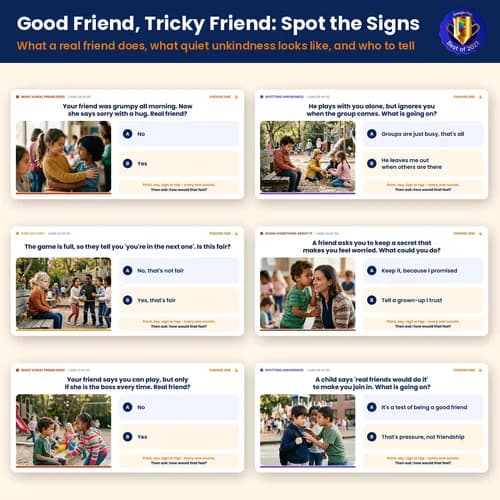
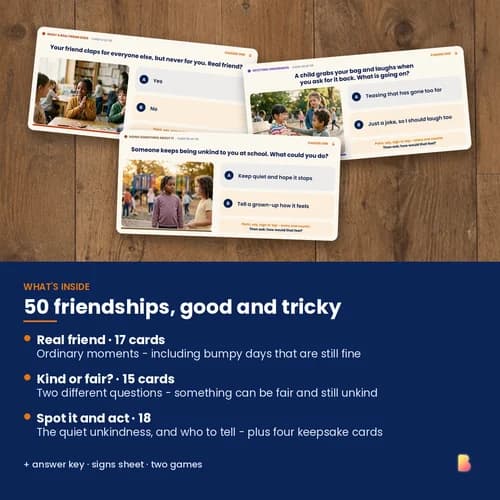
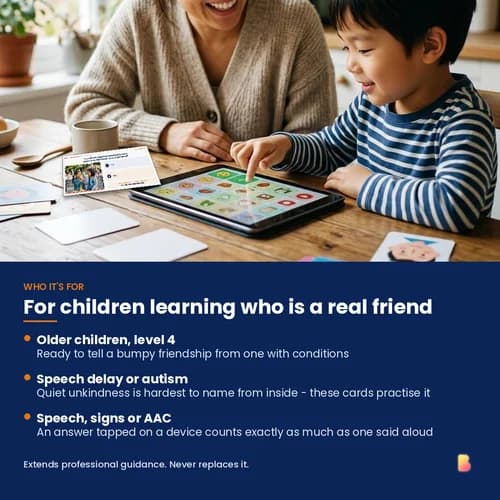
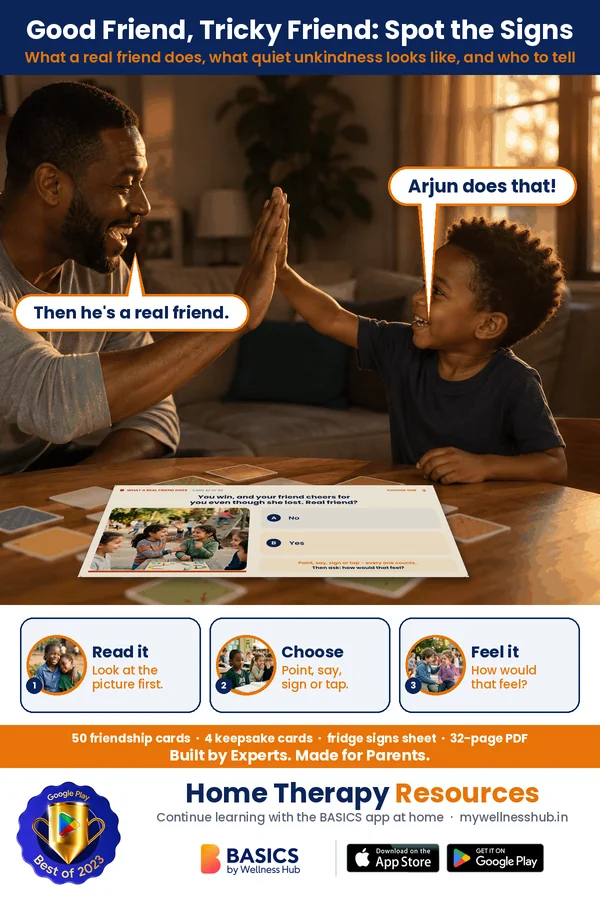
Good Friend, Tricky Friend: Spotting the Signs Card Deck is a 32-page printable and screen-friendly PDF designed for older children ready to explore the complex world of friendships. This resource features 50 photo-based cards, each with a real-life scenario and two thoughtful choices, helping kids tell the difference between a bumpy friendship and a truly bad one. Created for classrooms, therapy, and home use, the deck supports children with speech delays, autism, or those using AAC, making social learning accessible and inclusive.
Children practice skills like naming a feeling before a rule and telling a fair choice from a kind one. The cards encourage spotting "only sometimes" friendships and recognizing when it's okay to say no. Each scenario builds confidence in understanding social cues, making choices, and knowing when and how to seek help from trusted adults.
In therapy sessions, classrooms, or at home, children engage with realistic friendship dilemmas and gentle guidance. The deck's four color-coded categories—What a Real Friend Does, Kind or Fair?, Spotting Unkindness, and Doing Something About It—foster meaningful conversations. The included answer key and keepsake cards make this resource easy to use for group activities, one-on-one learning, or family discussions.
Product Details
- Resource Name: Good Friend, Tricky Friend: Spotting the Signs Card Deck
- Format: Printable and screen-ready PDF
- Total Pages: 32
- Grade Level: Upper elementary and middle school
- Designed For: Social skills learning, speech therapy, AAC users, inclusive classrooms, and home use
- Printing Notes: Three cards per sheet; color-coded by type; suitable for single- or double-sided printing
- Best Used In: Small groups, one-on-one sessions, SEL lessons, counseling, and home discussion
- Sets / Flashcards / Activities: 50 scenario cards, 4 keepsake cards, answer key, sample card, practice log, and games
- Visuals / Illustrations: Real-life photos on every card; clear, accessible design for all learners
Educational Benefits
1. Social Problem-Solving Practice
- Guides children through real-life friendship dilemmas using relatable scenarios.
- Strengthens decision-making by offering two realistic choices per card.
- Builds confidence in handling tricky social moments independently.
2. Emotional Literacy & Self-Advocacy
- Encourages naming feelings before following rules or making judgments.
- Supports children in expressing emotions and needs clearly with peers.
- Promotes self-advocacy, including knowing when and how to say no.
3. Recognizing Healthy vs. Unhealthy Friendships
- Helps children spot "only sometimes" or conditional friendships.
- Teaches warning signs like "or else" and "drop them" statements.
- Uses the primary_keyword to reinforce understanding of what makes a friendship supportive or harmful.
4. AAC and Communication Inclusivity
- Ensures full participation for children using signs or AAC devices.
- Validates all forms of communication—answers tapped or spoken count equally.
- Provides accessible visuals and language for diverse learners.
5. Practical Safety and Help-Seeking Skills
- Reinforces the importance of knowing three trusted grown-ups to tell.
- Practices strategies for seeking help without fear of "telling tales."
- Highlights the value of support networks in navigating friendship challenges.
Instructions for Use
Step 1: Print or Open the Cards
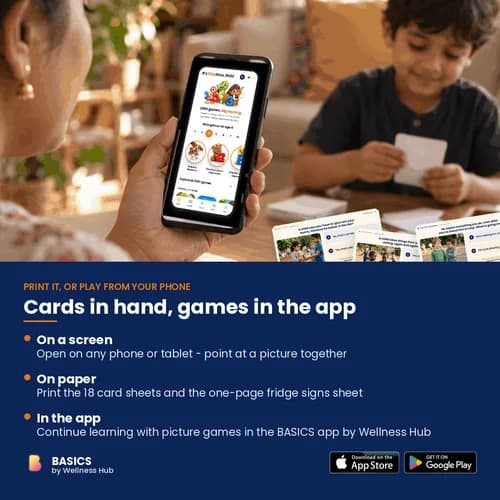
- Download the PDF and print the cards single- or double-sided, or open on a tablet.
- Cut out the cards if using printed copies for hands-on play.
- Laminate for durability if using frequently in groups.
Step 2: Introduce the Four Card Types
- Show the sample card and explain the four color-coded categories.
- Use the thumbnail map to preview What a Real Friend Does and other types.
- Set expectations for respectful discussion and participation.
Step 3: Model a Card Round
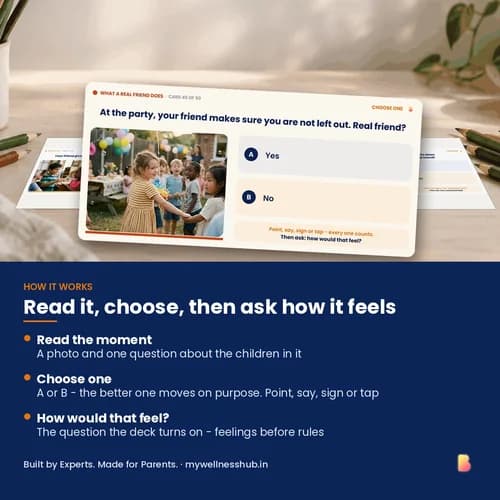
- Select one card and read the scenario aloud, showing the photo.
- Present both choices (A and B) and think aloud about each option.
- Use naming a feeling as a skill reference to guide discussion.
Step 4: Facilitate Group or One-on-One Play
- Invite children to choose their answer by speaking, signing, or tapping.
- Encourage discussion about why they made their choice.
- Spotting 'only sometimes' friendships can be referenced here.
Step 5: Use the Answer Key and Keepsake Cards
- Check the answer key for each card's teaching point—never a verdict.
- Share keepsake cards as reminders of key friendship signs.
- Use the quick key for fast-paced rounds or review.
Step 6: Reflect and Extend Learning
- End each session with the "How would that feel if it happened to you?" question.
- Prompt children to record observations in the practice log or discuss everyday carryover.
- Celebrate progress with the Certificate of Spotting the Signs.
Activities Using the Resource
1. Friendship Scenario Sorting Game
Objective: To distinguish between a bumpy friendship and a truly bad one using the primary_keyword.
How to Play:
- Lay out a mix of scenario cards from all four categories.
- Ask children to sort cards into "bumpy but okay" and "not okay" piles.
- Discuss the reasoning for each placement, using the feelings shown in the photos.
Skill Development:
- Builds critical thinking about social situations.
- Strengthens understanding of the primary_keyword in real-life contexts.
- Encourages respectful group discussion.
2. Naming Feelings Before Rules Activity
Objective: Support children in identifying emotions and expressing them before making judgments.
How to Play:
- Present a card and ask, "How do you think the child in the photo feels?"
- Encourage children to name the feeling before reading the choices.
- Use signs, AAC, or spoken words for responses.
Skill Development:
- Increases emotional vocabulary.
- Promotes self-awareness and empathy.
- Reinforces communication inclusivity.
3. Spotting "Only Sometimes" Friendships Practice
Objective: Help children recognize warning signs of conditional friendships.
How to Play:
- Select cards that show "only sometimes" or "or else" situations.
- Have children point out the sign and explain why it's a red flag.
- Reference the signs sheet for extra support.
Skill Development:
- Enhances ability to spot unhealthy patterns.
- Develops reasoning about fairness and safety.
- Encourages use of visual supports.
4. Fair or Kind? Card Discussion
Objective: Teach children to tell a fair choice from a kind one using real-life examples.
How to Play:
- Choose a card from the "Kind or Fair?" set.
- Ask, "Was this fair, kind, both, or neither?"
- Let children justify their answers with evidence from the scenario.
Skill Development:
- Sharpens social judgment skills.
- Fosters respectful debate and perspective-taking.
- Supports nuanced thinking about friendships.
5. Three Trusted Grown-Ups Game
Objective: Reinforce knowing who to tell and how to seek help in tricky situations.
How to Play:
- Play a round with "Doing Something About It" cards.
- After each, prompt: "Who are three grown-ups you could tell?"
- Record answers on the practice log or signs sheet.
Skill Development:
- Builds safety planning and self-advocacy.
- Strengthens recall of support networks.
- Encourages clear communication.
6. Certificate of Spotting the Signs Reflection
Objective: Celebrate learning and reinforce mastery of the primary_keyword.
How to Play:
- After several sessions, review completed cards and the signs sheet.
- Ask children to share one thing they learned about the primary_keyword.
- Present the Certificate of Spotting the Signs as positive reinforcement.
Skill Development:
- Encourages self-reflection and confidence.
- Reinforces key friendship concepts.
- Motivates ongoing social learning.
Frequently Asked Questions
Q1: What age group is Good Friend, Tricky Friend: Spotting the Signs Card Deck designed for?
A1: This resource is best suited for upper elementary and middle school children, typically ages 8–13. The scenarios and language are crafted for kids ready to discuss nuanced friendship issues. It supports both younger and older students who are beginning to analyze social cues.
Q2: Can I use these cards with a classroom group or social skills group?
A2: Yes, the cards are ideal for small group or classroom use. Each scenario invites discussion, debate, and shared reflection on friendship choices. Try using the color-coded categories to organize group rounds or peer-led games.
Q3: Are these cards appropriate for speech therapy or sessions with AAC users?
A3: Absolutely. The resource is fully accessible for children using speech, signs, or AAC devices, ensuring all answers are valued equally. Therapists can use the cards to target expressive language, emotional literacy, and social reasoning.
Q4: What is the best way to print and prepare the cards for repeated use?
A4: Print the cards on thick paper or cardstock and laminate for durability. Each sheet contains three cards, color-coded by type for easy sorting. Store cards by category in envelopes or boxes for quick access during sessions.
Q5: How does this deck support children with autism or special needs?
A5: The deck uses real-life photos, clear choices, and visual supports to make social concepts concrete. It is designed to be inclusive, with full AAC parity and accessible language for diverse learners. You can scaffold discussions, model responses, and use the answer key for gentle guidance.
Q6: Can I use the PDF on a tablet or screen without printing?
A6: Yes, the PDF is screen-ready for use on tablets, computers, or interactive whiteboards. Children can point, tap, or use digital annotation tools to select their answers. This flexibility supports remote learning and blended therapy sessions.
Q7: What specific social skills and learning goals does this resource address?
A7: The deck builds skills in naming feelings, spotting conditional friendships, distinguishing fair from kind choices, and knowing when to seek help. It emphasizes self-advocacy and recognizing warning signs in friendships. Children also practice identifying three trusted adults and reflecting on their own experiences.
Q8: What are the licensing and usage rights for this card deck?
A8: Your purchase grants a single-user license for personal, classroom, or therapy use. You may print or display the resource for your direct students or clients but not share it publicly or commercially. For school-wide or clinic-wide use, please contact Wellness Hub for extended licensing options.
Q9: How do I download and access my digital PDF after purchase?
A9: After checkout, you receive an instant download link via email and on your Wellness Hub account dashboard. The PDF is compatible with all major devices and easy to save for future access. If you encounter issues, Wellness Hub's support team is available to assist.
Q10: What is Wellness Hub's refund or exchange policy for digital resources?
A10: Wellness Hub offers refunds or exchanges for digital resources if you experience technical problems that cannot be resolved. Contact customer support within 14 days of purchase with your order details. The team is committed to ensuring every customer is satisfied with their resource.
Usage Rights and Restrictions
Allowed Usage:
- Personal use by parents, teachers, and therapists.
- Printable for classroom, home, or therapy settings.
- Can be used in group or one-on-one learning sessions.
Not Allowed:
- Reselling, redistributing, or modifying the resource for commercial use.
- Sharing publicly (e.g., on blogs, social media, or websites) without permission.
- Uploading the file to public sharing platforms.
If you need a bulk license for schools or therapy centers, please contact us.
Conclusion
Good Friend, Tricky Friend: Spotting the Signs Card Deck empowers older children to navigate friendship challenges with confidence and empathy. Designed for inclusive learning, it supports students with diverse communication needs and helps them recognize the difference between a bumpy friendship and one that may be harmful. The resource is a valuable tool for educators, therapists, and families seeking to foster healthy social development.
By focusing on emotional literacy and self-advocacy, children learn to identify feelings and respond thoughtfully to real-life situations. The deck's activities encourage discussion around fairness and help children practice self-advocacy in both group and one-on-one settings. Whether at home, in the classroom, or during therapy, these cards make it easier to build trust, spot warning signs, and develop lasting social skills.
Begin using Good Friend, Tricky Friend: Spotting the Signs Card Deck today to help your learners build safer, kinder relationships and strengthen their ability to navigate tricky social moments. Give every child the chance to practice fairness and self-advocacy as they grow into confident, caring friends.