




Go, Stop, No, Wait & All Done — 50 Printable Phrase Flashcards for Protest, Waiting and Finishing
₹80
₹160
You save ₹80
4.8 (41 ratings)
Grade Levels
Pre-K – Kindergarten (Ages 2–5)
Content Overview
Format: PDF | Pages: 24 | Features: 50 two-word phrase cards for speech delay and early communication practice
Categories
Share


About the Product
Introduction
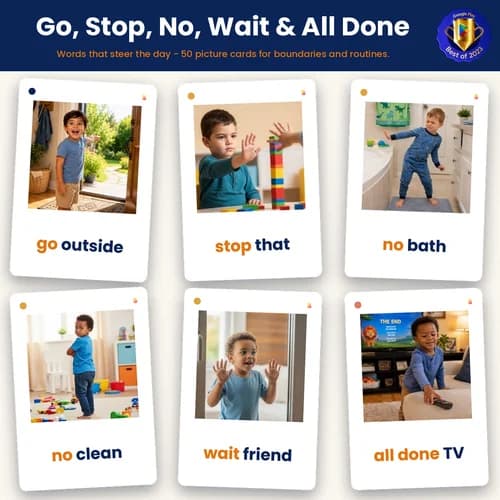
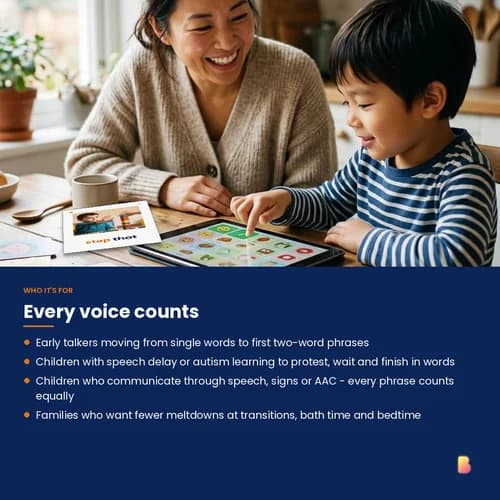
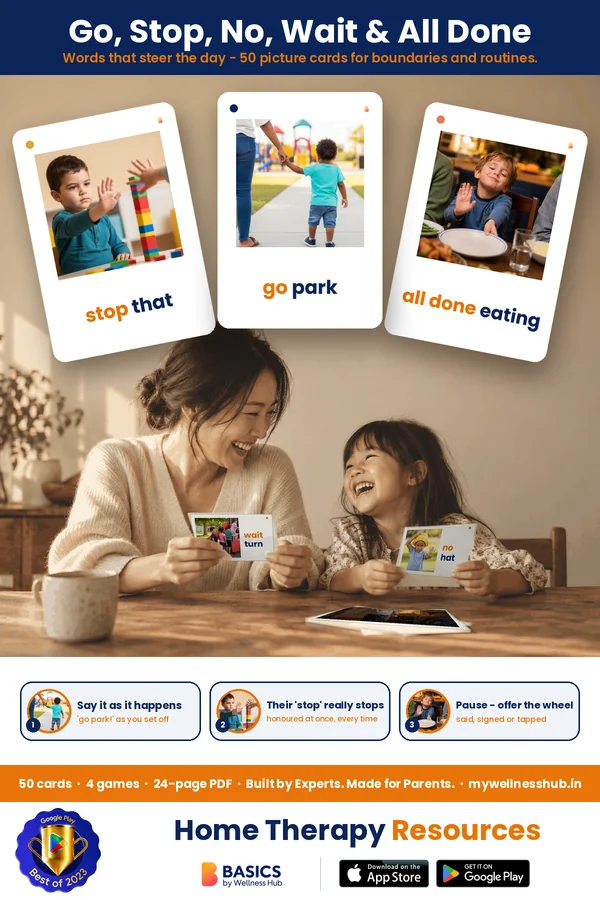
The primary_keyword Two-Word Steering Phrase Cards PDF is a 24-page digital resource created for young children at the first-phrase stage, including those with speech delay or autism. This printable set features 50 phrase cards designed for use with speech, sign, or AAC, making it accessible for a wide range of learners and communication needs. Perfect for parents, therapists, and educators, it helps children practice essential phrases that guide daily routines and social interactions.
Children using these cards will build confidence with fixed steering-word-first frames, such as go park and stop that, supporting early phrase construction. The resource encourages measurable outcomes like increased spontaneous use of two-word phrases and better understanding of key daily directives. With engaging games and coach cards, learners also practice honoring protest and patience through real-life scenarios.
Ideal for home, classroom, and therapy settings, the set supports structured practice and natural communication. Activities like Red Light Green Light and Finish My Phrase make learning interactive, while coach tips and practice logs help track progress. These cards fit seamlessly into speech sessions, group lessons, or daily routines for flexible, meaningful use.
Product Details
- Resource Name: Two-Word Steering Phrase Cards PDF
- Format: Printable and screen-ready PDF
- Total Pages: 24
- Grade Level: Early childhood, Pre-K, Kindergarten
- Designed For: Children at the first-phrase stage, including those with speech delay, autism, or AAC users
- Printing Notes: Suitable for color or black-and-white printing; can be laminated for durability
- Best Used In: Home, classroom, therapy sessions
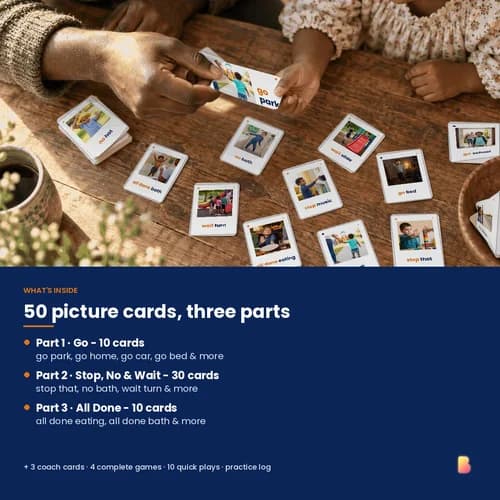
- Sets / Flashcards / Activities: 50 phrase cards, 3 coach cards, 3 make-your-own cards, 4 games, 10 two-minute plays
- Visuals / Illustrations: Child-friendly illustrations for each phrase card
Educational Benefits
1. Builds Early Two-Word Phrase Construction
- Children practice combining words in a fixed, steering-word-first frame.
- This supports foundational expressive language skills for new communicators.
- The primary_keyword helps reinforce phrase order for clearer communication.
2. Strengthens Daily Routine Participation
- Cards target everyday actions like going, stopping, waiting, and finishing.
- Learners gain confidence following and expressing daily routines independently.
- Supports smoother transitions and more predictable days for all.
3. Encourages AAC and Sign Language Use
- Visuals and structure make it easy to pair spoken, signed, or device-based phrases.
- Promotes full AAC parity, ensuring every child can participate equally.
- Helps bridge communication between verbal and nonverbal peers.
4. Fosters Self-Advocacy and Protest Skills
- Children learn to express refusal, protest, and patience using phrases like no and wait.
- Honoring these expressions builds trust and emotional safety in communication.
- Supports self-advocacy, especially for children with speech delay or autism.
5. Enhances Social Interaction and Play
- Games and two-minute plays encourage turn-taking and group participation.
- Practice with peers or adults boosts confidence in social settings.
- wait is naturally reinforced through playful, real-life scenarios.
Instructions for Use
Step 1: Print and Prepare the Cards
- Download and print the PDF in color or black-and-white.
- Cut out the 50 phrase cards and optional coach cards.
- Laminate for durability if desired. ✔ Cards last longer with lamination.
Step 2: Introduce the Steering Words
- Begin by modeling go and stop with real actions and matching cards.
- Use the go phrase cards to prompt movement or starting activities.
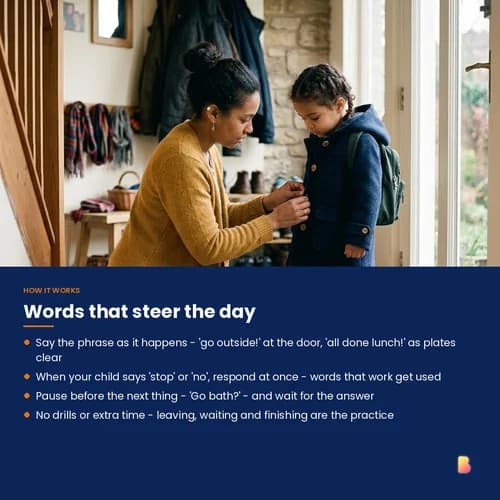
- Repeat phrases in context to help children connect words and actions.
Step 3: Model and Practice Refusal Phrases
- Present no phrase cards during moments of protest or choice.
- Encourage children to use no when they want to refuse something.
- Reinforce that all responses are valid and respected.
Step 4: Incorporate Wait and All Done in Routines
- Use wait cards to teach patience during transitions or turn-taking.
- Show all done cards when finishing an activity or meal.
- Support understanding of routine endings and waiting moments.
Step 5: Play Interactive Games for Engagement
- Choose from included games like Red Light Green Light or Finish My Phrase.
- Games support social interaction and reinforce phrase use naturally.
- Keep sessions short and playful for best results.
Step 6: Track Progress and Carry Over Skills
- Use the practice log to note new phrases and successes.
- Encourage use of two-word phrases in daily routines and therapy.
- Share progress with family and team for consistent support.
Activities Using the Resource
1. Go and Stop Action Game
Objective: To help children use the Two-Word Steering Phrase Cards PDF for initiating and halting actions in real time.
How to Play:
- Lay out go and stop cards from the set.
- Call out or sign a phrase (e.g., go park, stop that) and act it out together.
- Switch roles so the child can direct the adult or peer using the cards.
Skill Development:
- Builds phrase initiation and response accuracy.
- Increases understanding of action-based vocabulary.
- Supports turn-taking and social participation.
2. Wait Phrase Turn-Taking Practice
Objective: To practice patience and waiting skills using two-word phrases in structured play.
How to Play:
- Use wait cards during a favorite activity (e.g., wait turn).
- Pause the game and prompt the child to use or sign the wait phrase.
- Reinforce successful waiting with praise or a visual timer.
Skill Development:
- Strengthens impulse control and patience.
- Reinforces routine-based communication.
- Encourages AAC or sign use in context.
3. All Done Transition Routine
Objective: To support smooth transitions by using all done phrases at activity endings.
How to Play:
- Present all done cards when an activity finishes (e.g., all done eating).
- Model saying or signing the phrase and encourage the child to repeat.
- Pause before the next activity to allow the child to respond.
Skill Development:
- Builds closure and transition language.
- Promotes independence in daily routines.
- Supports receptive and expressive phrase use.
4. No Phrase Protest Practice
Objective: To empower children to express protest or refusal clearly and respectfully.
How to Play:
- Offer a choice or activity and present no cards (e.g., no bath).
- Honor the child's use of no instantly in play or acknowledge it verbally in real life.
- Encourage repetition and validate their communication.
Skill Development:
- Fosters self-advocacy and emotional safety.
- Increases confidence in expressing preferences.
- Teaches respectful refusal in social settings.
5. Picture-to-Phrase Matching Activity
Objective: To strengthen visual recognition and phrase comprehension using illustrated cards.
How to Play:
- Mix up phrase cards and their matching pictures (e.g., go park, stop that).
- Ask the child to pair each phrase with the correct illustration.
- Review matches together and practice saying or signing each phrase.
Skill Development:
- Enhances visual discrimination and memory.
- Supports phrase-picture association.
- Builds expressive and receptive vocabulary.
6. Make-Your-Own Phrase Card Creation
Objective: To encourage creativity and ownership by making new two-word steering phrases.
How to Play:
- Use the blank make-your-own cards included in the set.
- Guide the child to choose a steering word and a favorite activity or object.
- Draw or select a matching picture and practice using the new phrase in play.
Skill Development:
- Promotes flexible phrase construction.
- Encourages creative communication.
- Supports generalization to new contexts.
Frequently Asked Questions
Q1: What age range and developmental stage are the Two-Word Steering Phrase Cards PDF designed for?
A1: The Two-Word Steering Phrase Cards PDF is designed for young children at the first-phrase stage, typically ages 2–6. It is especially useful for early communicators, including those with speech delay or autism. Children should already be using some basic two-word requests before beginning this resource.
Q2: Can I use these phrase cards with a small group in a classroom or therapy session?
A2: Yes, these cards are suitable for small group activities in classrooms or therapy sessions. The included games and plays encourage turn-taking and peer interaction. Try assigning each child a steering word to practice in group routines for added engagement.
Q3: Are these cards appropriate for speech therapy sessions with AAC users?
A3: Yes. The cards are fully AAC-friendly and support both speech and alternative communication methods. Therapists can model phrases on devices, with signs, or verbally to ensure all children participate equally.
Q4: What is the best way to print and prepare these cards for repeated use?
A4: Print the cards in color or black-and-white on heavy paper, then laminate for durability. Cut out each card for flexible use in games and routines. Laminated cards are easy to wipe clean and withstand frequent handling.
Q5: How do these cards support children with special needs or who require differentiated instruction?
A5: The cards use clear visuals and predictable phrase frames to support a wide range of learning needs. Children with speech delay or autism benefit from the structured, repetitive language and visual cues. Adjust the pace and model phrases as needed for individual learners.
Q6: Can I use the resource on a tablet or screen without printing?
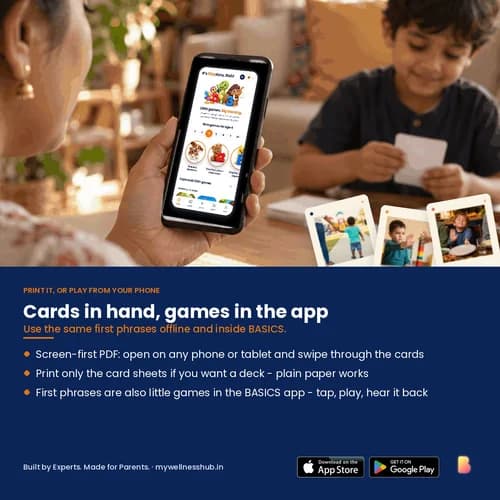
A6: Yes, the PDF is screen-ready and can be used on tablets, computers, or interactive whiteboards. Display cards digitally for modeling, matching, or group games. This is especially helpful for teletherapy or when printing is not possible.
Q7: What specific skills and learning goals do these cards target?
A7: The cards target early two-word phrase construction, self-advocacy, and routine participation. Children practice using go, stop, no, wait, and all done in real-life contexts. Repeated use builds expressive language, patience, and the ability to protest or finish activities appropriately.
Q8: What are the licensing and usage rights for the Two-Word Steering Phrase Cards PDF?
A8: Your purchase grants you a single-user license for personal, classroom, or therapy use. Redistribution, commercial use, or sharing outside your direct work is not permitted. For multi-user or institutional licensing, please contact Wellness Hub directly.
Q9: How do I receive and download my digital resource after purchase?
A9: After purchase, you will receive an instant download link via email from Wellness Hub. The PDF can be saved to your device for immediate use. If you have any trouble accessing your file, Wellness Hub's support team is ready to help.
Q10: What is Wellness Hub's refund or exchange policy for digital resources?
A10: Wellness Hub does not offer refunds or exchanges on digital downloads due to their nature. However, if you experience any issues with your file or receive the wrong resource, contact support for prompt assistance. They are committed to ensuring you have a positive experience with every purchase.
Usage Rights and Restrictions
Allowed Usage:
- Personal use by parents, teachers, and therapists.
- Printable for classroom, home, or therapy settings.
- Can be used in group or one-on-one learning sessions.
Not Allowed:
- Reselling, redistributing, or modifying the resource for commercial use.
- Sharing publicly (e.g., on blogs, social media, or websites) without permission.
- Uploading the file to public sharing platforms.
If you need a bulk license for schools or therapy centers, please contact us.
Conclusion
The Two-Word Steering Phrase Cards PDF empowers young children, including those with speech delay or autism, to communicate essential daily needs and choices. Designed for parents, therapists, and educators, it supports confident phrase use in speech, sign, or AAC, making language accessible for all. This resource is ideal for building foundational communication skills in early learners.
Children develop expressive language and self-advocacy as they practice using protest and patience in real-life routines. The cards foster independence and participation at home, in classrooms, and during therapy sessions. Honoring a child's voice and encouraging all done responses help create a supportive communication environment.
Start building strong communication habits—download the Two-Word Steering Phrase Cards PDF today and help your child express themselves with clarity and confidence. Give every child the chance to be heard and understood in daily routines and play.