

Friends & School Conversation Cards — 20 Printable Picture Cards and 200 After-School Questions for Kids
₹80
₹160
You save ₹80
5 (51 ratings)
Grade Levels
Grade 1 – Grade 2 (Ages 5–8)
Content Overview
Format: PDF | Pages: 22 | Features: 20 picture cards, 200 questions, conversation and turn-taking practice
Categories
Share


About the Product
Introduction
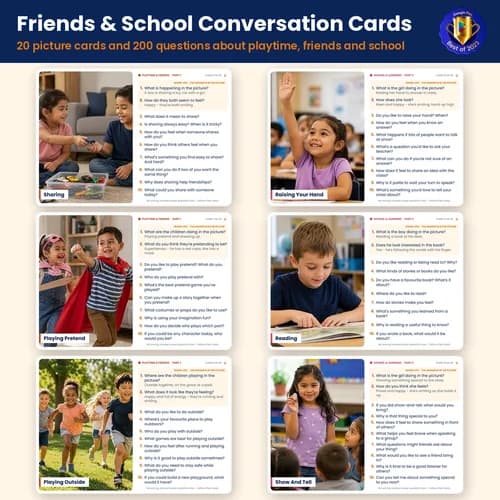
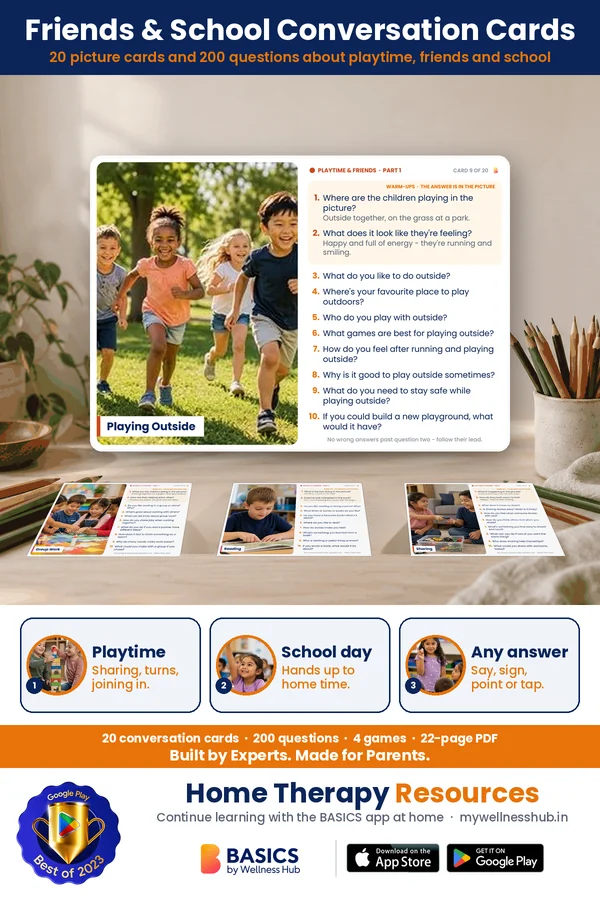
The Conversation Cards for Playtime, Friends, School & Learning PDF offers a comprehensive set of 20 picture cards and 200 questions designed for children ready to engage in real back-and-forth conversations. This digital resource is perfect for children who are building social skills, including those with speech delay, autism, or who use AAC or sign language. Each card features a large, engaging photograph and prompts that encourage children to talk about friendship, play, and their school day in a supportive and interactive way.
Children will practice expanding answers past one word, recounting the school day, and perspective-taking. The set includes warm-up questions with answers found in the pictures, as well as open-ended prompts to foster early storytelling and conversation and turn-taking. These activities help children build confidence in sharing, joining in, making up after disagreements, and talking about their experiences with friends and classmates.
Parents, teachers, and therapists can use these cards at home, in classrooms, or during therapy sessions to support working it out after conflicts and encourage meaningful dialogue. The resource is flexible for group or one-on-one use, making it easy to fit into daily routines or special moments, like after school or during quiet playtime.
Product Details
- Resource Name: Conversation Cards for Playtime, Friends, School & Learning PDF
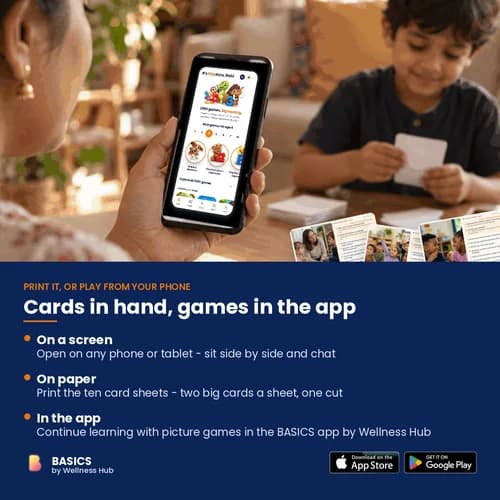
- Format: Printable and screen-ready PDF
- Total Pages: 22
- Grade Level: Pre-K, Kindergarten, Elementary
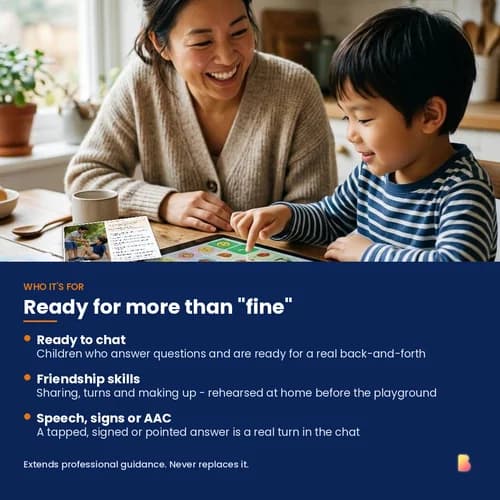
- Designed For: Children developing conversation skills, including those with speech delay, autism, or using AAC/signs
- Printing Notes: Print, cut, and keep; two cards per sheet
- Best Used In: Home, classroom, therapy sessions
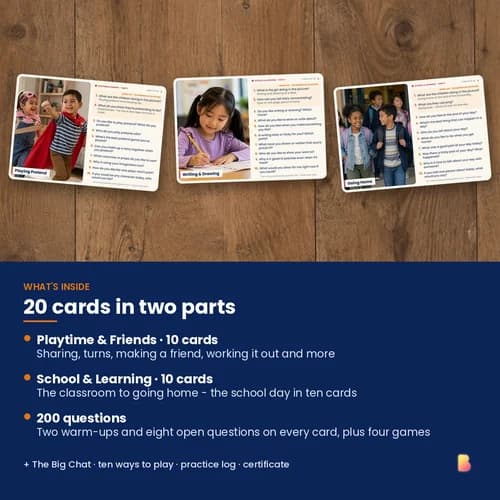
- Sets / Flashcards / Activities: 20 picture conversation cards, 200 questions, 4 games, sample card, deck map, make-your-own card, practice log, certificate
- Visuals / Illustrations: Large, real-life photographs on every card
Educational Benefits
1. Conversation and Turn-Taking Practice
- Children learn to take turns speaking and listening during each card activity.
- They build confidence by practicing back-and-forth exchanges.
- primary_keyword provides structured support for real conversations.
2. Early Storytelling and Perspective-Taking
- Prompts encourage children to describe events and imagine others' feelings.
- Kids develop narrative skills by recounting their school day and playtime.
- Perspective-taking grows as they discuss different viewpoints.
3. Social Skills for Friendship and Play
- Children practice sharing, joining in, and making up after disagreements.
- They learn how to approach new friends and resolve conflicts peacefully.
- Working it out with peers becomes easier through repeated, gentle practice.
4. Expanding Answers and Asking Questions
- Open-ended prompts help kids move beyond one-word responses.
- Children learn to elaborate on their thoughts and ask questions back.
- Answering and asking questions supports expressive language growth.
5. AAC and Inclusive Communication
- Every child can participate, including those using AAC, signs, or gestures.
- The cards foster communication for children with diverse needs.
- conversation skills are strengthened through consistent, accessible routines.
Instructions for Use
Step 1: Print and Prepare the Cards
- Print the PDF double-sided or single-sided as preferred.
- Cut along the lines to separate the 20 picture conversation cards.
- Laminate for durability if using frequently.
Step 2: Introduce a Card and Warm Up
- Choose one card and show the large photograph to the child.
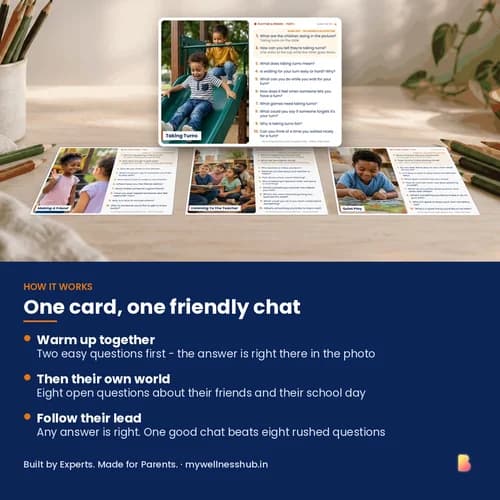
- Read the two warm-up questions printed on the card together.
- conversation and turn-taking can begin with simple, picture-based answers.
Step 3: Explore Open-Ended Questions
- Move to the eight open questions on the card.
- Encourage the child to answer in their own words or with AAC/signs.
- Wait at least five seconds for a response to allow thinking time.
Step 4: Model and Support Responses
- Answer a question yourself first to demonstrate.
- Repeat or rephrase the child's answer to show you are listening.
- Use positive feedback to encourage fuller responses.
Step 5: Play Conversation Games Together
- Try included games like Pass & Ask or Story Chain for group fun.
- Use the practice log to track progress and celebrate achievements.
- early storytelling skills can be reinforced through playful repetition.
Step 6: Carry Over Into Daily Routines
- Use a School & Learning card at pickup or after school for real-life practice.
- Invite the child to host The Big Chat or make their own card.
- Remember: cards are invitations, not tests—follow the child's lead.
Activities Using the Resource
1. Picture Card Turn-Taking Game
Objective: To build conversation and turn-taking skills using the conversation cards for playtime, friends, school & learning.
How to Play:
- Select a card and take turns answering the two warm-up questions shown in the picture.
- Alternate asking and answering open-ended questions about friends or school routines.
- Encourage the child to use AAC, signs, or speech for each turn.
Skill Development:
- Develops reciprocal conversation skills.
- Increases wait time tolerance and listening.
- Encourages expressive language in multiple formats.
2. Sharing and Joining In Practice
Objective: To encourage children to talk about sharing and joining in with peers during play.
How to Play:
- Choose a card focused on playtime or quiet play.
- Ask the child to describe a time they shared or joined in, using the picture as a prompt.
- Support the child in expanding their answer with follow-up questions.
Skill Development:
- Builds social sharing vocabulary.
- Strengthens self-reflection about group play.
- Enhances ability to elaborate on experiences.
3. Making Up After a Disagreement Role Play
Objective: To practice working it out after conflicts using real-life scenarios.
How to Play:
- Select a card depicting a disagreement or group work.
- Role-play the situation with the child, taking turns as each participant.
- Discuss how to resolve the conflict and what each person might say.
Skill Development:
- Teaches peaceful conflict resolution steps.
- Improves perspective-taking and empathy.
- Reinforces appropriate language for making up.
4. Recounting the School Day Activity
Objective: To help children practice recounting their school day with conversation cards for playtime, friends, school & learning.
How to Play:
- Pick a School & Learning card (e.g., Reading or Snack & Break).
- Ask the child to describe what happened during that part of their day.
- Prompt for details about who was there, what they did, and how they felt.
Skill Development:
- Supports narrative sequencing and recall.
- Boosts confidence in sharing personal stories.
- Expands vocabulary for school routines.
5. Expanding Answers Past One Word
Objective: To encourage children to elaborate on their responses during conversation.
How to Play:
- Use any card and ask an open-ended question.
- If the child gives a one-word answer, gently prompt for more details ("Tell me more about that.").
- Model expanding your own answers for the child to imitate.
Skill Development:
- Increases sentence length and complexity.
- Promotes expressive language growth.
- Fosters self-expression and confidence.
6. The Big Chat Host Game
Objective: To practice asking questions back and leading a conversation.
How to Play:
- Let the child pick a card and become the "host."
- The child asks you the ten Big Chat questions, one from each sheet.
- Switch roles and repeat, encouraging the child to listen and respond.
Skill Development:
- Builds question-asking and leadership skills.
- Strengthens active listening and turn-taking.
- Encourages curiosity and conversational initiative.
Frequently Asked Questions
Q1: What age range are the Conversation Cards for Playtime, Friends, School & Learning PDF designed for?
A1: These cards are best for children ages 4–10, covering Pre-K through elementary grades. The real-life photographs and relatable topics make them engaging for early learners and older children building conversation skills. Adjust the pace and depth of questions to fit your child's developmental level.
Q2: Can I use these conversation cards in a classroom group activity?
A2: Yes, these cards are ideal for small group or whole-class discussions. Each card includes enough questions for every child to participate, fostering conversation and turn-taking. Try circle time, partner chats, or rotating stations for interactive practice.
Q3: Are these cards suitable for speech therapy sessions with children who use AAC?
A3: Absolutely, the cards are fully accessible for children using AAC, signs, or gestures. Every response—spoken, signed, tapped, or pointed—is valued as a real conversational turn. Therapists can model answers and scaffold expressive language for all communication styles.
Q4: What is the best way to print and prepare the cards for repeated use?
A4: Print the PDF on thick paper or cardstock, then cut along the lines to separate the cards. Laminating each card adds durability for frequent handling in home, classroom, or therapy settings. Store cards in a labeled envelope or box for easy access and organization.
Q5: How do these cards support children with autism or social communication needs?
A5: The cards offer structured, visual prompts and predictable routines that help children with autism or social challenges participate in conversation. Warm-up questions build confidence, while open-ended prompts encourage expanding answers and perspective-taking. Visual supports and flexible pacing make differentiation easy for diverse learners.
Q6: Can I use the cards on a tablet or computer without printing?
A6: Yes, the PDF is screen-ready for digital use on tablets, computers, or interactive whiteboards. Show each card's photograph and read questions aloud, allowing children to respond verbally, with AAC, or by pointing. Digital use is perfect for teletherapy, remote learning, or on-the-go practice.
Q7: What specific conversation skills and learning goals do these cards target?
A7: The cards target conversation and turn-taking, perspective-taking, recounting the school day, and working it out after disagreements. Children practice expanding answers, asking questions back, and early storytelling about friends and playtime. These skills build expressive language, social understanding, and confidence in real-life interactions.
Q8: What are the licensing and usage rights for this PDF resource?
A8: Purchase of this PDF grants you a single-user license for personal, classroom, or therapy use. Sharing, posting, or distributing the file beyond your immediate setting is not permitted. For multi-user or school-wide licensing, please contact Wellness Hub for options.
Q9: How do I receive and download my Conversation Cards for Playtime, Friends, School & Learning PDF?
A9: After purchase, you will receive an instant download link via email from Wellness Hub. The PDF is ready for immediate use on any device or for printing at home or school. If you have trouble downloading, Wellness Hub's support team is available to help.
Q10: What is Wellness Hub's refund or exchange policy for digital resources?
A10: Wellness Hub does not offer refunds or exchanges on digital PDF resources once downloaded. This policy ensures the integrity of digital content distribution. If you experience technical issues or receive the wrong file, contact customer support for prompt assistance.
Usage Rights and Restrictions
Allowed Usage:
- Personal use by parents, teachers, and therapists.
- Printable for classroom, home, or therapy settings.
- Can be used in group or one-on-one learning sessions.
Not Allowed:
- Reselling, redistributing, or modifying the resource for commercial use.
- Sharing publicly (e.g., on blogs, social media, or websites) without permission.
- Uploading the file to public sharing platforms.
If you need a bulk license for schools or therapy centers, please contact us.
Conclusion
The Conversation Cards for Playtime, Friends, School & Learning PDF empowers children to build real conversation skills through engaging, everyday topics. Designed for kids who are ready to answer questions and participate in meaningful back-and-forth, it supports learners of all abilities, including those who use AAC or signs. Each card's large photograph and thoughtful prompts make social learning accessible and enjoyable.
Children develop confidence in turn-taking and perspective-taking while exploring friendship, sharing, and working it out after disagreements. The resource fits naturally into home routines, classroom activities, or therapy sessions, offering flexible ways to encourage expressive language and social growth. Conversation and turn-taking become part of daily life as children practice with real-life scenarios and supportive guidance.
Start using the Conversation Cards for Playtime, Friends, School & Learning PDF today to spark engaging discussions and help your child thrive in conversations with friends, classmates, and adults. Download now and watch your child's communication and social skills blossom with every chat.