




Can I Join? First Ways In — 50 Printable Joining-In Scenario Cards for Entering Play and Handling No
₹80
₹160
You save ₹80
4.8 (44 ratings)
Grade Levels
Grade 1 – Grade 4 (Ages 6–10)
Content Overview
Format: PDF | Pages: 31 | Features: 50 cards for joining games, practicing social skills, and handling 'no' answers
Categories
Share


About the Product
Introduction
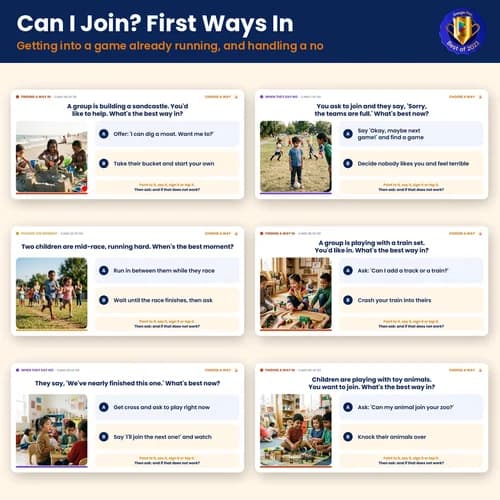
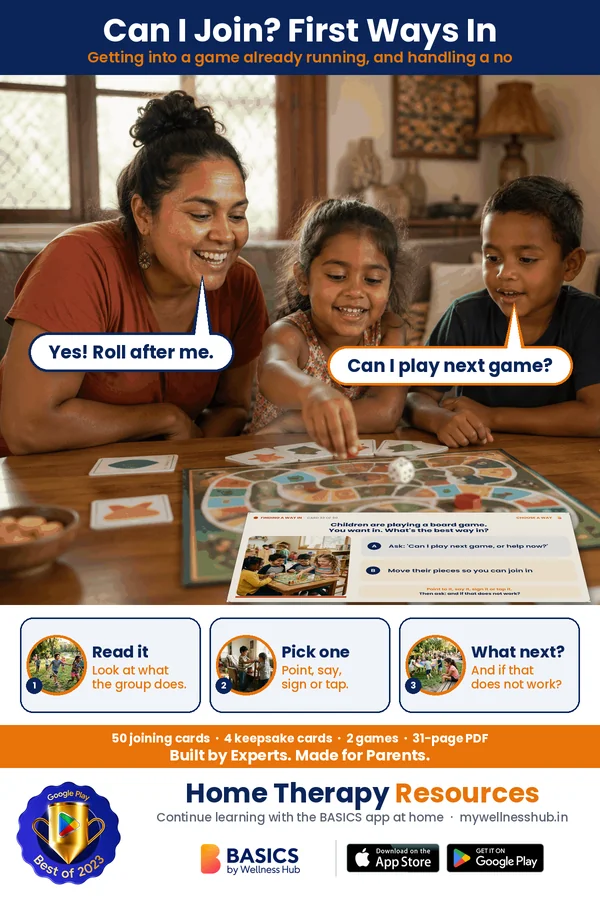
The Can I Join? Joining In Social Skills Cards PDF is a 31-page digital resource designed to help children learn how to join games and group activities that are already underway. Perfect for ages 5–12, this set features 50 illustrated cards, each showing a real-life moment and offering two possible ways to join in. The cards support children who may hang back, jump in too quickly, or need extra help with social entry, including those with speech delays or who use AAC.
Children practice skills like waiting for a gap and asking for a turn, with each card guiding them through what to say or do in real situations. By exploring choices and outcomes, kids build confidence in joining parachute games, board games, tag, and more. The resource encourages flexible thinking, problem-solving, and resilience when the answer is no, making social participation more accessible and less stressful.
Families, teachers, and therapists can use these cards in home, classroom, or therapy settings to support picking the moment to join a group. The PDF includes an answer key, keepsake cards, and ideas for everyday carryover, making it easy to adapt for group lessons, social skills groups, or one-on-one coaching.
Product Details
- Resource Name: Can I Join? Joining In Social Skills Cards PDF
- Format: Printable and screen-ready PDF
- Total Pages: 31
- Grade Level: Elementary (ages 5–12)
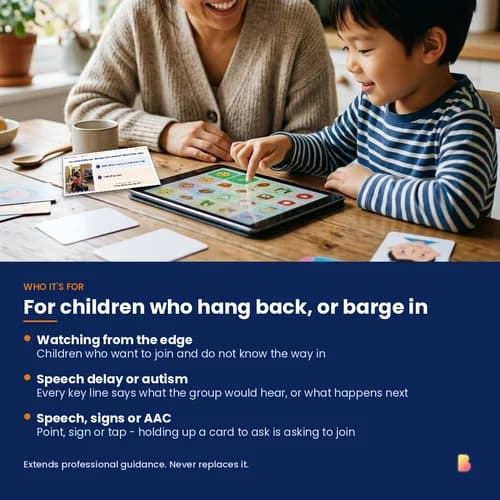
- Designed For: Children learning social entry, including those with speech delay, autism, or AAC users
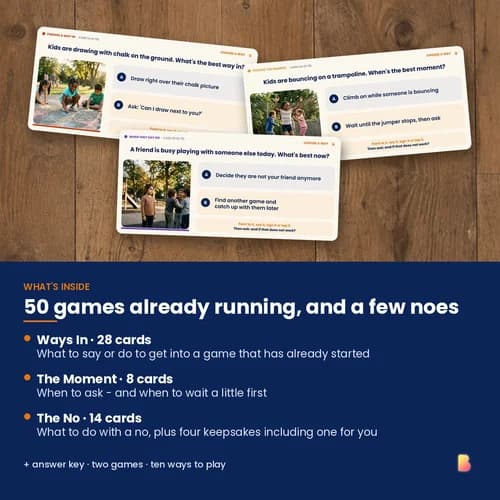
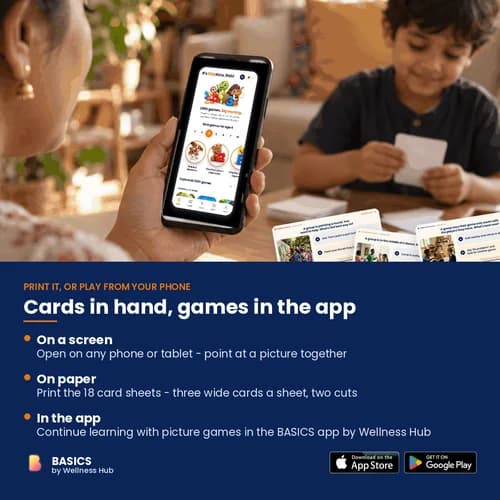
- Printing Notes: Cards print three to a sheet; suitable for color or black-and-white printing
- Best Used In: Home, classroom, therapy, social skills groups
- Sets / Flashcards / Activities: 50 joining-in cards, 4 keepsake cards, 2 games, practice log, certificate
- Visuals / Illustrations: Real-life photos on every card, clear visual cues for each scenario
Educational Benefits
1. Social Entry and Turn-Taking Practice
- Children learn how to watch, wait, and ask before joining group play.
- Practices turn-taking and respectful entry into ongoing games.
- Builds confidence for kids who hesitate or rush in too quickly.
2. Communication and Self-Advocacy Skills
- Supports clear asking, offering help, and using AAC or signs to join.
- Encourages children to express needs and choices in social settings.
- primary_keyword helps all communicators participate fully.
3. Flexible Thinking and Problem Solving
- Teaches kids to try different strategies if the first attempt doesn't work.
- Promotes resilience when facing a "no" and encourages trying again.
- Boosts creative approaches to joining group activities.
4. Emotional Regulation and Coping with Rejection
- Guides children in handling disappointment when not invited to join.
- Provides scripts and visuals for moving on after hearing "no."
- waiting for a gap is addressed, helping children manage feelings and reactions.
5. Inclusion and Peer Relationship Building
- Fosters a sense of belonging by practicing positive social approaches.
- Encourages empathy and understanding of group dynamics.
- Strengthens friendships through respectful joining and response.
Instructions for Use
Step 1: Print and Prepare the Deck
- Download and print the PDF, using color for best visual clarity.
- Cut out the cards and, if desired, laminate for repeated use.
- Store cards in a box or pouch for easy group access.
Step 2: Introduce the Card Types and Colors
- Show the three card types: Finding a Way In, Picking the Moment, When They Say No.
- Explain how each color matches a joining-in skill.
- Use the sample card to model reading and choosing an option.
Step 3: Select and Present a Scenario
- Pick a card that fits the current group activity or a common situation.
- Read the photo caption aloud and show the image to the child or group.
- Ask, "What could you say or do here?" to prompt discussion.
Step 4: Practice Asking and Responding
- Let children role-play both joining in and responding within the scenario.
- Encourage using skills like communication and self-advocacy.
- Remind them that AAC, signs, or holding up a card are all valid.
Step 5: Explore Outcomes and Try Alternatives
- Discuss what happens after each choice, using the answer key for guidance.
- If the first way doesn't work, encourage flexible thinking and trying another approach.
- problem-solving is naturally practiced in this step.
Step 6: Reinforce and Track Progress
- Use the practice log or certificate to celebrate successful attempts.
- Review four signs it's working and everyday carryover tips.
- Revisit cards regularly to build lasting social confidence.
Activities Using the Resource
1. Turn-Taking Role Play with Joining In Cards
Objective: To practice the primary_keyword in real group play scenarios and build confidence joining ongoing games.
How to Play:
- Choose a "Finding a Way In" card and read the scenario aloud.
- Children take turns acting out both ways to join, using props if desired.
- Discuss which approach worked best and why.
Skill Development:
- Builds social entry skills through repeated practice.
- Strengthens turn-taking and group awareness.
- Encourages expressive communication.
2. Waiting for a Gap Game
Objective: To develop patience and observation by practicing waiting for a gap before joining.
How to Play:
- Use "Picking the Moment" cards to set up a mock game (e.g., board game or tag).
- Children watch for a natural pause, then use the card's prompt to ask to join.
- Reflect on how waiting changed the outcome.
Skill Development:
- Improves impulse control and timing.
- Teaches reading group cues for entry.
- Reinforces respectful joining strategies.
3. Handling "No" with Coping Cards
Objective: To build resilience and coping skills when the answer to joining is "no."
How to Play:
- Select a "When They Say No" card and read the scenario.
- Child practices both suggested responses, including moving on or self-talk.
- Group discusses feelings and alternative next steps.
Skill Development:
- Strengthens emotional regulation after rejection.
- Teaches flexible thinking and problem-solving.
- Encourages positive self-advocacy.
4. Communication Choices Sorting Activity
Objective: To identify and practice different ways to communicate when joining a group.
How to Play:
- Lay out several cards showing various joining methods (e.g., asking, offering help).
- Children sort cards by communication style: spoken, signed, or AAC.
- Practice each style with a partner or small group.
Skill Development:
- Expands communication repertoire.
- Supports AAC and sign language users.
- Builds confidence in diverse social entry.
5. Scenario Sequencing for Joining In
Objective: To understand the step-by-step process of joining a game using the primary_keyword.
How to Play:
- Pick three cards: one for finding a way in, one for picking the moment, one for handling "no."
- Arrange cards to show the sequence of trying, waiting, and responding.
- Act out the full sequence as a group.
Skill Development:
- Reinforces logical sequencing of social actions.
- Enhances problem-solving in group settings.
- Develops planning and follow-through.
6. Everyday Carryover Challenge
Objective: To generalize joining-in skills to daily life and new situations.
How to Play:
- Each child picks a card to use in a real group activity that day (e.g., playground, class game).
- Afterward, share what happened and which strategy was used.
- Track attempts on the practice log and celebrate progress.
Skill Development:
- Promotes real-world application of joining skills.
- Encourages reflection and self-monitoring.
- Builds persistence and social confidence.
Frequently Asked Questions
Q1: What ages and grades are the Can I Join? Joining In Social Skills Cards PDF designed for?
A1: The cards are best for children ages 5–12, typically in elementary grades. The real-life scenarios and simple language make them accessible to both younger and older learners. Adjust the pace and discussion depth to fit your group's developmental level.
Q2: Can these joining in cards be used in a classroom group activity?
A2: Yes, they are ideal for classroom group work and social skills lessons. Teachers can facilitate role plays, group discussions, or cooperative games using the cards as prompts. Try mixing card types to practice both entry and coping strategies in group settings.
Q3: Are these social skills cards suitable for speech therapy or occupational therapy sessions?
A3: Absolutely. Therapists use them to target communication, self-advocacy, and flexible thinking in real-world joining scenarios. The visual supports and AAC parity make them effective for a wide range of therapy goals.
Q4: What is the best way to print and prepare these cards for repeated use?
A4: Print the cards on thick paper or cardstock for durability, and laminate them if possible. Cut along the lines and store in a box or pouch for easy access. Laminated cards are easy to wipe clean and withstand frequent handling.
Q5: How do these cards support children with special needs or those who use AAC?
A5: The cards are designed for full AAC parity, allowing children to answer by pointing, signing, or using a device. Visual cues and simple language support children with speech delay, autism, or communication differences. Encourage using any communication method, including holding up a card to ask to join.
Q6: Can the cards be used on a tablet or computer without printing?
A6: Yes, the PDF is screen-ready for digital use on tablets, computers, or interactive whiteboards. Display cards for group modeling or individual practice. Use annotation tools to highlight choices or track progress digitally.
Q7: What specific social skills and learning goals do these joining in cards target?
A7: They focus on social entry, waiting for a gap, problem-solving, and coping with rejection. Children practice reading group cues, choosing appropriate ways to join, and responding flexibly if told "no." The cards foster resilience, self-advocacy, and peer relationship skills.
Q8: What are the usage rights for the Can I Join? Joining In Social Skills Cards PDF?
A8: Your purchase allows you to use the PDF for personal, classroom, or therapy purposes. Sharing or distributing the file beyond your direct students or clients is not permitted. For wider licensing, contact Wellness Hub for options.
Q9: How do I receive and download the resource after purchase?
A9: After purchase, you will receive an instant download link via email. The PDF can be saved to your device and printed or used digitally. If you have trouble accessing the file, Wellness Hub's support team can assist promptly.
Q10: What is Wellness Hub's refund or exchange policy for digital resources?
A10: Wellness Hub does not offer refunds or exchanges for digital downloads due to their nature. If you experience technical issues or receive the wrong file, contact support for a resolution. Wellness Hub is committed to customer satisfaction and will help resolve any concerns.
Usage Rights and Restrictions
Allowed Usage:
- Personal use by parents, teachers, and therapists.
- Printable for classroom, home, or therapy settings.
- Can be used in group or one-on-one learning sessions.
Not Allowed:
- Reselling, redistributing, or modifying the resource for commercial use.
- Sharing publicly (e.g., on blogs, social media, or websites) without permission.
- Uploading the file to public sharing platforms.
If you need a bulk license for schools or therapy centers, please contact us.
Conclusion
The Can I Join? Joining In Social Skills Cards PDF offers a practical, engaging way for children to master joining group activities and games. Designed for kids who may hesitate or rush in, it supports ages 5–12, including those with speech differences or who use AAC, by building real-world social entry skills in a supportive format.
Children develop flexible thinking and resilience as they practice picking the moment and responding to "no" in home, classroom, or therapy settings. Skills like self-advocacy and problem-solving are woven into every scenario, helping kids build confidence and navigate social dynamics with greater ease.
Empower your learners to participate more fully—download the Can I Join? Joining In Social Skills Cards PDF today and help every child find their place in the group.