

Think It or Say It? Trickier Thoughts — 55 Printable Social Filter Cards for Timing and Audience
₹80
Grade Levels
Grade 3 – Grade 4 (Ages 8–10)
Content Overview
Format: PDF | Pages: 29 | Features: 55 thought cards, sorting mat, paddles, builds perspective taking and reading audience
Categories
Share


About the Product
Introduction
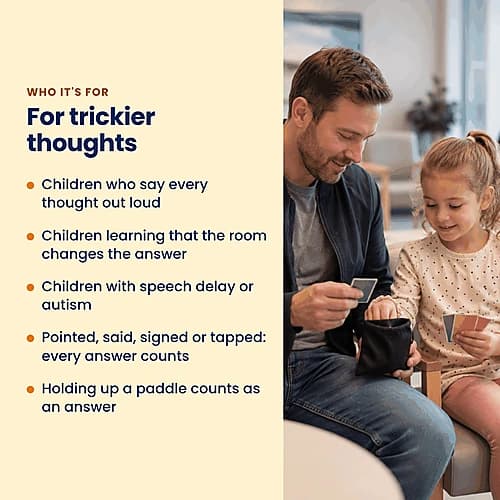
Think It or Say It? Reading the Room: Social-Emotional Thought Cards PDF is a 29-page printable and screen-ready resource designed for children who have mastered basic kind/unkind distinctions but need support with audience awareness and timing. This engaging deck helps children ages 7 and up, including those with speech delay or autism, decide when to share a thought aloud, keep it to themselves, or wait for a better moment. The resource is perfect for building real-world social communication skills in classrooms, therapy sessions, and at home.
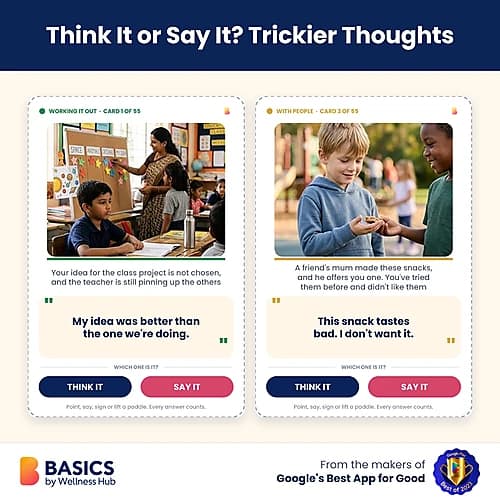
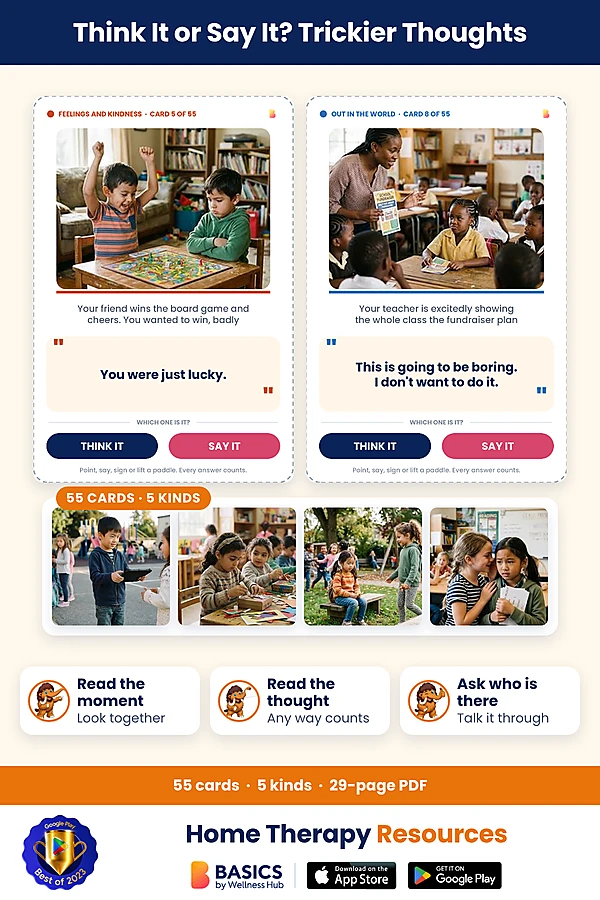
Children practice reading audience cues and understanding timing (now or later) through 55 scenario cards, each presenting a thought and the question: Think It or Say It? The deck encourages perspective taking and helps kids recognize the difference between spoken and typed communication, with scenarios that reflect everyday social situations. Outcomes include improved ability to park a thought, bring it back at the right time, and turn statements into questions or kind comments.
Use the sorting mat and paddles for interactive group lessons, individual speech therapy, or family practice. The included IT DEPENDS card supports nuanced discussion, while the variety of scenarios—like a friend overhearing, a teacher present, or an online comment—make this resource ideal for practicing perspective taking in diverse settings.
Product Details
- Resource Name: Think It or Say It? Reading the Room: Social-Emotional Thought Cards PDF
- Format: Printable and screen-ready PDF
- Total Pages: 29
- Grade Level: Elementary and Middle School (Ages 7+)
- Designed For: Social skills groups, speech therapy, special education, home use
- Printing Notes: Color and black-and-white friendly; cut-out paddles and cards included
- Best Used In: Small groups, individual sessions, classroom SEL lessons, home practice
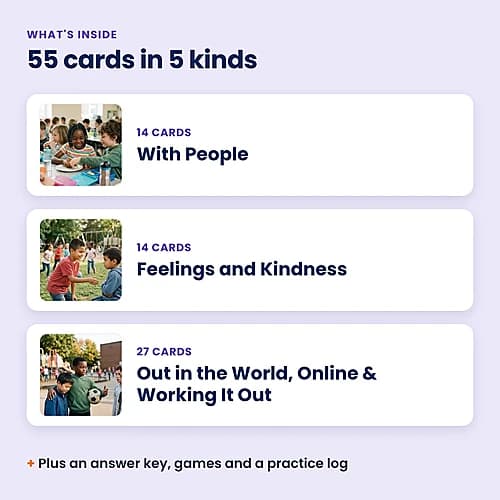
- Sets / Flashcards / Activities: 55 thought cards, 2 paddles, sorting mat, IT DEPENDS card
- Visuals / Illustrations: Scenario illustrations and color-coded cards for five thought types
Educational Benefits
1. Audience Awareness & Social Judgment
- Promotes reading audience cues to decide when to speak or stay silent.
- Builds understanding of who is present and how words affect others.
- Helps children avoid social missteps in real-world situations.
2. Timing and Communication Flexibility
- Strengthens ability to judge if a thought should be shared now or later.
- Encourages waiting for the right moment, supporting impulse control.
- Reinforces the difference between immediate and delayed responses.
3. Perspective Taking & Empathy Building
- Fosters seeing situations from others' viewpoints through scenario cards.
- Improves sensitivity to others' feelings, especially in group settings.
- Supports respectful interactions and thoughtful communication.
4. Spoken vs. Typed Expression Skills
- Teaches the difference between what is said aloud and what is typed online.
- Guides children to recognize how digital communication changes context.
- Prepares kids for safe, considerate online and in-person exchanges.
5. Supports Neurodiverse Learners
- Designed for children with speech delay or autism to practice social skills.
- Offers full AAC parity—pointing, signing, or using paddles counts as an answer.
- Think It or Say It? Reading the Room: Social-Emotional Thought Cards PDF adapts to diverse learning needs.
Instructions for Use
Step 1: Print and Prepare the Materials
- Print the PDF, including cards, paddles, sorting mat, and IT DEPENDS card.
- Cut out the cards and paddles for hands-on activities.
- Laminate pieces for repeated classroom or therapy use.
Step 2: Introduce the Five Thought Types
- Review the color-coded categories on the cards with the group or child.
- Explain each thought type, using examples from the deck.
- Highlight reading audience as a key skill during this step.
Step 3: Demonstrate a Sample Scenario
- Select a sample card and read the scenario aloud.
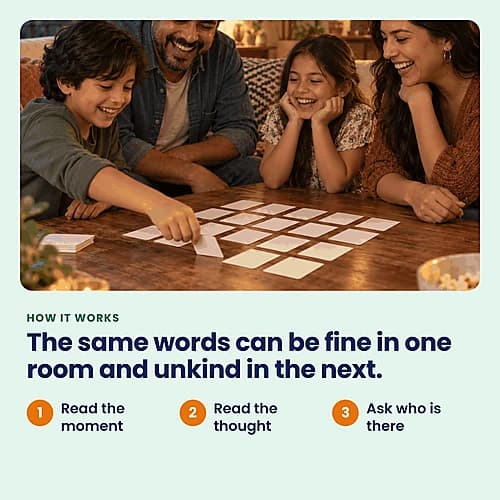
- Model the process: read the moment, read the thought, and ask who is present.
- Show how to use the paddles or mat to choose an answer.
Step 4: Facilitate Card Sorting Practice
- Shuffle the cards and present one at a time to the learner or group.
- Ask them to decide: Think It, Say It, or IT DEPENDS, using the paddles or mat.
- Encourage discussion about timing (now or later) for each answer.
Step 5: Explore Spoken vs. Typed Communication
- Use cards that reference online or written situations.
- Discuss how answers might change if the thought is typed instead of spoken.
- Reinforce the difference between said and typed as a communication skill.
Step 6: Reflect and Extend with Follow-Up Activities
- Use the answer key to review reasoning for each card.
- Try extension games like Now or Later or Three Rooms for deeper learning.
- Track progress with the included practice log and celebrate growth.
Activities Using the Resource
1. Social Scenario Sorting Game
Objective: To build audience awareness and social judgment using the Think It or Say It? Reading the Room: Social-Emotional Thought Cards PDF.
How to Play:
- Lay out the sorting mat and paddles.
- Present a thought card and read the scenario aloud, focusing on who is present.
- Ask the child to sort the card: Think It, Say It, or IT DEPENDS.
Skill Development:
- Improves reading audience cues in varied social settings.
- Strengthens decision-making for appropriate communication.
- Reinforces understanding of social context.
2. Now or Later Timing Challenge
Objective: Develops timing skills by deciding if a thought should be shared immediately or saved for later.
How to Play:
- Select a card from the deck.
- Discuss the scenario, emphasizing timing and the people involved.
- Use the paddles to show if the thought should be said now, later, or kept private.
Skill Development:
- Builds impulse control and patience.
- Enhances judgment of appropriate timing.
- Encourages flexible thinking about communication.
3. Online vs. In-Person Expression Sort
Objective: Practice distinguishing between spoken and typed communication in real-world and digital scenarios.
How to Play:
- Pick cards that mention online or group settings.
- Ask the child to decide if the thought changes when typed versus spoken.
- Sort the card and discuss the impact of the medium.
Skill Development:
- Teaches differences between digital and face-to-face communication.
- Promotes safe online interaction habits.
- Develops awareness of audience in multiple contexts.
4. Perspective Taking Role-Play
Objective: Strengthen perspective taking by acting out scenarios and considering others' feelings.
How to Play:
- Choose a thought card and assign roles (e.g., speaker, listener).
- Act out the scenario, focusing on how each person might feel.
- Decide together if the thought should be shared or kept inside.
Skill Development:
- Builds empathy and understanding of others' viewpoints.
- Encourages respectful communication choices.
- Improves social role awareness.
5. IT DEPENDS Discussion Circle
Objective: Support nuanced thinking by exploring situations where the answer is not clear-cut.
How to Play:
- Present a card that could fit multiple answers.
- Use the IT DEPENDS card to spark group discussion about what changes the answer.
- Encourage children to explain their reasoning and consider alternatives.
Skill Development:
- Fosters flexible, critical thinking.
- Strengthens reasoning and justification skills.
- Promotes open-mindedness in social decision-making.
6. Turn a Statement into a Question Game
Objective: Practice turning statements into questions to encourage positive, inclusive communication.
How to Play:
- Read a thought card aloud.
- Challenge the child to rephrase the statement as a kind question.
- Discuss when and how to use questions instead of statements in social situations.
Skill Development:
- Enhances conversational skills and question formation.
- Encourages inclusive, thoughtful dialogue.
- Supports adaptive communication strategies.
Frequently Asked Questions
Q1: What age range is Think It or Say It? Reading the Room best for?
A1: This resource is designed for children ages 7 and up, including elementary and middle school students. The scenarios and skills target learners ready for more nuanced social-emotional practice beyond basic kind/unkind distinctions. Older children with social communication needs also benefit from the real-world situations provided.
Q2: Can I use this resource with a social skills group in my classroom?
A2: Yes, this PDF is ideal for small groups, SEL lessons, or classroom discussions. The sorting mat and paddles make it interactive for multiple participants. Group use encourages peer modeling and discussion about audience cues and timing.
Q3: Is Think It or Say It? Reading the Room suitable for speech therapy sessions?
A3: Absolutely. The resource supports speech therapy goals such as reading audience, perspective taking, and flexible communication. Therapists can use the cards for role-play, sorting, and practicing both spoken and AAC responses.
Q4: How should I print and prepare the cards, paddles, and mat for repeated use?
A4: Print the cards, paddles, and mat on thick paper or cardstock for durability. Laminate the pieces before cutting them out to ensure they last through frequent handling. Store the components in labeled envelopes or pouches for easy organization.
Q5: Are there supports for children with autism or speech delays?
A5: Yes, this resource was developed with neurodiverse learners in mind, including those with autism or speech delays. It offers full AAC parity, so pointing, signing, or using paddles all count as valid answers. Visual cues and clear routines help scaffold participation and success.
Q6: Can I use the PDF on a tablet or computer without printing?
A6: Yes, the PDF is screen-ready and works well on tablets, computers, or interactive whiteboards. Children can point, tap, or use digital annotation tools to sort cards and answer questions. This flexibility supports both in-person and teletherapy sessions.
Q7: What specific skills and learning goals does this resource address?
A7: Think It or Say It? Reading the Room builds reading audience, timing, and perspective taking skills. It also teaches the difference between spoken and typed communication and supports flexible, thoughtful social decision-making. Children learn to park a thought, bring it back later, and adapt statements for different audiences.
Q8: What are the usage rights for this PDF resource?
A8: Your purchase grants you a single-user license for personal, classroom, or therapy use. You may print or display the resource for your own students or clients but may not share, resell, or distribute it to others. For multi-user or school-wide licensing, please contact Wellness Hub directly.
Q9: How do I receive and download my Think It or Say It? Reading the Room PDF?
A9: After purchase, you will receive an email with a secure download link for the PDF. The file is delivered instantly and can be saved to your device for immediate use. If you have trouble accessing your download, Wellness Hub's support team is available to assist.
Q10: What is Wellness Hub's refund or exchange policy for digital resources?
A10: Wellness Hub does not offer refunds or exchanges for digital PDF resources once downloaded. This policy protects the integrity of digital content and intellectual property. If you experience technical issues or have concerns about your purchase, contact Wellness Hub support for prompt assistance.
Usage Rights and Restrictions
Allowed Usage:
- Personal use by parents, teachers, and therapists.
- Printable for classroom, home, or therapy settings.
- Can be used in group or one-on-one learning sessions.
Not Allowed:
- Reselling, redistributing, or modifying the resource for commercial use.
- Sharing publicly (e.g., on blogs, social media, or websites) without permission.
- Uploading the file to public sharing platforms.
If you need a bulk license for schools or therapy centers, please contact us.
Conclusion
Think It or Say It? Reading the Room: Social-Emotional Thought Cards PDF empowers children to navigate real-life conversations with confidence and care. Designed for learners who already understand basic kindness, it guides them to consider who is listening, when to speak, and how their words might be received by others.
By focusing on audience awareness and perspective taking, this resource helps children grow essential social-emotional skills for home, classroom, and therapy settings. The included IT DEPENDS card encourages flexible thinking and supports nuanced decision-making in tricky social moments.
Download Think It or Say It? Reading the Room: Social-Emotional Thought Cards PDF today and give your learners the tools to communicate thoughtfully, read the room, and build lasting social success.