

Think It or Say It? Hardest Thoughts — 55 Printable Social Filter Cards for Big Feelings
₹80
Grade Levels
Grade 1 – Grade 4 (Ages 6–11)
Content Overview
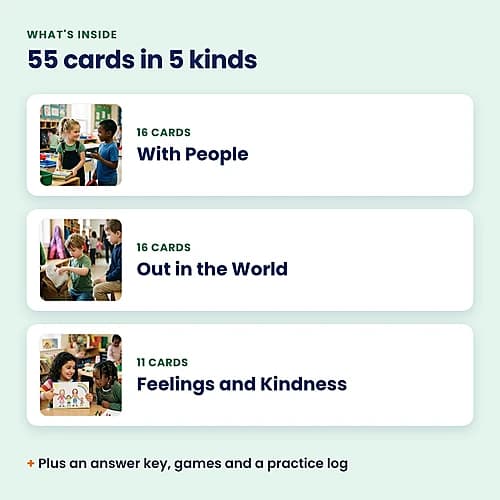
Format: PDF | Pages: 29 | Features: 55 thought cards, sorting mat, paddles, builds behavioral skills
Categories
Share


About the Product
Introduction
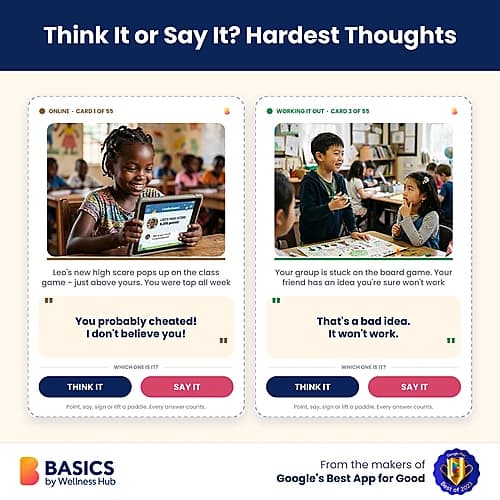
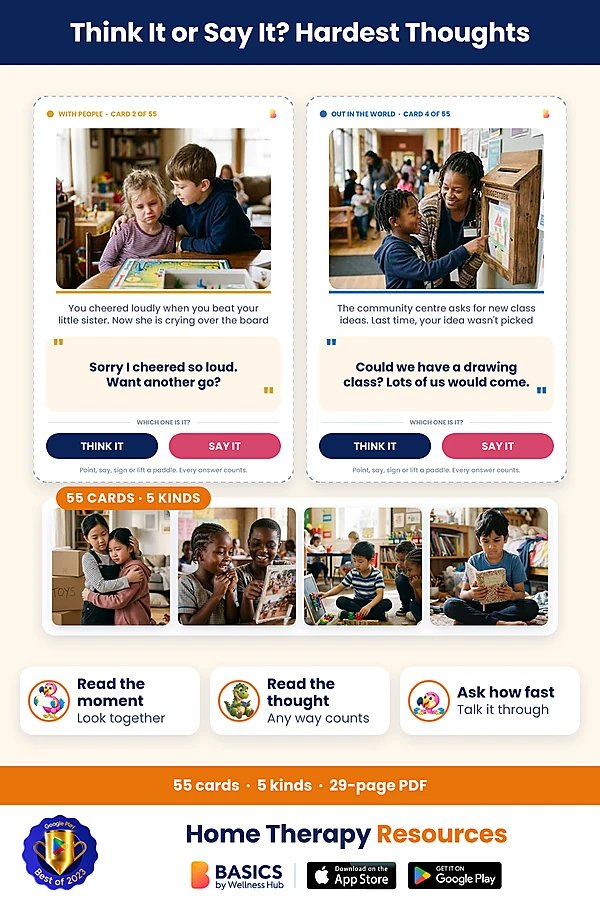
Think It or Say It? The Fast Ones: Social-Emotional Thought Sorting Deck is a 29-page printable PDF designed for children who struggle with blurting out their feelings in tough moments. This resource offers 55 illustrated thought cards, sorting paddles, and a two-column mat, making it ideal for learners who need support with emotional regulation and social communication. Perfect for use with children who use speech, signs, or AAC, this deck helps kids pause and choose their response when emotions run high.
Children practice skills like naming the feeling under an accusation and using the pause before reacting. By sorting each card into Think It or Say It, kids learn to recognize a fast thought before it arrives and decide how to respond calmly. Outcomes include better self-control, improved emotional expression, and strategies for losing well or standing up for themselves in social situations.
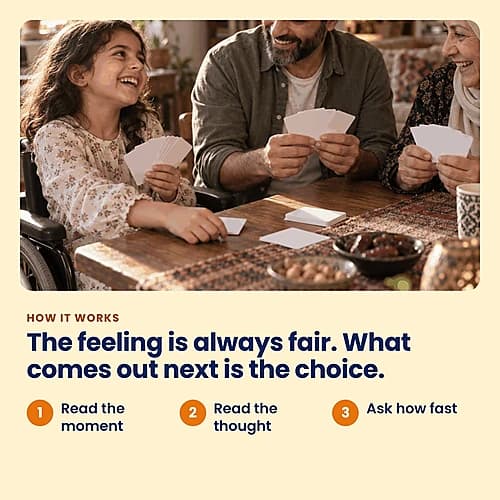
Home, classroom, and therapy settings all benefit from this engaging deck, especially when teaching social skills to children with speech delay or autism. The included sorting mat and paddles make it easy to use in group lessons, one-on-one sessions, or family practice. Visual supports and AAC parity ensure every child can participate and succeed.
Product Details
- Resource Name: Think It or Say It? The Fast Ones: Social-Emotional Thought Sorting Deck
- Format: Printable PDF
- Total Pages: 29
- Grade Level: Elementary (Ages 6–12)
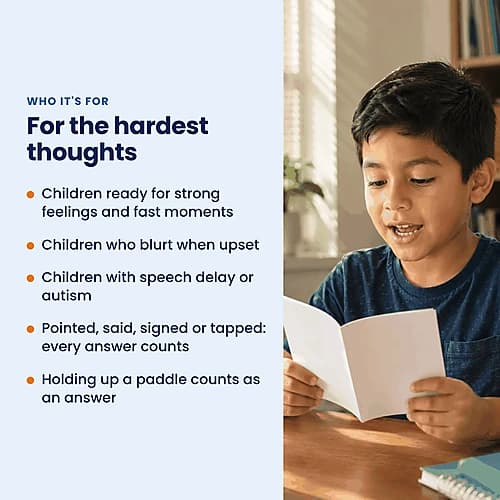
- Designed For: Children needing support with emotional regulation and social communication; suitable for speech, signs, or AAC users
- Printing Notes: Print single-sided; cut-out paddles and cards included
- Best Used In: Home, classroom, therapy
- Sets / Flashcards / Activities: 55 thought cards, 2 paddles, 1 sorting mat, 1 FAST PILE card
- Visuals / Illustrations: Color-coded, illustrated cards and visual supports
Educational Benefits
1. Emotional Regulation and Self-Control
- Strengthens a child's ability to pause before reacting in heated moments.
- Teaches strategies for managing fast, strong feelings constructively.
- Supports children in recognizing and handling disappointment or frustration.
2. Social Communication and Expression
- Encourages clear, appropriate sharing of thoughts and feelings with others.
- Promotes use of both spoken words and AAC for full participation.
- Fosters confidence in expressing hurt or standing up calmly.
3. Perspective-Taking and Empathy Building
- Helps children understand how their words affect peers and adults.
- Guides kids to name the feeling under an accusation or quick reaction.
- Improves awareness of others' emotions in group or friendship settings.
4. Flexible Thinking and Problem Solving
- Practices sorting tricky thoughts and choosing the best response in real time.
- Develops skills for losing well, mending mistakes, and adapting to change.
- Encourages children to try new strategies when old habits don't work.
5. Everyday Carryover and Practical Use
- Prepares children to use the skills in this resource in daily situations, not just practice sessions.
- Reinforces skills like standing up for themselves and making amends after a slip.
- Supports generalization of emotional regulation in home, school, and social settings.
Instructions for Use
Step 1: Print and Prepare the Materials
- Print the PDF single-sided and cut out the 55 thought cards, paddles, and sorting mat.
- Laminate for durability if using repeatedly or in group settings.
- Organize by color or category for easy setup.
Step 2: Introduce the Deck and Visual Supports
- Show children the sorting mat, paddles, and a sample card.
- Explain how to use the paddles or point for AAC parity.
- Demonstrate sorting a card into Think It or Say It.
Step 3: Model Recognizing Fast Thoughts
- Read a card aloud and discuss the feeling behind the thought.
- Use the term emotional regulation to highlight the skill being practiced.
- Pause and let the child identify the emotion before sorting.
Step 4: Practice Sorting with Real-Life Scenarios
- Present cards one at a time, asking the child to sort each quickly.
- Encourage use of speech, signs, or paddles to answer.
- Incorporate social communication by discussing why each answer fits.
Step 5: Play The Fast Ones Game for Speed Practice
- Set a timer or use the FAST PILE card for fast-paced rounds.
- Challenge children to respond quickly but thoughtfully.
- Remind them to breathe or pause before choosing their answer.
Step 6: Reflect and Reinforce Skills Learned
- Review answers using the included answer key and discuss alternative responses.
- Highlight progress in flexible thinking and self-control.
- Encourage children to use these strategies in daily situations.
Activities Using the Resource
1. Fast Thought Sorting Challenge
Objective: To build quick decision-making and emotional regulation using the Think It or Say It? deck.
How to Play:
- Shuffle the thought cards and place them face down.
- Draw a card, read the scenario, and use the paddles to sort it fast.
- Use the sorting mat to place each card in the correct column.
Skill Development:
- Improves emotional regulation under time pressure.
- Strengthens impulse control and self-monitoring.
- Increases accuracy in sorting social-emotional scenarios.
2. Feeling Identification Relay
Objective: To recognize and label emotions behind fast thoughts in real-life situations.
How to Play:
- Select a card and read the thought aloud.
- Ask the child to name the feeling before sorting.
- Use a timer to add excitement and encourage quick responses.
Skill Development:
- Enhances emotional vocabulary and recognition.
- Boosts speed in identifying feelings.
- Reinforces the link between emotions and actions.
3. Social Scenario Role Play
Objective: To practice responding to tricky moments using the Think It or Say It? method.
How to Play:
- Act out a scenario from a card with a partner or group.
- Pause and let the child choose to think or say the response.
- Discuss the outcome and possible alternatives.
Skill Development:
- Builds social communication skills in context.
- Encourages flexible thinking during peer interactions.
- Develops confidence in handling social challenges.
4. AAC and Sign Answer Practice
Objective: To support AAC users in making fast choices with visual supports.
How to Play:
- Present a card and the sorting paddles.
- Child answers by pointing, signing, or lifting a paddle.
- Celebrate correct choices and discuss any tricky moments.
Skill Development:
- Promotes AAC parity and access.
- Increases speed and accuracy with visual supports.
- Strengthens nonverbal communication strategies.
5. The Fast Pile Game for Losing Well
Objective: To practice handling disappointment and mending quick reactions.
How to Play:
- Use the FAST PILE card for scenarios about losing or unfair moments.
- Sort each card, then discuss how to pause and express hurt calmly.
- Practice mending with a "Say It" card when needed.
Skill Development:
- Teaches losing well and emotional recovery.
- Encourages honest expression of hurt or disappointment.
- Develops strategies for making amends after a fast reaction.
6. Everyday Carryover Reflection
Objective: To generalize Think It or Say It? skills into daily routines.
How to Play:
- After a real-life incident, recall a similar card from the deck.
- Ask the child to sort the thought and discuss what they did or could do.
- Record progress in the practice log for ongoing growth.
Skill Development:
- Supports daily use of emotional regulation.
- Reinforces self-reflection and personal growth.
- Encourages transfer of skills to new situations.
Frequently Asked Questions
Q1: What age group is Think It or Say It? The Fast Ones best for?
A1: This resource is designed for children ages 6–12, typically in elementary grades. The scenarios and language are developmentally appropriate for this age range. Younger or older children can also benefit with adult guidance.
Q2: Can I use this thought sorting deck with a classroom group?
A2: Yes, the deck works well in both small groups and whole-class social-emotional lessons. The paddles and sorting mat make it interactive for group participation. Try rotating roles or having students discuss their choices for peer learning.
Q3: Is this resource suitable for speech therapy or occupational therapy sessions?
A3: Absolutely. Therapists use the deck to target emotional regulation, impulse control, and social communication goals. The visual supports and AAC parity help every child participate, including those with speech delays or autism.
Q4: How should I print and prepare the cards and paddles?
A4: Print single-sided on thick paper or cardstock for best durability. Laminate the cards, paddles, and sorting mat before cutting for repeated use. Store pieces in labeled envelopes or small boxes for easy access during sessions.
Q5: Does this deck support children with special needs or AAC users?
A5: Yes, it is fully accessible for children who use signs, speech, or AAC to answer. The resource emphasizes social communication and provides visual supports for all learners. Pointing, signing, or lifting a paddle all count as valid responses.
Q6: Can I use the deck on a tablet or screen without printing?
A6: Yes, you can display the PDF on a tablet or computer for digital use. Children can point to or verbally indicate their answers on the screen. For group activities, screen sharing works well in virtual sessions.
Q7: What specific skills and learning goals does this resource target?
A7: The deck builds emotional regulation, social communication, and flexible thinking. Children learn to recognize fast thoughts, name feelings, and choose between thinking or saying a response. It also supports losing well, standing up calmly, and mending after a quick reaction.
Q8: What are the usage rights for Think It or Say It? The Fast Ones?
A8: Your purchase grants a single-user or single-classroom license for personal or professional use. You may print and use the resource with your own students or clients. Sharing, reselling, or uploading the PDF elsewhere is not permitted.
Q9: How do I receive and download my digital resource from Wellness Hub?
A9: After purchase, you will receive an instant download link via email. The PDF can be saved to your device and printed as needed. If you have trouble accessing your file, Wellness Hub's support team is ready to help.
Q10: What is Wellness Hub's refund or exchange policy for digital downloads?
A10: Due to the nature of digital products, refunds and exchanges are not available once the file has been downloaded. If you experience technical issues or receive the wrong resource, contact Wellness Hub for prompt assistance. They are committed to ensuring you have a positive experience.
Usage Rights and Restrictions
Allowed Usage:
- Personal use by parents, teachers, and therapists.
- Printable for classroom, home, or therapy settings.
- Can be used in group or one-on-one learning sessions.
Not Allowed:
- Reselling, redistributing, or modifying the resource for commercial use.
- Sharing publicly (e.g., on blogs, social media, or websites) without permission.
- Uploading the file to public sharing platforms.
If you need a bulk license for schools or therapy centers, please contact us.
Conclusion
Think It or Say It? The Fast Ones: Social-Emotional Thought Sorting Deck empowers children to manage fast, tricky moments with confidence and care. Designed for kids who need extra support with emotional regulation, it provides clear, visual strategies for pausing before reacting and choosing the best response. This resource is ideal for families, educators, and therapists working with children who use speech, signs, or AAC.
By focusing on self-control and flexible thinking, children learn to handle disappointment, express feelings plainly, and mend quick reactions. The sorting mat and paddles make it easy to practice social communication in home, classroom, and therapy settings. Every child is supported in building real-world skills for everyday challenges.
Start building stronger social-emotional skills—download Think It or Say It? The Fast Ones: Social-Emotional Thought Sorting Deck and help your child grow in confidence, self-awareness, and kindness today.